
For most snorkeling, a snorkel vest is the better choice because it supports a face down, relaxed position that makes breathing through a snorkel easier. Reach for a Coast Guard approved life jacket instead for boat transit, for non swimmers, or whenever a regulation requires it. Fit and test whichever device you choose before you get in the water.
TL;DR:
- Snorkel vests are inflatable, hold swimmers face down, and lack Coast Guard approval, making them suitable for comfort but not for rough conditions.
- Life jackets are foam-based, approved, and keep users face up, offering greater safety for non swimmers and in challenging water conditions.
- Use a snorkel vest in calm, supervised water if you are a confident swimmer, but always carry an approved life jacket when offshore or in currents.
- Proper sizing, full inflation, leak testing, and float confirmation are essential steps before water use to ensure flotation device reliability.
- Charter trips often include crew-managed safety gear, removing equipment management concerns for families and casual snorkelers.
Table of Contents
- How snorkel vests and life jackets differ in design and performance
- Pros and cons for snorkelers: comfort, safety, and practicality
- Who should wear a snorkel vest, who needs a life jacket
- What Coast Guard approval means for your gear choice
- How to choose, size, and test your flotation gear
- Keeping your gear reliable between trips
- What charter crews see about flotation gear and snorkeling — working around snorkelers day after day teaches you that most incidents trace back to fatigue, not equipment failure. A well-run operation supplies an approved life jacket for the boat ride and briefs guests before anyone enters the water, then allows a snorkel vest for the swim itself once conditions check out. If you are snorkeling with any operator, ask directly what their Boat Tours operator’s PFD policy is and whether vests are provided or just permitted.
- A simpler route: let a charter handle the flotation gear for you
- FAQ
- Sources
How snorkel vests and life jackets differ in design and performance
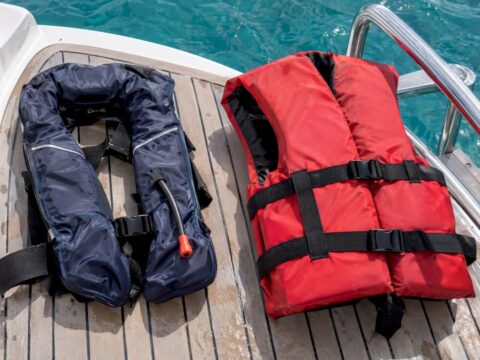
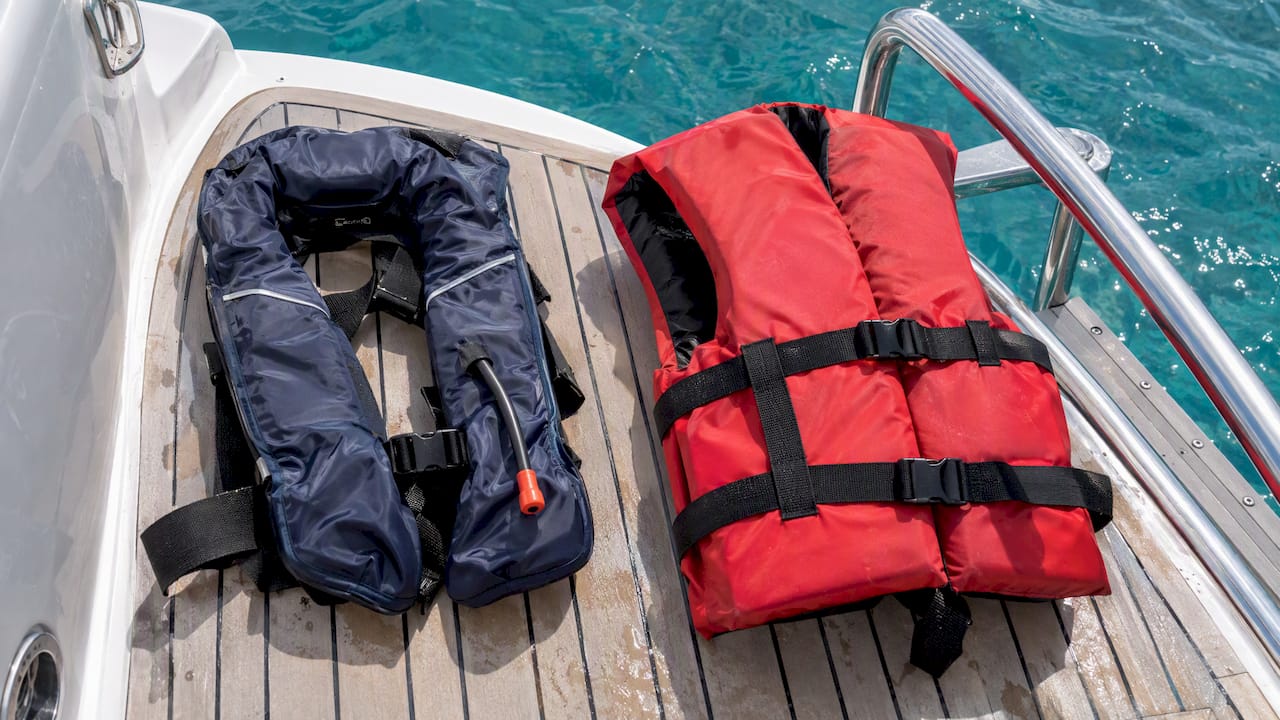
A snorkel vest is an inflatable buoyancy aid built from lightweight fabric with an internal bladder you fill by mouth or with a small cartridge. It is designed to hold a swimmer face down at the surface, which is exactly the posture you want for watching the reef below. A standard life jacket, by contrast, usually relies on closed cell foam or a hybrid foam and inflation system, and it is built to roll an unconscious wearer face up. That upright, chin out position is the right call for someone who might lose consciousness in open water, but it fights against the horizontal position snorkelers need to see and breathe comfortably.
The labeling tells the real story. A snorkel vest typically carries no U.S. Coast Guard approval and no printed buoyancy figure. Manufacturers list a wearer weight range instead, which makes it hard to compare one vest’s lift directly against a jacket’s rated buoyancy. Life jackets sold as personal flotation devices carry approval labels and performance levels, with Type III or Level 70 being common for the everyday jackets most recreational boaters wear.
The two devices also fail differently. An inflatable vest loses air gradually through a worn valve or a small puncture, and a slow leak can go unnoticed until buoyancy is already reduced. Foam jackets do not leak, but the foam can compress or degrade over years of sun and saltwater exposure, quietly losing lift without any visible sign.
- Construction: inflatable bladder (vest) versus foam or foam hybrid (jacket).
- Labeling: weight range only (vest) versus Coast Guard approval and buoyancy rating (jacket).
- Position held: horizontal and face down (vest) versus upright and face up (jacket).
- Failure mode: slow air loss (vest) versus foam compression over time (jacket).
Pros and cons for snorkelers: comfort, safety, and practicality
Weighing these two devices comes down to matching their trade-offs to how and where you plan to swim.
Snorkel vest
- Keeps you in a horizontal position that matches a natural snorkeling stroke.
- Packs small, dries fast, and rarely restricts arm movement.
- Carries no official buoyancy rating, so you are trusting a weight range instead of a tested figure.
- Can leak slowly through a valve or seam without an obvious warning sign.
Life jacket
- Carries a Coast Guard approval label and a published buoyancy rating you can verify.
- Holds an unconscious or exhausted wearer face up, which matters in rough or offshore conditions.
- Bulkier and stiffer, which can make the snorkeling stroke awkward and tiring.
- Often rides up around the ears when a swimmer is mostly horizontal.
A life jacket is the safer call despite the bulk whenever conditions turn rough, visibility drops, or you are snorkeling somewhere with current or boat traffic nearby.
Pro Tip: Pack both when you can: wear the jacket for the boat ride, switch to the vest once you are in calm, supervised water.
Who should wear a snorkel vest, who needs a life jacket
Device choice should match swimming ability, age, and water conditions, not just personal preference.
- Strong, confident swimmers in calm, clear, supervised water generally do fine in a snorkel vest alone.
- Casual or occasional snorkelers benefit from a vest for comfort, paired with a buddy who can help if fatigue sets in.
- Non swimmers and weak swimmers need a Coast Guard approved life jacket, not a snorkel vest, regardless of conditions.
- Children should wear a properly sized, approved life jacket, since a vest sized for an adult will not hold a child’s head clear of the water.
- Anyone snorkeling offshore, in current, or near boat traffic should default to an approved jacket over a vest.
- On an organized tour, follow the operator’s posted PFD policy rather than assuming your own gear is acceptable.
Before you leave the boat or shore, run through this: Can everyone in the group swim comfortably? Is the water calm and clear? Does the operator require an approved jacket? If any answer favors caution, choose the jacket.
What Coast Guard approval means for your gear choice
U.S. carriage rules require wearable, Coast Guard approved personal flotation devices on recreational vessels, and those approved jackets display approval labels along with a buoyancy or performance level, with Type III or Level 70 equivalence common for everyday wear. A snorkel vest almost never carries that approval or a published buoyancy figure, which means it typically does not satisfy a vessel’s required PFD count, even though it works well as an in-water comfort aid.
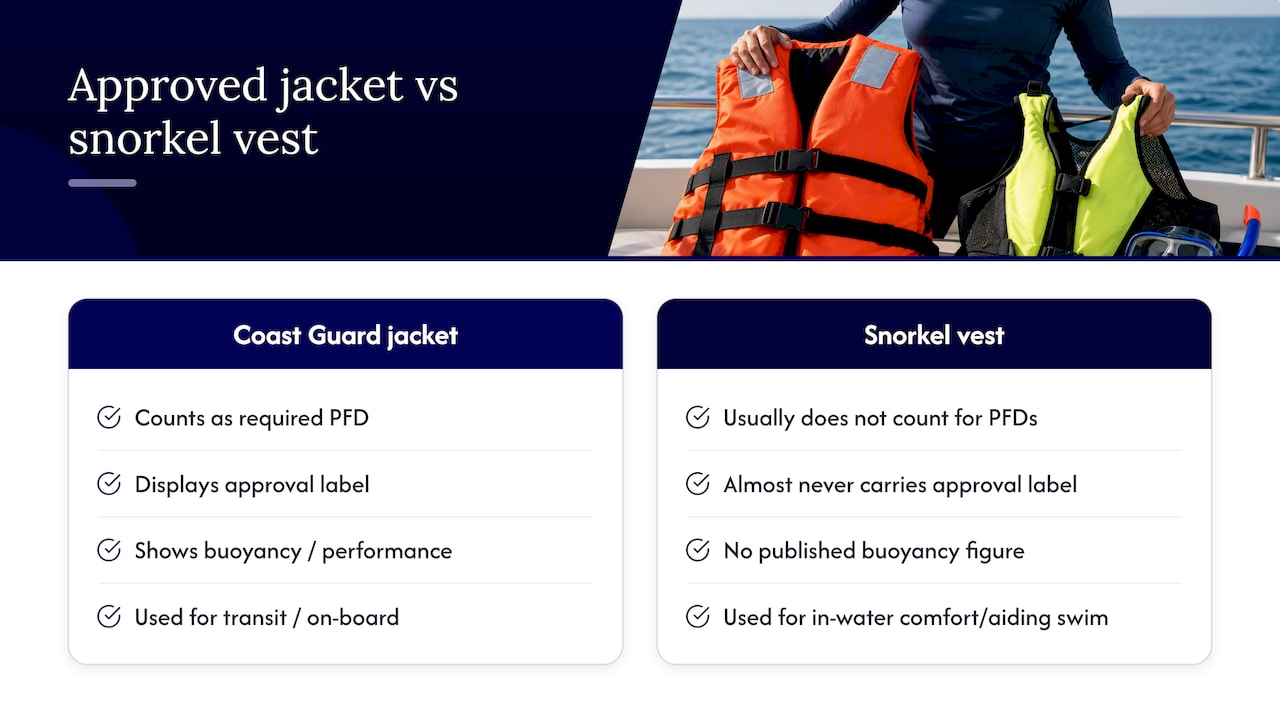
The practical rule of thumb: keep an approved jacket on board for every passenger, use it for transit, and treat the snorkel vest as a separate, additional item for time spent in the water. Families traveling with children should confirm a properly sized, approved jacket is on hand before departure rather than assuming a snorkel vest will cover the requirement.
How to choose, size, and test your flotation gear
Getting the fit right matters as much as picking the right device.
- Try the vest or jacket on fully dressed for swimming and check that it sits snug without pinching under the arms.
- Fasten any crotch strap, which stops the device from riding up over your head in the water.
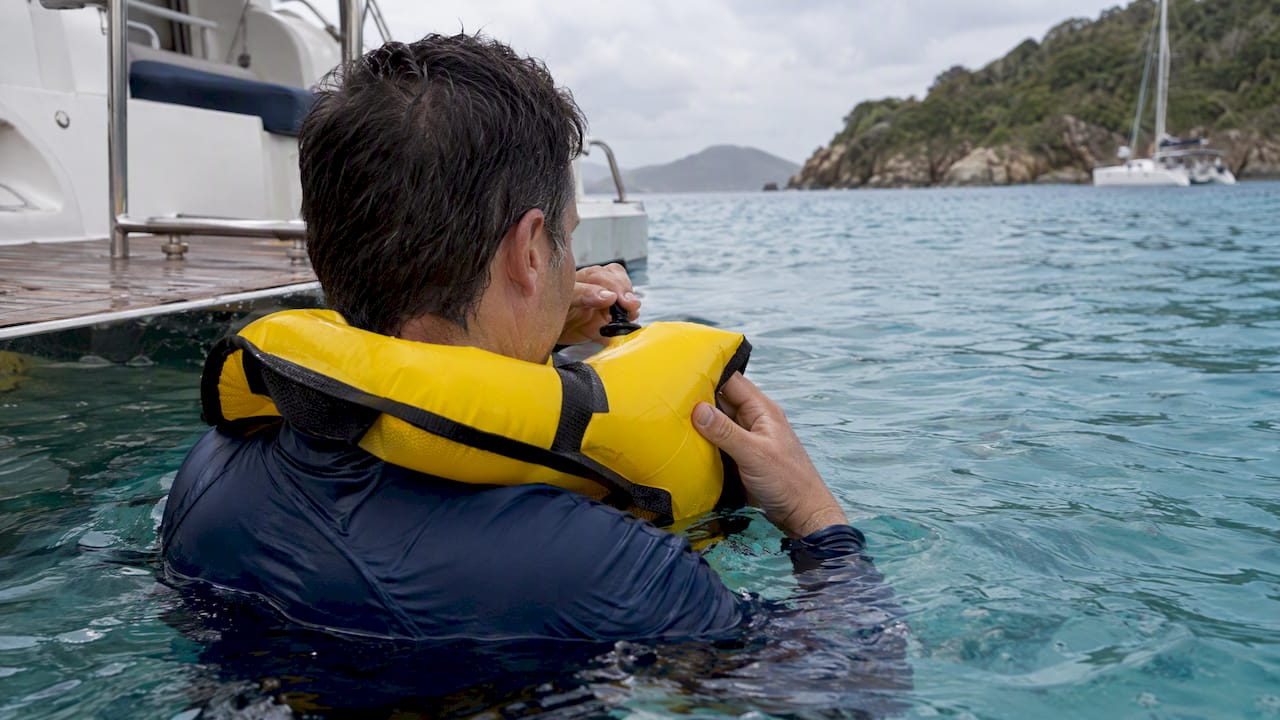
- Fully inflate the vest on land first, then listen and feel along every seam and valve for leaks before you trust it offshore.
- Practice topping off the vest by mouth so the motion feels automatic if you need air mid-swim.
- Float face down in shallow, calm water to confirm the device holds your chest and head comfortably clear.
- Choose high visibility colors like orange or yellow, and clip on a whistle for signaling.
This sequence mirrors the pre-use check recommended by snorkel safety guidance from the British Sub-Aqua Club: inflate fully on land, check for leaks, then confirm support in shallow water before heading out.
Pro Tip: Run the full inflation and float test the night before a trip, not the morning you plan to swim, so you have time to swap gear if something fails.
Keeping your gear reliable between trips
A flotation device is only as good as its last inspection. Rinse both vests and jackets in fresh water after every saltwater swim, let them air dry fully away from direct sun, and store them loose rather than folded tight for months at a time. Avoid harsh cleaners or bleach, and never sew patches or attachments directly onto the fabric, since stitching can puncture the bladder or weaken a seam.
Retire a device when you notice:
- A valve that will not hold air overnight.
- A seam that feels stiff, cracked, or separated.
- Foam that feels crushed or spongy compared to when it was new.
- Any bladder that leaks even after a repair attempt.
In the water, build in simple habits: do a buddy check before you swim, inflate the vest fully before you need it rather than waiting until you are tired, and if you feel winded, stop and float rather than pushing on. If a vest starts losing air, signal your buddy immediately and head for the boat or shore while you still have lift to spare.
What charter crews see about flotation gear and snorkeling — working around snorkelers day after day teaches you that most incidents trace back to fatigue, not equipment failure. A well-run operation supplies an approved life jacket for the boat ride and briefs guests before anyone enters the water, then allows a snorkel vest for the swim itself once conditions check out. If you are snorkeling with any operator, ask directly what their Boat Tours operator’s PFD policy is and whether vests are provided or just permitted.
Working around snorkelers day after day teaches you that most incidents trace back to fatigue, not equipment failure. A well-run operation supplies an approved life jacket for the boat ride and briefs guests before anyone enters the water, then allows a snorkel vest for the swim itself once conditions check out. If you are snorkeling with any operator, ask directly what their PFD policy is and whether vests are provided or just permitted.
— alexia
A simpler route: let a charter handle the flotation gear for you
If sorting through vests, jackets, and fit checks sounds like one more thing to manage on vacation, a crewed charter removes that logistics problem entirely. A family-owned charter company operating in the British Virgin Islands offers crewed trips that include staff to handle onboard safety gear and brief guests before anyone goes in the water.

This is not a requirement for anyone snorkeling from shore with their own gear, just an alternative for travelers who would rather not manage equipment themselves. Crewed options run from the Premium Catamaran for 4 to 6 guests up to the High-End Luxury Catamaran or Motor Yacht, and you can browse current availability to see what fits your group and dates.
FAQ
Will a snorkel vest keep you afloat?
Yes, a properly inflated snorkel vest provides enough buoyancy to hold a swimmer at the surface in a relaxed, face down position. It is built for comfort and support while snorkeling rather than for rescuing an unconscious swimmer, so fit and inflation level still matter.
Are swim vests as good as life jackets?
Not for the same purpose. A swim or snorkel vest lacks the Coast Guard approval and published buoyancy rating that a life jacket carries, and it holds a swimmer face down rather than rolling them face up if they lose consciousness.
What does a snorkel vest do?
A snorkel vest raises your chest at the surface, which reduces the work of breathing for a swimmer floating face down. That support lets a tired or anxious snorkeler stop, rest, and breathe normally instead of treading water.
Is a snorkeling vest the same as a flotation belt?
No, they are different pieces of gear. A snorkel vest wraps around the torso and chest to support a face down posture, while a flotation belt sits at the waist and is more common in pool training than open water snorkeling.
Sources
- Snorkel vest vs life jacket: which to wear and when
- Personal Flotation Devices | BoatUS Study Guide
- Should I wear a snorkel vest or other flotation device? Here’s why
- Be safe, be seen: Snorkel buoyancy aids - British Sub-Aqua Club
Recommended
- Full Face Snorkel Mask vs Traditional: Safety Guide
- Dry Snorkel vs Semi Dry: Which One Should You Buy?
Did You Know?
The BVI are only accessible by boat. Check out our charter yachts that can get you there. View Our Fleet