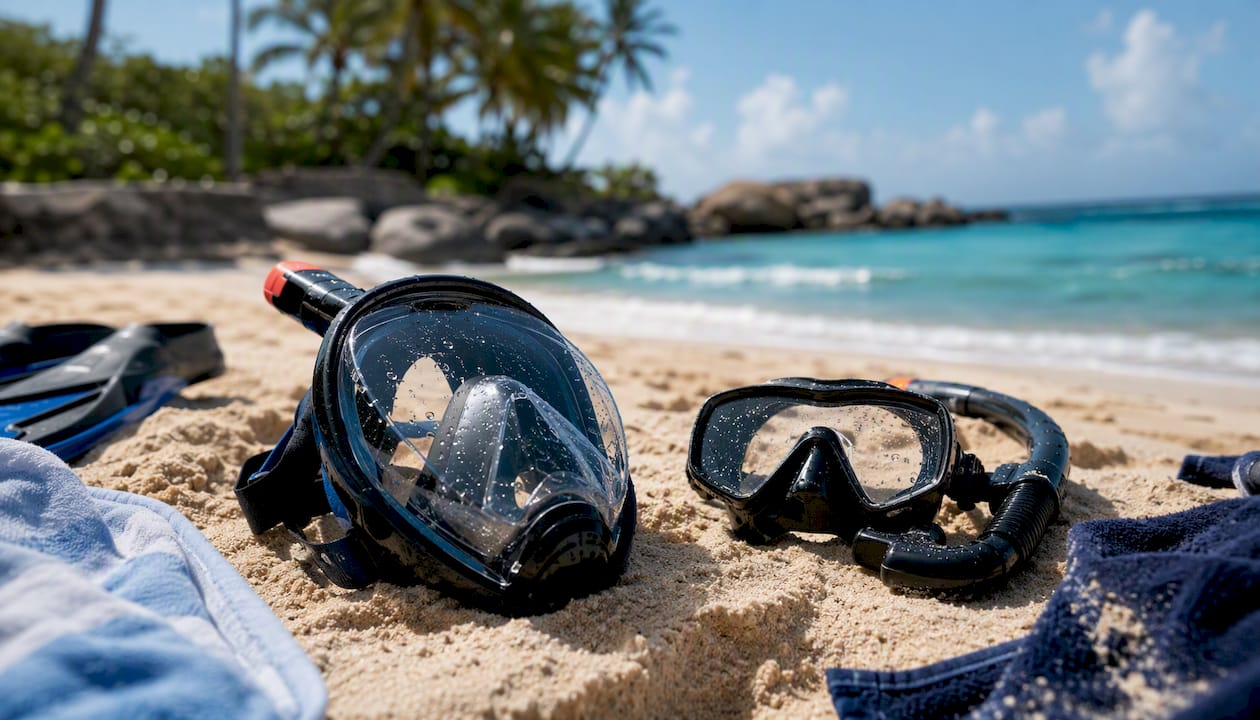

For calm, surface-only sightseeing, a well-fitted full-face snorkel mask can be genuinely more comfortable, especially for beginners who struggle with mouthpieces. For anyone who needs to dive below the surface, equalize ear pressure, or clear water fast in an emergency, a traditional mask and snorkel is the safer choice.
Full-face mask strengths at a glance:
Natural nose-and-mouth breathing, panoramic field of view, no jaw fatigue
Lower learning curve for first-time snorkelers in calm, shallow water
Traditional mask strengths at a glance:
Instant airway control (spit the mouthpiece, breathe)
Compatible with diving, equalization, and fast emergency clearing
The safety gap is real and documented. The U.S. Consumer Product Safety Commission warned consumers in 2026 to immediately stop using OUSPT full-face snorkel masks following reports of labored breathing, loss of consciousness, and a fatality linked to drowning. That action applies to a specific brand, but the underlying physiology, CO2 rebreathing from enlarged dead space, affects the full-face snorkel mask category more broadly.
Table of Contents
How the two designs direct airflow (and why dead space matters)
Side-by-side comparison: full face vs traditional snorkel mask
What studies, DAN, and the CPSC say about full-face snorkel mask safety
How the two designs direct airflow (and why dead space matters)
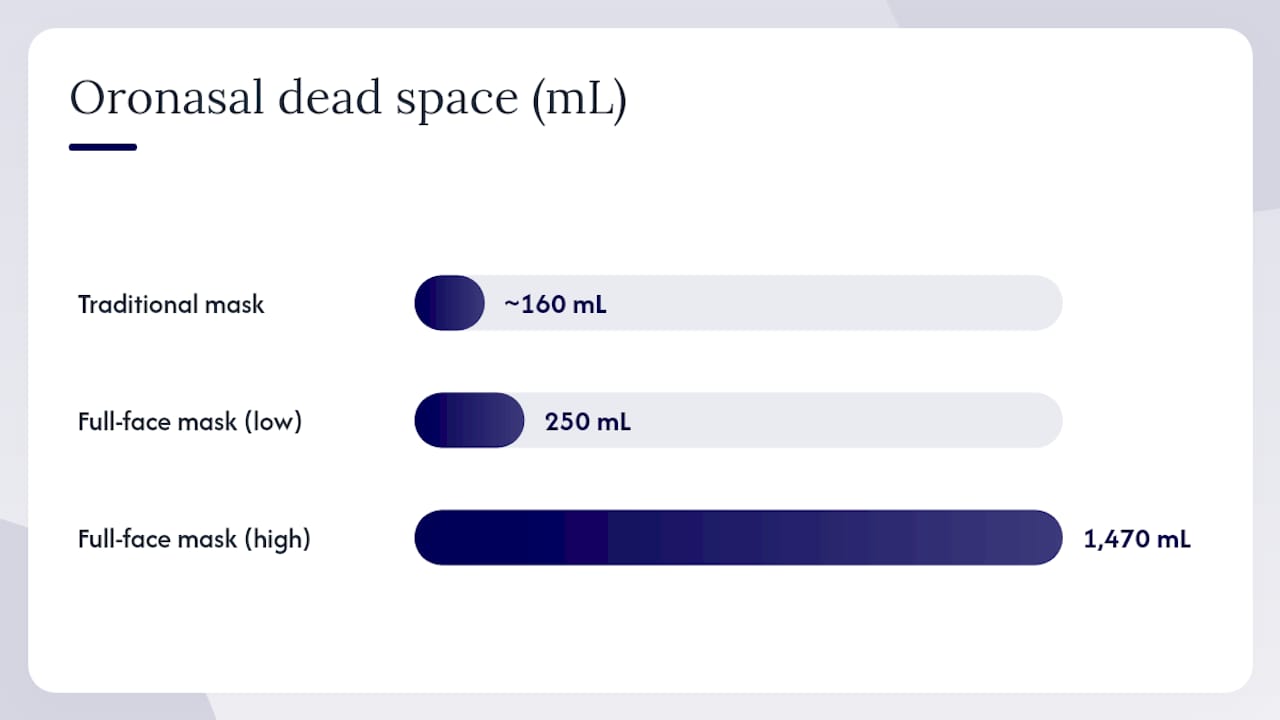
A traditional snorkel setup separates the breathing path from the face seal. Air travels down a single tube roughly 160 mL in dead-space volume, into the mouthpiece, and back out the same tube via a purge valve. The path is short, the volume is small, and exhaled CO2 clears quickly.
A full-face snorkel mask (FFSM) covers the entire face. The snorkel attaches at the top of the mask, and internal channels are supposed to route inhaled air to the nose and mouth while directing exhaled air out through a separate path. When the system works perfectly, it functions like a one-way valve circuit. The problem is dead space.
Research published in PMC documents that FFSM oronasal compartments range from roughly 250 mL to over 1,470 mL depending on model and fit. That is up to nine times the dead space of a standard snorkel tube. When dead space is large, exhaled air rich in CO2 lingers in the mask before the next breath draws it back in. The result is rebreathing: the user inhales a mixture of fresh air and their own exhaled CO2 instead of clean outside air.
One-way valves are the engineering fix. They are supposed to keep inhaled and exhaled airstreams separate. But valve function depends on a perfect facial seal. Facial hair, an imperfect fit, worn silicone skirts, or a valve that has degraded over time can all allow the two streams to mix. Even in well-fitted masks, peer-reviewed testing found measurable CO2 in the eye-pocket compartment, a compartment that should contain only fresh air, confirming that rebreathing can occur even when the mask appears to be working.
Key airflow differences:
Traditional snorkel: ~160 mL dead space, single tube, purge valve at mouthpiece
FFSM: 250–1,470 mL dead space depending on model and fit
FFSM one-way valves fail with poor fit, facial hair, or wear
CO2 risk rises with exertion, larger dead space, and smaller body size
Side-by-side comparison: full face vs traditional snorkel mask
| Dimension | Full-Face Snorkel Mask | Traditional Mask + Snorkel |
|---|---|---|
| Breathing method & ease | Nose and mouth; natural for beginners | Mouth only via mouthpiece; requires practice |
| Safety / CO2 / rebreathing risk | Higher; dead space roughly 250–1,470 mL depending on model and fit; valve failure risk | Lower; ~160 mL dead space; direct airway control |
| Field of view / visibility | Panoramic 180°; no nose/mouth obstruction | Limited to lens area; nose and mouth outside view |
| Fit & leak risk / sizing availability | Whole-face seal; facial hair and size variations cause leaks | Mask skirt seals around eyes/nose; snorkel fits most |
| Fogging behavior | Can fog if seal leaks; internal airflow helps when sealed | Fog common without anti-fog treatment; defogging drops help |
| Ability to dive / equalize / clear water | Cannot equalize; clearing requires full mask removal | Easy equalization; quick purge via mouthpiece |
| Portability & storage | Bulky; harder to pack | Compact; mask and snorkel separate easily |
| Price / availability | $30–$100 typical U.S. retail | $20–$150+ depending on quality; widely available |
| Suitability for children / beginners | Appealing but size-fit critical; CO2 risk higher in small children | Recommended for children with proper sizing and instruction |
Three points from this comparison stand out above the rest.
First, the safety gap on CO2 is not theoretical. It is measured in controlled conditions and documented in incident reports. Second, emergency clearing is categorically different: a traditional snorkel user can drop the mouthpiece and breathe in under a second; removing a full-face mask requires two hands, coordination, and a few seconds that matter a great deal when someone is panicking. Third, fit variability in FFSMs is a bigger problem than most buyers expect. A mask that seals perfectly on a medium adult face may leak continuously on a child or a person with a narrow jaw, converting the oronasal compartment into a rebreathing chamber regardless of valve design.
Many guided tour operators ban full-face masks for exactly these reasons, particularly in choppy water or currents where clearing ability and emergency response time are non-negotiable.
What studies, DAN, and the CPSC say about full-face snorkel mask safety
The evidence base has grown significantly in recent years, and the picture it paints is consistent.
A 2023 peer-reviewed study found that participants using FFSMs exceeded the safety endpoint of 7.0 kPa end-tidal CO2 more often than those using conventional snorkels. Thirteen participants experienced peripheral oxygen saturation below 95% during FFSM trials. CO2 measurements taken inside the eye-pocket compartment confirmed rebreathing was occurring, not just in the oronasal zone but in a part of the mask that should only contain fresh air.
“Full-face snorkel masks increase the incidence of hypoxaemia and hypercapnia during simulated snorkelling compared to conventional snorkels.” — Grundemann et al., Diving and Hyperbaric Medicine, 2023
Divers Alert Network (DAN) has been collecting incident reports and running collaborative testing, including work with Duke University, to evaluate physiological differences across FFSM models. DAN’s approach is model-specific rather than a blanket condemnation, which matters: not every FFSM performs identically, and ongoing testing is designed to identify which designs pose the greatest risk.
The CPSC action is the most direct regulatory signal for U.S. buyers. The agency warned consumers to stop using and dispose of OUSPT full-face snorkel masks after five consumers reported trouble breathing and one lawsuit alleged a drowning fatality. The warning does not cover all FFSMs, but it signals that the agency is monitoring the category and that specific models have already crossed the threshold for regulatory action.
Practical takeaways from the evidence:
CO2 risk increases with physical exertion, larger dead-space volume, and smaller body size
Children and small adults face proportionally higher rebreathing risk
Valve wear and poor fit can turn any FFSM into a rebreathing chamber
Emergency removal of an FFSM is slower and more complex than dropping a mouthpiece; investigative reporting links this delay to real-world near-drownings
Real-world pros and cons you’ll notice in the water
Full-face snorkel mask pros:
Breathe through nose and mouth naturally; no mouthpiece discomfort
Panoramic 180° field of view; see more reef without turning your head
Less jaw fatigue on longer surface floats
Perceived hygiene benefit (no shared mouthpiece in rental scenarios)
Full-face snorkel mask cons:
Large dead space raises CO2 risk, especially during exertion
Clearing water from the mask requires full removal
Cannot equalize ear pressure for any meaningful depth
Bulk and drag make it harder to manage in current or chop
Removal during panic requires coordination; not instinctive
Traditional mask + snorkel pros:
Instant airway control: drop the mouthpiece, breathe
Easy equalization for diving to any depth
Quick water clearing via purge valve
Compact and easy to pack; compatible with dive fins and wetsuits
Versatile across snorkeling, freediving, and scuba
Traditional mask + snorkel cons:
Mouthpiece causes jaw fatigue on long sessions
Narrower field of view; nose and mouth are inside the mask but not in the lens area
Learning to clear a flooded snorkel takes practice
Fogging requires anti-fog treatment (drops or the classic saliva method)
Pro Tip: Before your first water session with any mask, do a dry-fit breathing check on land. Put the mask on, breathe normally for 60 seconds, then hold your breath and press gently on the snorkel top. If you feel air moving through the seal, the fit is wrong. For a traditional mask, press the mask to your face without the strap and inhale through your nose; it should hold without your hands.
Who should choose which mask?
Full-face masks work well for:
Calm, flat-water surface snorkeling with no intention of diving
People who find mouthpieces uncomfortable or have dental issues
Short guided float sessions in protected bays
Travelers who have never snorkeled and want the lowest learning curve
Traditional masks are preferred or required for:
Any snorkeling in waves, current, or open water
Freediving or diving below roughly 1.5–3 meters
Guided tours where operators enforce traditional-gear policies
Snorkelers who want the ability to respond quickly if something feels wrong
Children, who face higher CO2 risk in FFSMs and need properly fitted traditional gear with adult supervision
On the operator policy point: many professional snorkel tour operators prohibit full-face masks outright, particularly in Hawaii and other high-traffic snorkel destinations. If you are booking a guided tour, check the operator’s gear policy before purchasing an FFSM with private dive package operators. Showing up with one you cannot use is a frustrating and expensive surprise.
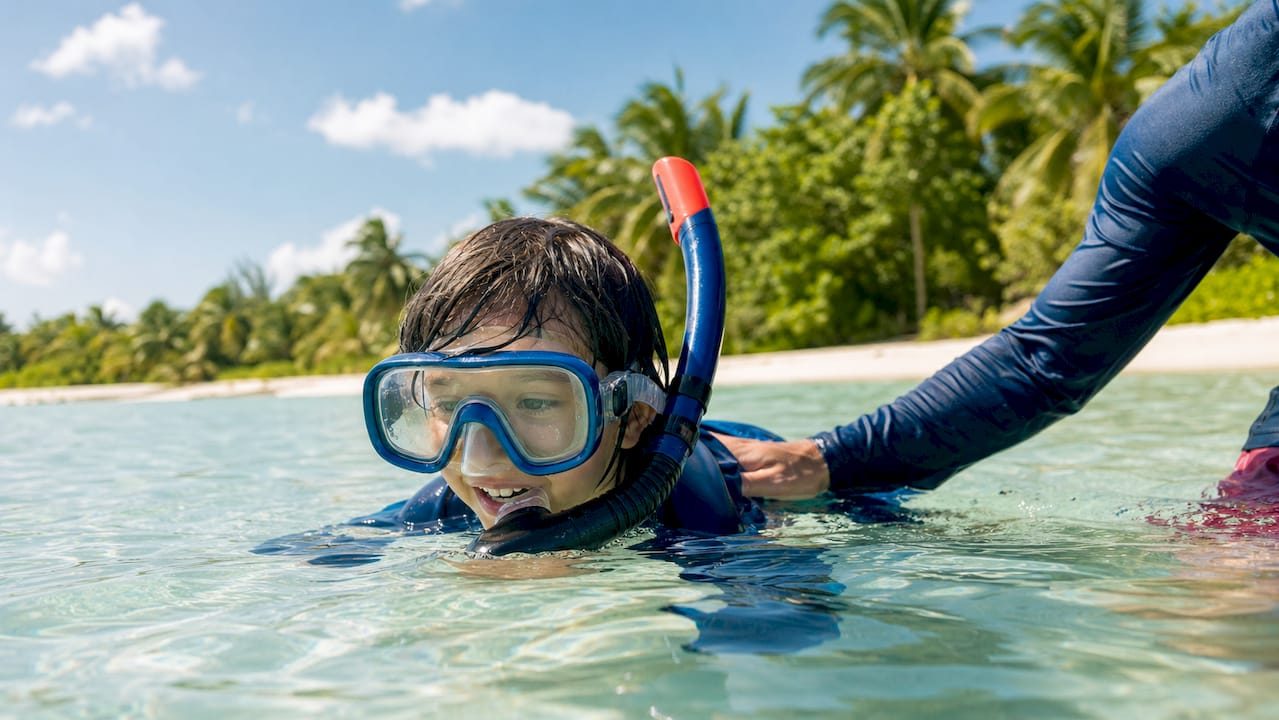
For children specifically, manufacturer age and weight minimums exist for a reason. A child’s smaller face creates a proportionally larger dead-space-to-lung-volume ratio, which amplifies CO2 rebreathing risk. If a child is snorkeling, a properly fitted traditional mask with a dry-top snorkel and close adult supervision is the safer configuration.
Pre-use safety checklist and what to do in an emergency
Before every session, check:
Seal integrity: dry-fit test on land (see Pro Tip above)
Valve condition: no cracks, tears, or debris in one-way valves
Snorkel attachment: secure and not loose at the connection point
Strap condition: no fraying, buckles click and hold
Sizing: matches manufacturer’s face-size chart, not just “adult” or “child”
Hygiene: rinsed with fresh water after last use; no mold or residue in channels
CPSC status: check CPSC.gov for active warnings on your model before first use
Do not enter the water if:
Your model appears on a CPSC warning or recall list
You notice visible valve damage or a cracked skirt
The mask fogs immediately on land (indicates a seal leak)
You feel any dizziness or shortness of breath during a 60-second dry-fit test
Emergency steps for traditional gear: Spit the mouthpiece out immediately. If the snorkel is flooded, tilt your head and blow sharply to purge it. If you feel disoriented, roll onto your back, breathe, and signal for help. The mouthpiece drop is instinctive after minimal practice.
Emergency steps for a full-face mask: Tilt to the surface and use both hands to break the strap seal at the back of your head. Pull the mask forward and off. If you feel lightheaded, do this immediately rather than trying to troubleshoot the mask in the water. Signal for assistance as soon as the mask is off.
If you feel dizzy, short of breath, or confused while wearing a full-face snorkel mask, remove it immediately. Do not try to adjust the fit or clear the snorkel while still wearing it. Get your face out of the water first.
Pro Tip: Practice full-face mask removal on land until you can do it in under five seconds with your eyes closed. The strap release and forward pull should be automatic before you ever enter the water.
How to pick a mask and models available in the U.S.
Buying checklist:
Size: use the manufacturer’s face-measurement guide, not generic S/M/L
Valve design: look for documented one-way valve separation between inhale and exhale channels
Dead-space claims: treat vendor claims skeptically; PMC research shows wide variation
Lens material: tempered glass (traditional masks) vs polycarbonate (most FFSMs); tempered glass is more scratch-resistant
Corrective lenses: traditional masks from brands like Beuchat accept prescription lens inserts; most FFSMs do not
Warranty and replacement parts: valves and skirts wear out; check that spares are available
Retail availability: buy from a U.S. retailer with a return policy so you can test fit
| Model | Type | Dead Space / Airflow | Dive / Equalize | Corrective Lens Option | U.S. Price Range |
|---|---|---|---|---|---|
| Subea / Tribord Easybreath (Decathlon) | Full-face | Separated channels; variable by fit | No | No | $30 |
| Seaview 180 / Wildhorn Seaview 180° V3 | Full-face | Vendor-claimed improved airflow | No | No | $40 |
| SEAC Full Face Snorkel Mask | Full-face | Manufacturer valve layout; varies by fit | No | No | $40 |
| Ocean Reef Full Face Snorkel Mask | Full-face | Dive-heritage valve engineering | No | Some models | $80 |
| Beuchat (traditional mask + snorkel) | Traditional | ~160 mL dead space; direct airway | Yes | Yes (inserts) | $50 |
The Subea / Tribord Easybreath, originally marketed by Tribord and now sold under the Subea name at Decathlon, is the product that popularized the consumer FFSM category. It is widely available and affordable, but it carries the same dead-space and valve-fit variables as other FFSMs. The Seaview 180 and its Wildhorn-branded variant (Seaview 180° V3) market improved airflow engineering; the vendor’s own guidance acknowledges that experienced snorkelers often still prefer traditional gear for emergency control. Ocean Reef brings longer dive-industry heritage to its full-face designs, with more attention to skirt engineering, and some models accept corrective lens inserts.
Beuchat, as a traditional mask and snorkel example, represents what experienced snorkelers and freedivers actually use: tempered glass, low dead space, and compatibility with prescription inserts. For anyone who wears glasses, a traditional mask with Beuchat-style prescription inserts is the only practical option in most cases.
U.S. retail prices for FFSMs typically run $30–$100. Quality traditional setups (mask plus snorkel) range from $20 for basic recreational gear to $150 or more for dive-grade equipment. Budget for replacement valves and a silicone skirt care kit if you plan to use any mask regularly.
Environmental impact: materials, longevity, and disposal
Most snorkel masks, both full-face and traditional, are built from a combination of silicone (skirts and straps), polycarbonate or tempered glass (lenses), and ABS or nylon plastic (frames and buckles). None of these materials are easily recyclable through standard municipal programs.
Full-face masks use more material overall. The larger silicone skirt, internal valve components, and polycarbonate face panel add up to a heavier environmental footprint per unit than a traditional mask and snorkel. They also tend to have shorter usable lifespans in practice: valve wear, skirt degradation, and the difficulty of sourcing replacement parts mean many FFSMs end up in landfill after one or two seasons.
Traditional masks, particularly those from established dive brands like Beuchat, are built for longevity. Tempered glass lenses do not scratch as easily as polycarbonate, and replacement skirts and straps are widely available. A well-maintained traditional mask can last a decade or more, which is a meaningful difference in material consumption over time.
For disposal, check whether the manufacturer offers a take-back or recycling program before discarding any mask. Some dive retailers accept used gear for donation or refurbishment. Silicone components cannot go into standard plastic recycling streams; they require specialist recycling or must be landfilled. If a mask is on a CPSC warning list, follow the agency’s specific disposal guidance rather than donating it.
Key Takeaways
Traditional masks carry lower CO2 rebreathing risk, allow equalization and diving, and give faster emergency airway control than full-face snorkel masks in every tested condition.
| Point | Details |
|---|---|
| Safety comes first | FFSMs carry higher CO2 rebreathing risk; dead space ranges from roughly 250 mL to over 1,470 mL, depending on model and fit, versus ~160 mL for a standard snorkel tube. |
| Best for beginners | Full-face masks lower the learning curve in calm, shallow water; traditional masks are safer for children and any active snorkeling. |
| Traditional gear is non-negotiable | For diving, equalization, guided tours in current, or any situation requiring fast emergency clearing, use a traditional mask and snorkel. |
| Check before you buy | Verify your model against CPSC warnings and DAN updates; operator policies at many U.S. tour sites prohibit full-face masks. |
| Virgin Charter Yachts recommends | On Caribbean charters, Virgin Charter Yachts prioritizes traditional snorkel gear for guests in open-water conditions, consistent with operator safety standards. |
A charter operator’s perspective on snorkel gear
The debate over full-face snorkel masks versus traditional gear looks different when you are responsible for guests in open water rather than shopping for yourself. At Virgin Charter Yachts, which has operated luxury bareboat and crewed charters in the British Virgin Islands and Caribbean since 1996, the default position on snorkeling equipment reflects 30 years of on-water experience: traditional masks and snorkels for any session outside a protected, flat-water anchorage.
The reason is not that full-face masks are universally dangerous. It is that the conditions where they perform adequately, calm surface water with no current and no intention of diving, are not the conditions guests typically encounter on a Caribbean charter. Reef snorkeling in the BVI involves surge, variable depth, and the occasional need to duck under a ledge. A guest who cannot equalize or clear their airway quickly is a guest who needs rescuing. That calculus does not change because the mask looked appealing in a retail display.
The CPSC warning on OUSPT masks and the DAN testing program are worth following as the research matures. For now, the conservative position is the right one for anyone snorkeling in anything other than a swimming pool or a glassy, supervised lagoon.
Virgin Charter Yachts and snorkeling on a Caribbean charter
Snorkeling gear is one decision among many when you are planning a week on the water in the British Virgin Islands. The bigger question is whether you want to be managing logistics yourself or whether you want a charter operator with three decades of local knowledge handling the details, including which gear is appropriate for which site.
Virgin Charter Yachts offers luxury bareboat and crewed yacht charters in the BVI and Caribbean, with a fleet of modern power catamarans from Fountaine Pajot, Leopard, Aquila, Lagoon, and others. Crewed charters include on-board guidance from crew who know the local reefs, the currents, and which anchorages are safe for snorkeling on any given day. That local knowledge is what turns a good snorkel session into a great one, and it is what 30 years of operating from Tortola actually looks like in practice. Plan your BVI charter and ask about snorkeling itineraries when you reach out.
Useful sources and further reading
The sources below are the primary references for the safety claims and product guidance in this article. Check the CPSC page directly before using any full-face snorkel mask, as warnings and recalls are updated as new incidents are reported.
Before using any full-face snorkel mask, search your model name at CPSC.gov to confirm it is not subject to an active warning or recall. This takes under two minutes and could prevent a serious incident.
CPSC Warns Consumers to Stop Using OUSPT Full-Face Snorkel Masks Immediately Due to Risk of Serious Injury and Death from Drowning Hazard | CPSC.gov
Full-face snorkel masks increase the incidence of hypoxaemia and hypercapnia during simulated snorkelling compared to conventional snorkels
Full-face snorkel mask safety study | Divers Alert Network (DAN)
Full-Face Snorkel Masks: Here’s Why They Could Be Dangerous — Business Insider
How do I choose between a full-face snorkel mask and a traditional one? | Seaview180 blog
Full-Face Snorkel Mask vs Traditional for Oahu Snorkeling | Living Ocean Tours
Full Face Snorkel Mask vs Traditional – OpenWaterHQ
Did You Know?
The BVI are only accessible by boat. Check out our charter yachts that can get you there. View Our Fleet