
For most U.S. travelers heading to the Caribbean, the strongest options are Travelex Insurance Services for family trip protection, World Nomads Travel Insurance for excursions and adventure sports, IMG Travel Insurance for medical-evacuation priorities, and Squaremouth or InsureMyTrip for comparing several plans at once. Buy within days of booking, confirm the evacuation and adventure-activity limits in writing, and remember that Medicare and most private U.S. health plans do not pay for care overseas.
TL;DR:
- Most trip costs for Caribbean travel, especially during hurricane season, should be insured within days of booking to ensure coverage before storms develop.
- Medical evacuation limits are critical, as smaller Caribbean islands often lack extensive healthcare facilities, making direct-pay arrangements valuable.
- Adventure sports like scuba diving and jet-skiing are often excluded unless explicitly added, requiring confirmation in writing before participating.
- Cancel For Any Reason coverage increases premiums by about 50% and reimburses 50% to 75% of nonrefundable costs, especially useful for high-value or nonrefundable trips.
- Marketplace comparison tools like Squaremouth and InsureMyTrip simplify finding plans with suitable medical and evacuation limits, but reading the fine print remains essential.
Table of Contents
- The top travel insurance providers for Caribbean trips
- How the top plans compare on coverage and price
- Your pre-purchase checklist for Caribbean coverage
- What to double-check in the policy wording before you fly
- What a Caribbean policy actually costs and when CFAR earns its price
- Marketplaces, agents, or buying direct: choosing your path
- What yacht charters mean for your insurance choices
- What I’d prioritize if I were booking this trip
- How Virgin Charter Yachts fits into your insurance planning
- Where this guide’s information comes from
- Sources
- FAQ
The top travel insurance providers for Caribbean trips
Picking a policy for a Caribbean vacation comes down to matching the plan to your itinerary: island-hopping, a cruise, a dive trip, or a private charter all carry different risks. The providers below cover the ground U.S. travelers search for most, and each fits a different kind of trip.
Travelex Insurance Services is a familiar name for family vacations, with trip-cancellation benefits and plan tiers built around protecting a prepaid, multi-person trip. It suits travelers who want one comprehensive policy rather than piecing together add-ons.
World Nomads Travel Insurance leans toward travelers doing something active once they land: diving off Bonaire, zip-lining in St. Lucia, or sailing between islands. Its plans are built with adventure-sports coverage in mind rather than bolted on as an afterthought, and both single-trip and multi-trip options are available for travelers who move around during their stay.
IMG Travel Insurance centers its pitch on medical coverage and evacuation, which matters more in the Caribbean than in destinations with dense hospital networks. Some IMG plans include direct-pay arrangements with providers, which can spare a traveler from paying out of pocket and waiting on reimbursement during a crisis.
Pathway Essential, from Trawick International, is the budget-minded entry point: core trip and medical protections without the frills, for travelers who want a safety net but not a long list of add-ons.
ExactCare Insurance, underwritten through Berkshire Hathaway Travel Protection, is built around a faster claims experience with digital tools for filing and tracking a claim. Travelers who dislike paperwork tend to gravitate here.
Safe Travels Protect, also from Trawick International, is positioned as a balanced option for U.S. residents, pairing standard trip protections with broad geographic coverage across the islands.
BCBS Single Trip Platinum Insurance carries the familiarity of Blue Cross Blue Shield branding, which can matter to travelers who already use BCBS at home and want some continuity in how claims and networks are described, even though overseas coverage runs through the travel policy, not domestic BCBS benefits.
Protect Insurance shows up in most comparison lists as a lower-cost option focused on basic trip-cancellation coverage, a reasonable fit for short, inexpensive trips where extensive medical and evacuation limits matter less.
Pathway Premium sits above Pathway Essential in the Trawick International lineup, adding higher coverage limits for travelers who want more cushion than the entry-level plan but still prefer a single straightforward policy.
Two names on this list are not insurers at all but marketplaces. Squaremouth aggregates plans from dozens of providers and lets you filter by medical limit, evacuation cap, CFAR availability, and price, backed by a Zero Complaint Guarantee that removes insurers with unresolved complaint patterns from its results. InsureMyTrip does something similar but adds licensed-agent support and Anytime Advocates assistance, a claims-advocacy service that steps in if a claim gets stuck. Both are worth running a search through before buying direct, since they show the same underlying policies side by side.
If your Caribbean trip is a private yacht charter rather than a resort stay or cruise, the calculus shifts; this clear guide for buyers explains the yacht insurance basics you should understand before you go. Charter agreements often carry their own liability and insurance requirements separate from a standard travel policy, and the gap between a bareboat and a crewed charter changes what you need to document. Charter Travel Insurance: What Yacht Charterers Need to Know walks through what a charter operator typically expects to see before handing over the keys or the crew.
A short list of what tends to separate these plans in practice:
- Family-oriented plans like Travelex emphasize trip cancellation and group coverage over adventure add-ons.
- Adventure-focused plans like World Nomads build sports coverage into the base policy rather than charging extra for every activity.
- Medical-first plans like IMG prioritize evacuation caps and direct-pay hospital networks over trip-cost reimbursement.
- Budget plans like Pathway Essential and Protect Insurance trade lower limits for a lower price, which works for short, low-cost trips.
- Marketplaces like Squaremouth and InsureMyTrip don’t underwrite anything themselves, they just make comparing the above faster.
How the top plans compare on coverage and price
The dimensions that matter most for a Caribbean trip are medical and evacuation limits, whether Cancel For Any Reason is available, and how the plan treats adventure activities and cruise segments. Here’s how the featured plans stack up.
Cancel For Any Reason typically adds about 50% to the cost of the base policy and reimburses 50% to 75% of nonrefundable trip costs, according to Progressive’s CFAR explainer. That premium buys flexibility that standard cancellation reasons don’t cover, which matters most when a trip is expensive and nonrefundable.
Travel insurance generally runs a low single-digit to around 10% of total trip cost, per NAIC, with age, trip length, destination, and the coverage limits you pick all moving that percentage up or down.
A higher medical limit buys more room before you’re responsible for a hospital bill yourself, since Caribbean hospitals that treat foreign travelers often require proof of ability to pay before admitting or treating beyond emergency stabilization. The evacuation limit matters even more on multi-island itineraries, where moving a patient from a smaller island to a facility in San Juan or Miami can run into the tens of thousands of dollars before insurance is even involved.
Your pre-purchase checklist for Caribbean coverage
Buying a policy that actually fits your trip takes a few minutes of preparation before you start comparing quotes. Work through this list in order:
- Total your trip cost, including every prepaid, nonrefundable expense: flights, charter deposits, excursions, and lodging.
- List every traveler’s age, since age brackets affect both eligibility and price on most plans.
- Map the full itinerary, island by island or port by port, so you can confirm the policy’s geographic coverage matches.
- Note every planned activity, from snorkeling to scuba to jet-skiing, since these are the activities insurers most often exclude by default.
- Decide whether the trip is land-based, a cruise, or a private charter, since this changes which add-ons you need.
- Disclose any pre-existing medical conditions honestly, since most plans require this to qualify for a pre-existing condition waiver.
- Request quotes through a marketplace or directly from two or three insurers using the details above.
- Read the exclusions section specifically for adventure sports and confirm what needs to be added.
- Confirm the medical evacuation procedure: who arranges transport, which hospitals are in-network, and whether direct payment is offered.
- Check the claim-filing timeline and required documentation before you buy, not after something goes wrong.
- Buy the policy and keep the confirmation, policy number, and 24/7 assistance line accessible on your phone and in print.
Before you commit, ask the insurer or agent a short set of direct questions: does the plan exclude adventure activities unless listed by name, what’s the evacuation process if a hospital transfer is needed between islands, does the plan pay hospitals directly or require you to pay first, and how long do claims typically take to process. NAIC consumer guidance notes that many policies exclude adventure activities by default, so getting a clear answer here before you fly matters more than almost anything else on this list.
Most policies include a free-look period, typically 10 to 15 days, during which you can cancel for a full refund if your trip hasn’t started and you haven’t filed a claim, according to InsureMyTrip’s comparison of marketplace options. If you want Cancel For Any Reason, that add-on usually has to be purchased within a tight window after your initial trip deposit, often 14 to 21 days, so this is not a decision to leave for later.
Pro Tip: Buy your policy the same week you book your trip. Waiting until closer to departure, especially during hurricane season, can mean a named storm is already on the map and excluded from coverage by the time you purchase.
What to double-check in the policy wording before you fly
The fine print is where Caribbean trips most often run into trouble, usually around four areas: medical coverage, adventure activities, cruise-specific benefits, and geographic validity.
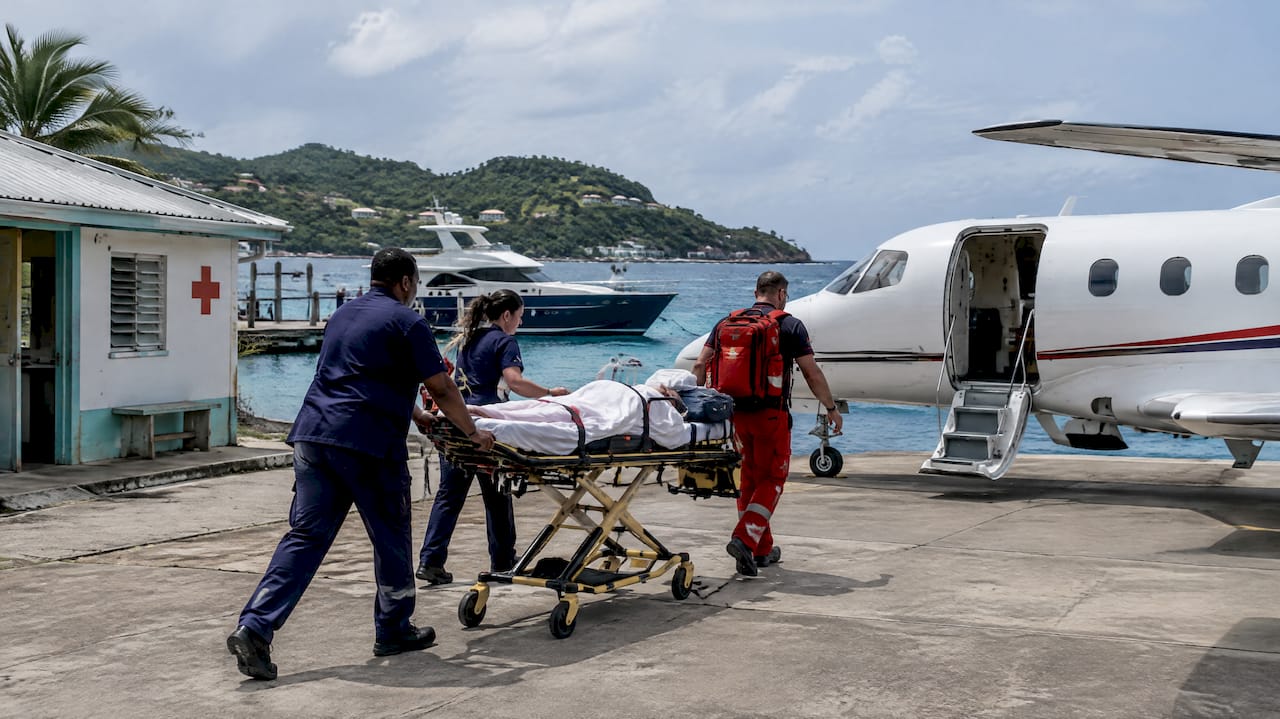
Travel medical and evacuation coverage deserve the closest read, because U.S. State Department guidance confirms that Medicare and most private U.S. health plans usually do not cover medical costs abroad. That guidance also recommends medical evacuation coverage specifically for destinations with limited local care, which describes many smaller Caribbean islands where a serious injury or illness means transport to a larger facility.
Adventure activity exclusions catch travelers off guard more than almost anything else. Snorkeling, scuba diving, jet-skiing, and similar activities are frequently excluded unless the policy names them explicitly, so a plan that looks comprehensive on the surface may leave you unprotected the moment you put on a mask and fins. If your itinerary includes any of these, confirm in writing that the activity is covered or add the rider before you go.
Cruise-specific benefits are worth checking line by line if any part of your trip includes a cruise segment:
- Missed-connection coverage that reimburses you if a flight delay causes you to miss your ship’s departure.
- Itinerary-change reimbursement if the cruise line alters your ports of call.
- Cabin confinement or quarantine benefits if you’re unable to disembark due to illness.
- Pre-existing condition waivers, which often require purchase within a short window of your initial deposit.
Finally, confirm the policy’s geographic validity against your actual itinerary. Practitioners note that insurers sometimes treat multi-island trips the way they treat multi-country trips, requiring each island or territory to be named for a claim to be valid. If you’re visiting three or four islands on one trip, check that the policy’s coverage list includes every stop, not just your port of entry.
Adventure activities common in the Caribbean, like scuba diving past certain depths or jet-skiing, are frequently excluded from standard policies unless added explicitly, per NAIC consumer guidance. That single fact causes more denied claims among Caribbean travelers than almost any other policy detail.
What a Caribbean policy actually costs and when CFAR earns its price
Expect to pay roughly 4% to 10% of your total trip cost for a standard policy, according to NAIC. A family spending $6,000 on a week-long Caribbean vacation might pay somewhere in the $240 to $600 range, with the final number shaped by:
- Traveler age, since older travelers generally pay more for the same coverage.
- Trip length, with longer stays costing more to insure.
- Total trip cost, since cancellation and interruption benefits scale with what you’ve prepaid.
- Coverage limits chosen, particularly medical and evacuation caps.
- Add-ons selected, including adventure sports coverage and CFAR.
Cancel For Any Reason is the add-on most worth understanding on its own terms. CFAR typically adds about 50% to your base policy premium and reimburses 50% to 75% of your nonrefundable trip costs, per Progressive, regardless of the reason you cancel, as long as you cancel within the policy’s required window before departure.
CFAR tends to make the most sense for high-value, nonrefundable trips booked during hurricane season, which runs from June through November across most of the Caribbean. The timing caveat matters here: once a storm is named, any policy purchased afterward will typically exclude that specific storm as a covered cancellation reason, according to AAA’s hurricane season guidance. Buying your policy, and any CFAR add-on, soon after booking and before a storm forms is the only way to preserve that protection.
Marketplaces, agents, or buying direct: choosing your path
Squaremouth and InsureMyTrip solve the same basic problem, comparing dozens of plans at once, but they lean in different directions. Squaremouth’s strength is its filtering: you can sort by medical limit, evacuation cap, CFAR availability, and price, backed by a Zero Complaint Guarantee that screens out insurers with unresolved complaint histories. InsureMyTrip adds licensed-agent support on top of its comparison tools, plus Anytime Advocates, a service that intervenes directly if a claim stalls, which can matter more for complex trips or anyone managing a pre-existing condition that needs careful plan selection.
If your trip is straightforward, a marketplace alone will likely get you to the right plan faster than calling insurers one by one. If your situation is more complicated, multiple pre-existing conditions, a multi-leg itinerary spanning several islands, or a high-value charter booking, the agent support that InsureMyTrip offers is worth the extra step.
Whichever path you take, follow the same sequence:
- Gather your trip cost, traveler ages, and itinerary details before you start requesting quotes.
- Run your details through a marketplace filter for evacuation caps and adventure-activity coverage first, since these matter most for Caribbean trips.
- Compare two or three plans side by side on medical limit, evacuation limit, and CFAR availability.
- Read the exclusions section of your top choice before you buy.
- Purchase within the free-look window so you can still cancel for a full refund if something looks wrong once you review the full policy document.
- Save your policy number, insurer’s 24/7 assistance line, and claim-filing instructions somewhere accessible on your phone before you depart.
That 24/7 line matters more than it sounds like it should. If you need emergency care or evacuation while on a smaller island, the insurer’s assistance line is usually the fastest way to get connected to an approved facility and start the direct-pay process rather than paying out of pocket and filing for reimbursement later.
What yacht charters mean for your insurance choices
Chartering a private yacht in the Caribbean adds a layer that a standard resort stay or cruise doesn’t carry. Crewed and bareboat charters come with different liability structures, and most charter agreements spell out specific insurance requirements before you’re handed the boat or introduced to the crew.
- Bareboat charters typically require proof of coverage for vessel liability and operator competency, since you’re responsible for the boat without a professional crew aboard.
- Crewed charters shift much of the operational liability to the crew and operator, but travel insurance still needs to cover you personally for medical and evacuation needs.
- Equipment and excursion liabilities, like water toys, dinghies, or shore excursions arranged through the charter, often fall outside a standard travel policy and need separate confirmation.
- Inter-island medical evacuation deserves special weight when selecting a plan, since a charter itinerary often means being farther from a major hospital than a land-based resort stay.
- Missed-connection coverage matters for multi-island charter itineraries, where a delayed flight to the embarkation port can throw off the whole week.
Charterers researching what their agreement actually requires can find more detail in Yacht Charter Insurance: What Every Charterer Must Know, which breaks down the language that typically appears in a charter agreement and what it means for the coverage you need to bring to the table. For a broader look at how crewed charters are structured and planned, the Crewed Charter Guide covers the planning steps that intersect with insurance requirements.
What I’d prioritize if I were booking this trip
If you take one thing from this guide, make it this: evacuation coverage and activity add-ons matter more than almost any other line in the policy, and both are easy to overlook when you’re comparing prices instead of protections. Buy the policy within days of booking, not weeks later, and keep a copy of the confirmation somewhere you can find it from your phone.
The most common mistake I see is travelers assuming a comprehensive-sounding plan automatically covers scuba diving or jet-skiing. It usually doesn’t. A five-minute call to confirm adventure coverage before you fly is worth more than any amount of comparison shopping afterward.
— alexia
How Virgin Charter Yachts fits into your insurance planning
If your Caribbean trip centers on a private yacht charter rather than a resort or cruise, the insurance conversation looks a little different, and that’s where our experience comes in. A charter operator has experience with bareboat and crewed charters out of Tortola, BVI, and part of charter planning includes helping clients understand what their travel policy needs to cover before they step aboard.

We’re not an insurer, and we don’t sell policies. What we offer is the on-the-ground perspective of a family-owned charter operator that has seen which coverage gaps actually cause problems for charter clients, from inter-island evacuation caps to equipment liability language that a standard travel policy might not touch.
- Clients are often guided through what their charter agreement requires before finalizing a policy.
- Charterers are pointed toward the coverage details that matter most for bareboat versus crewed trips.
- Charter itineraries involving power catamarans across the British Virgin Islands and wider Caribbean are matched to the kind of evacuation and liability coverage they actually need.
If you’re planning a charter and want help thinking through both the boat and the paperwork around it, our bareboat charter pricing and crewed charter pricing pages are a good starting point, and our planning team can walk you through the rest from there.
Where this guide’s information comes from
This article draws on government and industry sources rather than marketing claims. The NAIC’s travel insurance overview and its Travel Insurance Model Act cover typical costs, disclosures, and consumer protections. The U.S. State Department provides guidance on health coverage abroad, and Progressive’s CFAR explainer supplies the cost and reimbursement figures cited above.
This article is general information, not a substitute for advice from a qualified financial advisor. Consult a qualified financial professional about your own circumstances before acting on anything here.
Sources
- Cancel for Any Reason travel insurance — Progressive
- Insurance topics: Travel insurance — NAIC
- Your health abroad — U.S. Department of State
FAQ
What travel insurance is recommended for travel to the Caribbean?
For most Caribbean trips, a plan with strong medical evacuation coverage and adventure-activity add-ons matters most, which is why Travelex Insurance Services, World Nomads Travel Insurance, and IMG Travel Insurance appear repeatedly in comparisons. Running your trip details through Squaremouth or InsureMyTrip lets you compare these side by side against your specific itinerary and budget.
What is the most highly rated travel insurance?
There’s no single plan that ranks highest across every category, since the best choice depends on your trip type: family travelers often lean toward Travelex, adventure travelers toward World Nomads, and medical-priority travelers toward IMG. Marketplaces like Squaremouth and InsureMyTrip let you compare current ratings and coverage details for your specific trip rather than relying on a generic ranking.
What travel insurance is best for US citizens visiting the USA?
Domestic trips within the United States generally don’t require international travel medical insurance, since Medicare and most private U.S. health plans already apply at home. Travelers still sometimes buy trip-cancellation-only coverage for domestic trips to protect nonrefundable costs like flights and hotels, which several of the insurers above also offer as standalone options.
Does AAA or AARP offer travel insurance?
AAA has published guidance recommending travel insurance during hurricane season, noting that policies exclude named storms once they’ve formed, which makes early purchase important for Caribbean trips. Specific plan availability and pricing through AAA or AARP membership programs should be confirmed directly with those organizations, since this guide focuses on the standalone insurers and marketplaces listed above.
Recommended
- Charter Travel Insurance: What Yacht Charterers Need to Know
- Travel Tips and Safety
- How to Pack for Your BVI Yacht Charter Vacation
Did You Know?
The BVI are only accessible by boat. Check out our charter yachts that can get you there. View Our Fleet