
Pick a dry snorkel if you need maximum protection against waves, chop, or nervous first-timers who panic when water hits the tube. Pick a semi-dry if you’d rather breathe easier, submerge repeatedly, and skip the extra maintenance a float valve demands. That’s the whole decision in one sentence, and industry testing backs it up: beginners consistently do better with a dry top, while experienced snorkelers and working divers tend to migrate toward semi-dry or classic designs once they start duck-diving on a regular basis.
Here’s the quick version before we get into the mechanics:
- Dry snorkel: Best for beginners, kids, choppy surface conditions, and anyone who wants to float face-down without constantly clearing water. Trade-off: slightly harder to breathe through, more parts to rinse.
- Semi-dry snorkel: Best for repeated submersion, reef diving support, and snorkelers who want a lighter, lower-profile tube. Trade-off: some spray does get through in rough water.
- Classic (wet) snorkel: Still the choice for serious freedivers and spearfishers who need zero drag and instant clearing on ascent.
At Virgin Charter Yachts, we assist guests across a wide range of comfort levels on charters through the British Virgin Islands and Caribbean, so this isn’t an academic question for us. It’s one we answer on the dock almost every week.
Key Takeaways
Choosing between a dry and semi-dry snorkel comes down to matching valve design to how often you plan to submerge and how much breathing resistance you’re willing to accept.
| Point | Details |
|---|---|
| Dry snorkels suit beginners | The float valve blocks nearly all water, which builds confidence for kids and first-timers in choppy conditions. |
| Semi-dry suits repeat divers | Splash guards and purge valves breathe easier and hold up better under frequent submersion. |
| Grit is the hidden failure point | Sand in a dry-top valve seat causes sticking, the top complaint among repeat-dive users. |
| Freedivers avoid dry tops | Trapped air creates buoyancy that tugs on the mask during descents. |
| Try before you buy | Fit and breath comfort vary by person, so test the mouthpiece and purge valve in person when possible. |
Table of Contents
- Dry Snorkel vs Semi Dry: How the Mechanisms Actually Differ
- Dry vs Semi Dry Comparison at a Glance
- Who Should Choose Dry, Semi-Dry, or Classic?
- What Happens When You Go Underwater
- Keeping Your Snorkel Working: Maintenance and Travel
- Buying Guide: Models Worth Researching
- What Testing and Real Users Actually Report
- Why We Pay Attention to This on Charter
- Where to Read More
- Frequently Asked Questions
- Sources
Dry Snorkel vs Semi Dry: How the Mechanisms Actually Differ
The difference between these two designs comes down to one small part at the top of the tube: the valve.
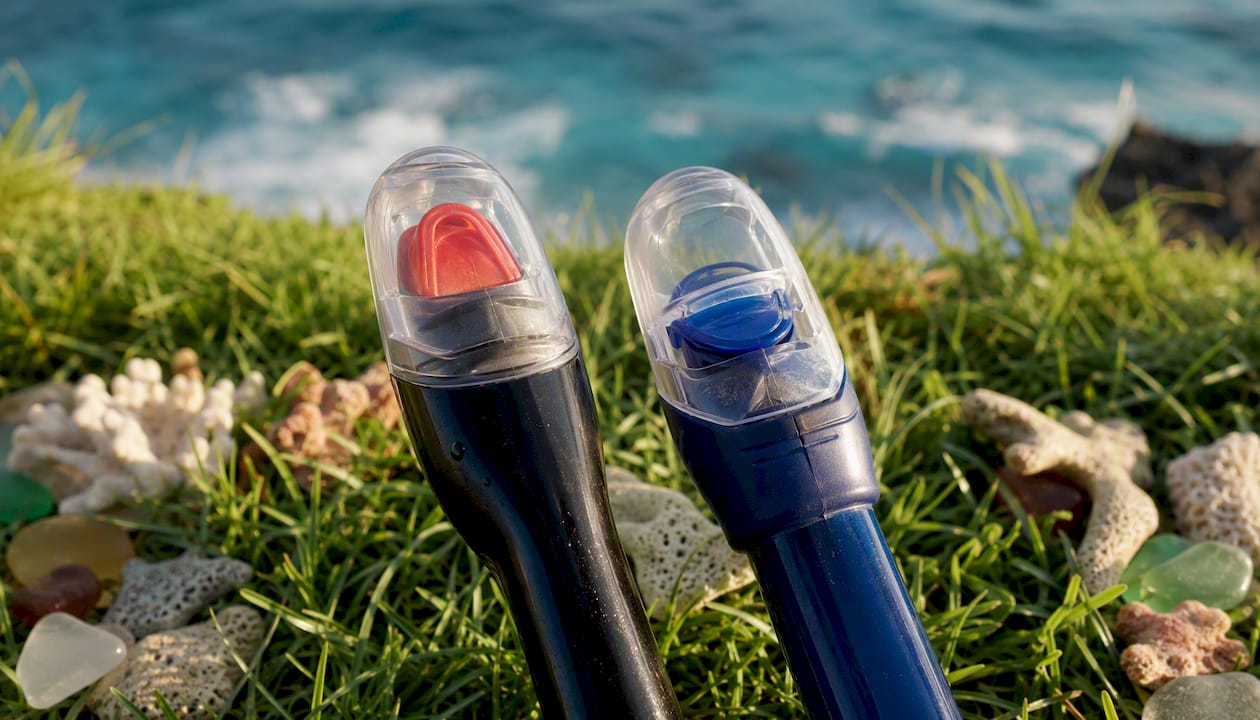
A dry snorkel uses a float valve mechanism sitting at the top of the tube. When the snorkel goes underwater, a small ball or diaphragm rises and seals the opening completely, blocking water from entering. As soon as you resurface, the float drops and air flows freely again. It’s a simple piece of engineering, but it’s also the reason dry snorkels have a reputation for near-total water exclusion. A well-built valve, according to buying guides that test dry-top reliability, seals fast and reopens without hesitation, though cheaper versions can hang or flutter under real wave action instead of sealing cleanly.
A semi-dry snorkel skips the float valve entirely and instead uses a splash guard, a curved hood or set of baffles positioned over the tube opening. It deflects surface spray and light chop but doesn’t seal against full submersion. Water that does get in collects at a purge valve near the mouthpiece, a one-way rubber flap you clear with a short, sharp exhale.
That structural difference explains the airflow trade-off you’ll read about constantly in reviews. A float valve, even a well-made one, sits directly in the path of your breath and adds a small amount of resistance every time you inhale. A splash guard adds nothing to the airflow path, which is why semi-dry designs generally breathe easier over long sessions. Picture the tube in cross-section: air travels straight up through a semi-dry, curving only at the splash guard, while a dry snorkel forces air past the float valve mechanism itself, a narrower, more obstructed path.
- Dry top: float valve seals on submersion, reopens on surfacing, low-profile designs reduce added bulk.
- Semi-dry: splash guard deflects spray, purge valve clears pooled water at the base of the mouthpiece.
- Airflow: unobstructed in semi-dry models, marginally restricted in dry models due to the valve housing.
Dry vs Semi Dry Comparison at a Glance
Here’s how the two designs stack up across the factors that actually matter when you’re standing in a dive shop trying to decide.
| Dimension | Dry Snorkel | Semi-Dry Snorkel |
|---|---|---|
| Water protection | Near-complete exclusion via float valve | Good against spray; some water enters in heavy chop |
| Breathing ease | Slightly restricted by valve housing | Freer airflow, less resistance over long sessions |
| Best for | Beginners, kids, choppy surface swims | Reef divers, repeat submersion, experienced snorkelers |
| Maintenance | More moving parts, needs regular rinsing | Simpler design, fewer failure points |
| Typical price | Mid to upper range | Mid range, often better value |
| Repeated submersion | Valve can stick or seal awkwardly with frequent dives | Handles repeated dunking without valve fatigue |
| Travel convenience | Bulkier housing on some models | Slimmer profile, easier to pack |
If you’re outfitting a family for a week of shallow reef snorkeling from a boat, the dry snorkel is the safer bet for anyone under 12 or new to the water. If your crew plans to duck-dive down to look at coral heads or chase a turtle, semi-dry is going to feel less like fighting your own gear. Models worth researching by name, which we cover in detail further down, include the TUSA Hyperdry Elite II, the Cressi Supernova and Cressi F1, the Scubapro Escape, the U.S. Divers Cozumel, and various Aqualung semi-dry lines.
Who Should Choose Dry, Semi-Dry, or Classic?
Matching gear to your actual snorkeling habits matters more than brand loyalty. Run through this short checklist before you buy.
- Will you be in chop or open ocean? If yes, lean dry. A dry top handles unpredictable wave slap far better than a splash guard alone.
- Do you plan to duck-dive repeatedly? If yes, lean semi-dry or classic. Float valves aren’t built for constant submersion cycles.
- Are you new to snorkeling or bringing kids? Dry snorkels reduce the panic factor that comes from an unexpected mouthful of seawater.
- Are you supporting scuba dives or working near the surface for extended periods? Semi-dry keeps breathing comfortable across a long session without the added valve drag.
- Are you a freediver or spearfisher? Go classic. Low-drag tubes remain the standard for anyone doing serious duck-diving, since a dry top’s trapped air actively works against you underwater.
A few extra notes worth flagging. Kids and true beginners benefit enormously from the confidence a dry top provides, even with the minor breathing trade-off, because panic in the water is a bigger safety risk than slightly harder inhales. On the other end, instructors and dive shop staff often recommend semi-dry as the practical default once someone has a season or two of experience and starts snorkeling for hours rather than minutes.
What Happens When You Go Underwater
This is where the comparison gets interesting, and it’s the part most casual buyers skip past.
A dry top’s float valve seals reliably under normal conditions, but the trapped air above the seal creates small positive buoyancy. That buoyancy tugs upward on your mask and snorkel assembly during a descent, which freedivers and spearfishers find distracting enough to avoid dry tops entirely. It’s a subtle force, but subtle forces matter when you’re trying to hold a stable, controlled dive line fifteen feet down.
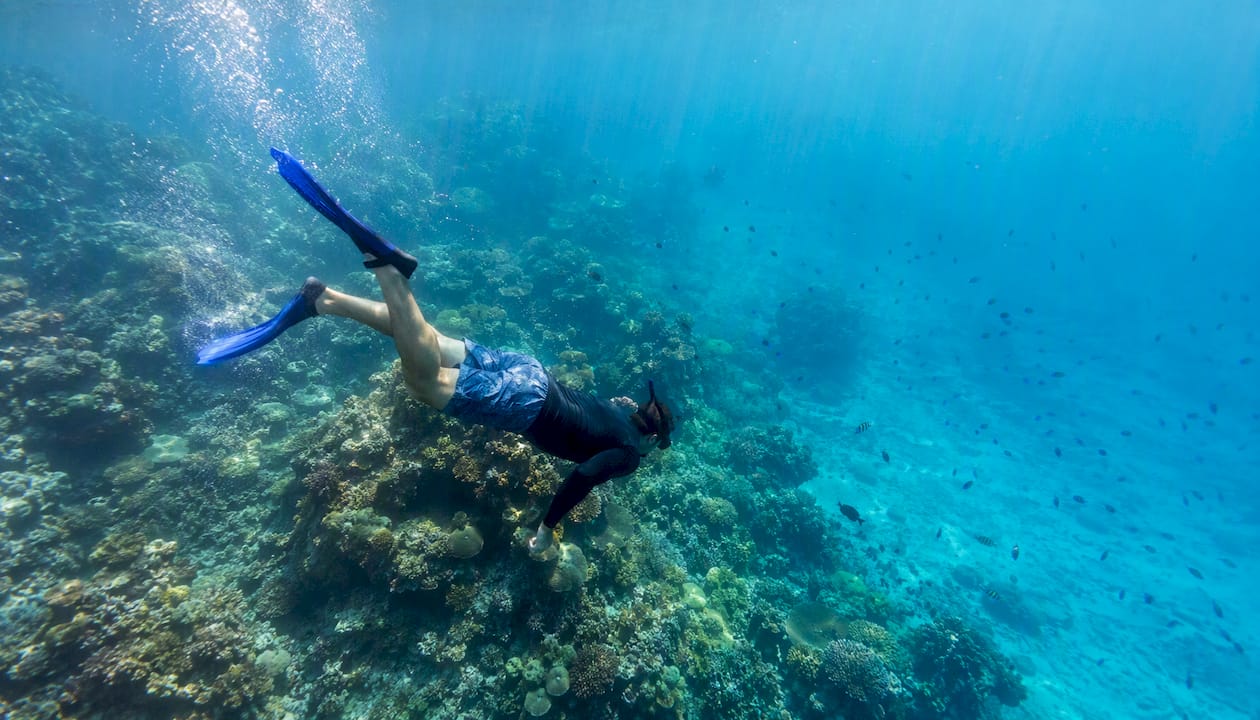
There’s also a mechanical issue that doesn’t show up until you’ve used a dry snorkel for a season: grit. Sand and salt crystals can lodge in the float valve’s seat, which prevents a clean seal or, worse, causes the float to stick shut when you resurface. That’s a genuinely uncomfortable moment when you’re expecting air and getting none. Divers who submerge repeatedly, day after day, run into this failure mode far more than casual weekend snorkelers ever will.
Troubleshooting checklist if your dry top starts acting up:
- Valve won’t seal on descent: rinse the seat thoroughly in fresh water and check for sand buildup.
- Hard to clear after surfacing: exhale sharply through the purge, and if that fails, remove and manually flush the valve housing.
- Increased breathing resistance mid-session: stop and inspect the float; a partially stuck valve restricts airflow even when technically open.
Pro Tip: If you’re planning a trip with repeated dives off a boat, pack a low-profile semi-dry as backup even if your main snorkel is a dry top. It weighs almost nothing in a dive bag and saves the day if a valve jams mid-trip.
Keeping Your Snorkel Working: Maintenance and Travel
Neither design needs much upkeep, but skipping the basics is how a $60 snorkel turns into a $60 paperweight halfway through a trip.
Rinse both types in fresh water after every use, paying particular attention to the purge valve on semi-dry models and the float valve housing on dry tops. Salt crystallizes fast in warm climates, and dried salt is the single biggest cause of a sticky or unreliable valve. Give the mouthpiece a quick inspection every few outings, since silicone degrades with sun exposure and chlorine exposure in pool use, and a cracked mouthpiece is an annoying mid-swim discovery.
Common failure points worth watching:
- Salt buildup around the purge valve flap, which can cause a slow leak if left uncleaned.
- Grit lodged in the dry-top float seat, the most common cause of a valve that won’t reseal properly.
- Mouthpiece wear at the bite tabs, especially on rental gear that’s seen heavy use.
For travel, semi-dry snorkels generally win on packing convenience since they lack the bulkier valve housing found on some dry-top models. Low-profile dry tops have closed that gap considerably, though, so check the collapsed length before assuming one design packs smaller than the other. A quick pre-trip checklist: rinse and dry everything before packing, test the purge valve with a dry exhale to confirm it’s not stuck, and toss a spare mouthpiece in your bag if you’re headed somewhere without a dive shop nearby.
Buying Guide: Models Worth Researching
Fit matters more than brand, full stop. A snorkel that leaks around the mouthpiece or feels off on your bite tabs will ruin your day regardless of how good the valve engineering is. Try before you buy whenever you can, and prioritize a comfortable mouthpiece and a purge valve large enough to clear in one exhale.
Here’s what to look for by model, based on how each is generally positioned in the market:
- TUSA Hyperdry Elite II: A well-regarded dry-top option known for a reliable float valve and a large purge valve that clears fast, a solid pick for beginners who want dependable water exclusion.
- Cressi Palau: A budget-friendly classic snorkel, simple J-tube design with no valve, popular as an entry point for casual pool and shallow-reef use.
- Cressi F1: A semi-dry option with a splash guard and purge valve, positioned as an all-rounder for recreational snorkeling and light scuba support.
- Cressi Supernova: A dry-top model built for snorkelers who want stronger water exclusion without stepping up to a premium price tier.
- Scubapro Escape: A semi-dry snorkel frequently recommended for divers who want a lightweight, low-drag tube that pairs well with a full mask and fins setup.
- U.S. Divers Cozumel: An affordable semi-dry choice that shows up often in beginner snorkel sets and rental fleets for its simplicity.
- Aqualung semi-dry lines: Generally positioned for divers who want a splash guard design that stays out of the way during descents and ascents.
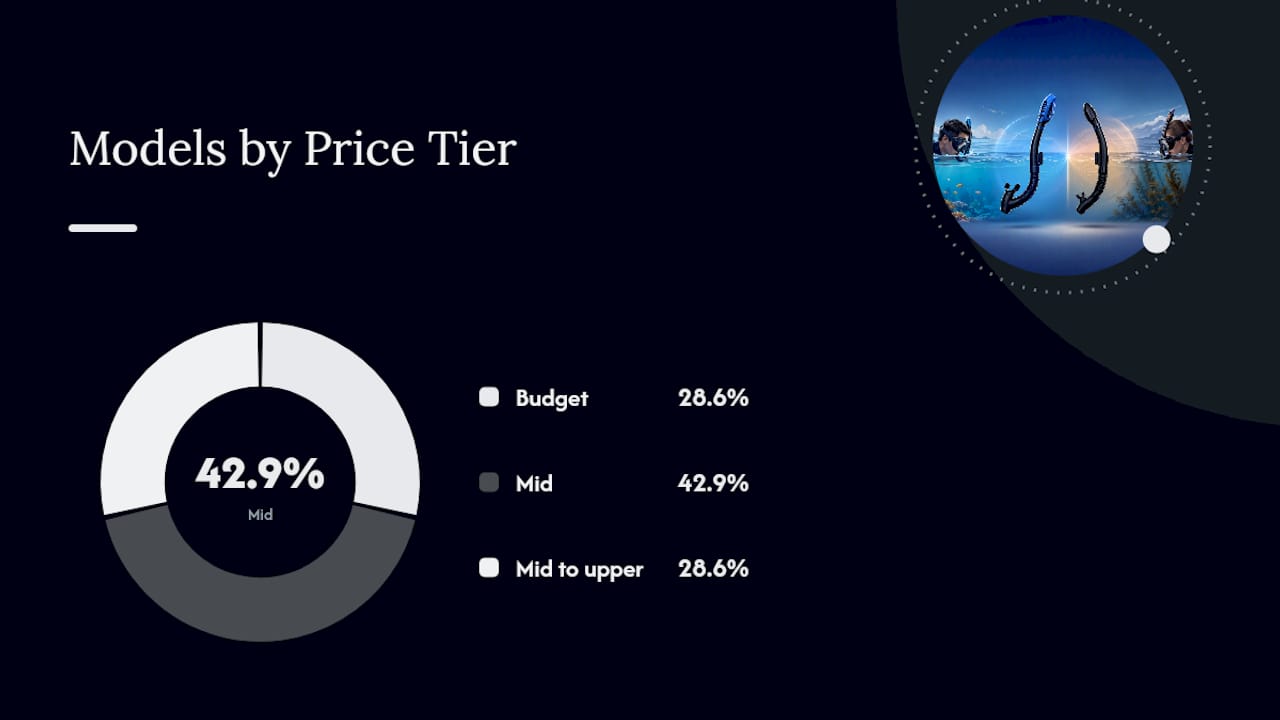
| Model | Type | Typical Price Range | Best For |
|---|---|---|---|
| TUSA Hyperdry Elite II | Dry | Mid to upper | Beginners wanting maximum water exclusion |
| Cressi Palau | Classic | Budget | Casual pool and calm shallow-water use |
| Cressi F1 | Semi-dry | Mid | Recreational all-rounder |
| Cressi Supernova | Dry | Mid | Beginners upgrading from entry-level dry tops |
| Scubapro Escape | Semi-dry | Mid to upper | Divers wanting a low-drag, lightweight tube |
| U.S. Divers Cozumel | Semi-dry | Budget | First-time buyers and rental fleets |
| Aqualung semi-dry lines | Semi-dry | Mid | Divers prioritizing splash protection without valve bulk |
What Testing and Real Users Actually Report
Spec sheets tell you what a snorkel is supposed to do. Long sessions in the water tell you what it actually does, and the two don’t always match.
Testing and long-session reports consistently flag that dry-top float valves introduce a small but noticeable breathing drag, one that becomes more perceptible the longer you’re in the water. It’s rarely a dealbreaker, but it’s real enough that people with respiratory sensitivity or those planning multi-hour sessions notice it by the second or third hour.
That perceived resistance is subjective. Two people can test the same snorkel and describe the breathing feel differently, which is why buying guides increasingly recommend an in-person fit and breath test over trusting a spec sheet alone. Grit in the valve seat is the other recurring complaint. Divers doing repeated dives off a boat report the float sticking after a few days of sandy-bottom entries, forcing a mid-trip rinse-and-inspect cycle they hadn’t planned for.
The honest takeaway from these reports: float valves aren’t built for repeated deep submersion, and pressure differentials combined with trapped grit are the most common reason working divers keep a semi-dry or classic snorkel in their kit even if they own a dry top for casual days. If you’re planning to snorkel in open water regularly and want to check insurance or safety resources before you go, the DAN membership page is worth a look for anyone unfamiliar with sea-activity coverage.
Why We Pay Attention to This on Charter
On a typical week-long charter, we watch guests cycle through every skill level from “first time in a mask” to “spent a decade diving reefs.” What stands out is how consistently the confident beginners end up in dry-top snorkels and the experienced swimmers gravitate toward semi-dry the moment they start diving down to look at something interesting. It’s not a coincidence. The gear matches the behavior almost every time.
We keep a mix of both on board because guest comfort on the water isn’t a place to guess. A guest who spends the first ten minutes fighting a snorkel that keeps flooding isn’t going to enjoy the reef no matter how clear the water is, and that’s the kind of surprise we’d rather eliminate before it happens. If you’re planning a trip with us and want gear advice tailored to your itinerary, our team at Virgin Charter Yachts can walk you through what tends to work best for the specific waters and activities on your route.
Where to Read More
A few sources go deeper into specific angles of this comparison if you want more detail before buying.
- Dry Snorkel vs Semi Dry: Which Snorkel Is Better in 2026? covers feature-by-feature trade-offs and breathing resistance reports.
- Best snorkel set / Best dry snorkel models and buying guide is useful for model-level recommendations and valve reliability notes.
- Dry snorkel or semi-dry for snorkeling breaks down maintenance differences in plain terms.
- Snorkel Buying Guide: Dry, Semi-Dry and Classic is a solid read for divers weighing semi-dry against classic tubes.
- Dry snorkeling: the types, pros and cons explains the buoyancy and mask-tug issue in more technical depth.
- Snorkel Buying Guide from Divers Supply is a good general primer on fit and purge valve mechanics.
- DAN membership and insurance is worth checking if you want coverage options before a trip involving unfamiliar gear.
Frequently Asked Questions
Is a dry snorkel better than a semi-dry snorkel for beginners? Yes, generally. A dry snorkel’s float valve blocks nearly all water entry, which makes it more forgiving for people still learning to breathe comfortably through a tube on the surface.
Can you scuba dive with a dry snorkel? You can attach one to your mask, but most working divers skip dry tops for actual diving. The trapped air creates buoyancy that tugs on the mask, and the float valve isn’t designed for repeated deep submersion.
Do semi-dry snorkels still let water in? Some, especially in rough chop or heavy spray. The splash guard reduces most water entry, and the purge valve clears what does get through with a short exhale.
Why do dry snorkels feel harder to breathe through? The float valve sits directly in the airflow path, adding a small amount of resistance that becomes more noticeable during long sessions or for people with respiratory sensitivity.
What snorkel type is best for kids? Dry snorkels are usually the safer, more confidence-building choice for kids since the valve prevents the sudden mouthful of water that can trigger panic.
Sources
- Dry Snorkel vs Semi Dry: Which Snorkel Is Better in 2026?
- Best snorkel set / Best dry snorkel models and buying guide
- Dry snorkel or semi-dry for snorkeling - Which to choose and why?
- Snorkel Buying Guide: Dry, Semi-Dry and Classic – Scuba Diving Shop in Singapore
- Dry snorkeling: the types, pros and cons
Did You Know?
The BVI are only accessible by boat. Check out our charter yachts that can get you there. View Our Fleet