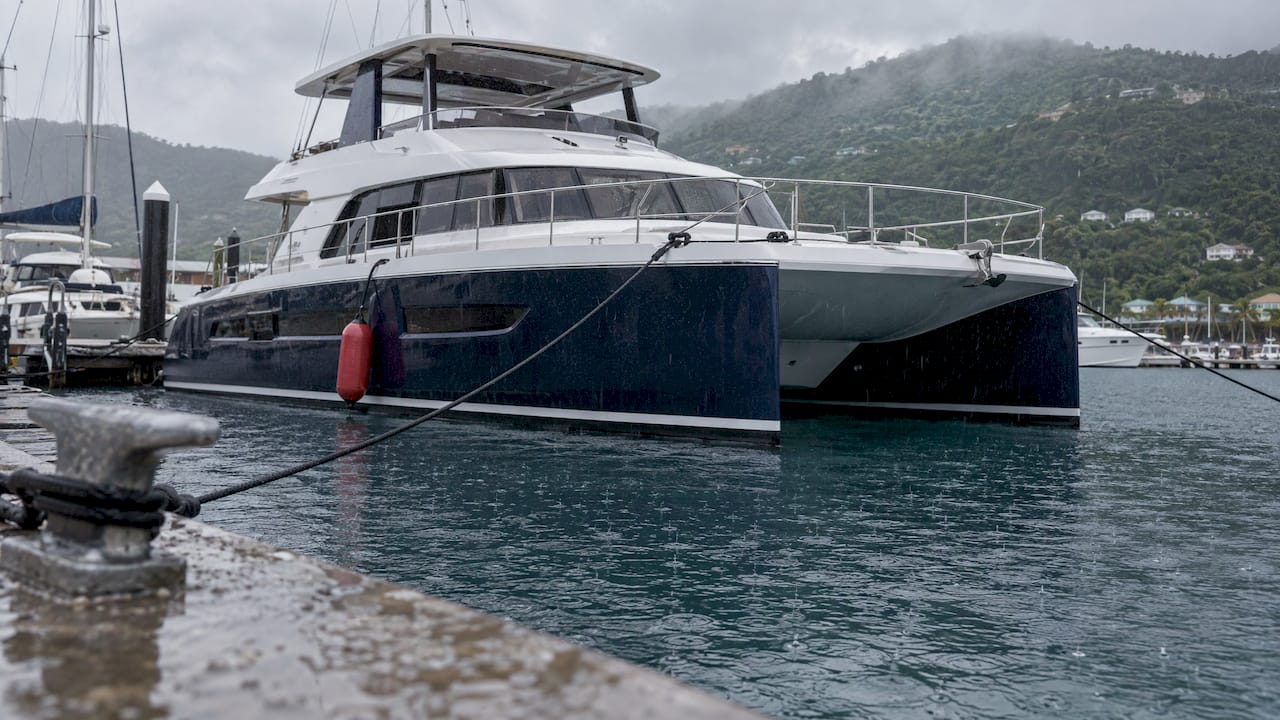

The Atlantic hurricane season runs June 1 to November 30, and in the British Virgin Islands the risk concentrates between mid-August and mid-October. You can charter in the BVI outside that window with the lowest weather risk, or inside it with the right timing, flexible plans and insurance. This guide explains the dates, the real odds, what a charter looks like in the off-season and how to book sensibly.
TL;DR
- The Atlantic season officially runs June 1 to November 30. BVI Disaster Management puts the statistical peak at September 10, with most storms forming between mid-August and mid-October.
- Tropical storms strike the territory roughly once every 8 years on average, and that count includes storms that only touched the northern island of Anegada.
- Many shore businesses close in September and early October, so a charter in those weeks means fewer restaurants and bars open.
- December through April steers clear of hurricane season entirely. Book early for those months.
- If you travel June through November, buy travel insurance that covers trip cancellation, medical care and evacuation.
Table of Contents
- When BVI hurricane season starts and ends
- How likely is a storm to hit your trip?
- What a charter looks like in hurricane season
- The calmer way to avoid hurricane season
- What a charter costs
- Before you book: insurance and official guidance
- Preparing when a storm enters the forecast
- Our perspective
- Plan your charter with Virgin Charter Yachts
- FAQ
- Sources
When BVI hurricane season starts and ends
The season is defined for the whole Atlantic basin, and the BVI sits inside it. The official dates are June 1 to November 30, but the weeks are not equal. BVI Disaster Management notes that the statistical peak falls on September 10, with most storms developing between mid-August and mid-October.
In plain terms:
| Period | Storm activity | What it means for a charter |
|---|---|---|
| June to mid-August | Early season, usually quieter | Good value, fewer crowds, watch the forecast |
| Mid-August to mid-October | Peak | Highest chance of disruption, many shore businesses closed |
| Mid-October to November 30 | Tapering | Activity fades, services reopen gradually toward winter |
| December to April | Outside the season | Most settled weather, strongest demand |
For a month-by-month look at wind, rain and sea conditions, see our BVI weather by month guide.
How likely is a storm to hit your trip?
Less likely than the headlines suggest, but not zero. A record of Virgin Islands storms compiled on Wikipedia shows tropical storms striking the islands about once every 8 years on average, including strikes affecting only Anegada. The same record counts 13 hurricanes in the 20th century, five between 1916 and 1932 and seven between 1989 and 1999. Storms cluster in some decades and disappear in others.
A worked example: if the territory sees a storm roughly every eight years, any single week in peak season carries a small chance of a direct hit. The more common effect is a tropical wave or system passing nearby, bringing a few days of wind and rain that reshape your route.
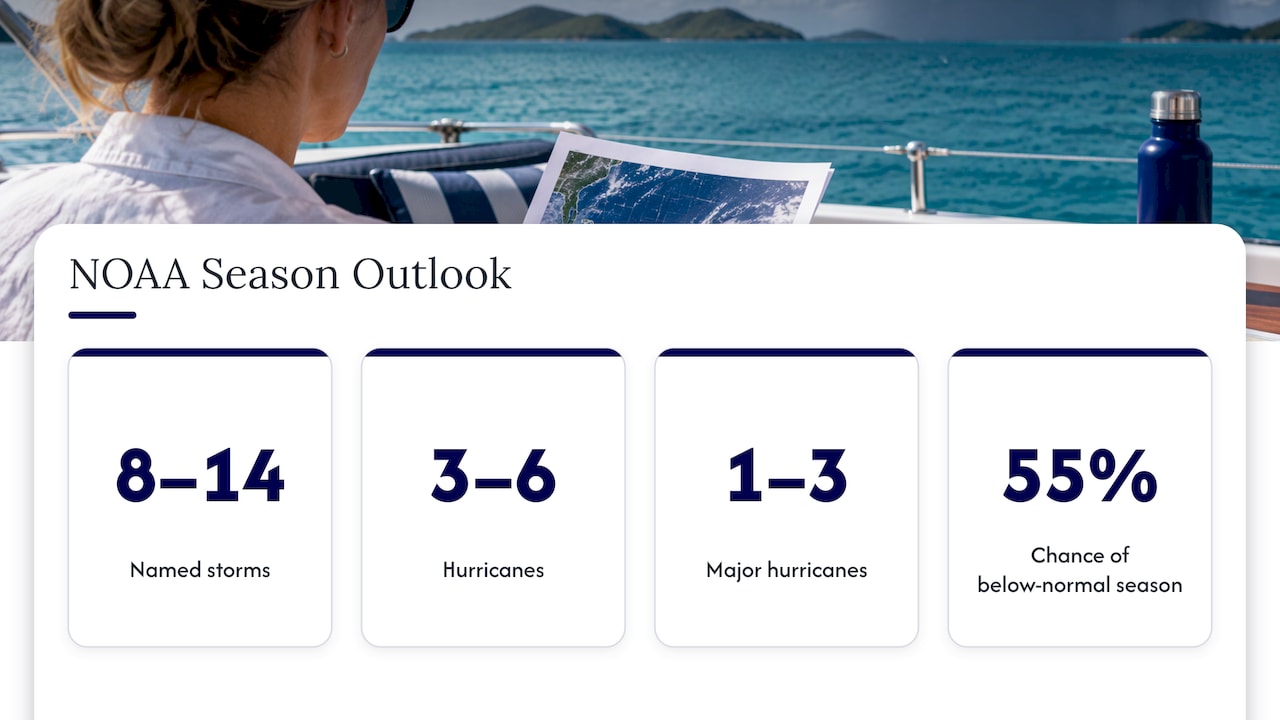
The outlook for any one year is basin-wide. NOAA’s 2026 outlook anticipated 8 to 14 named storms, 3 to 6 hurricanes and 1 to 3 major hurricanes, with a 55% chance of a below-normal season. The same report stresses that an outlook is not a forecast of where a storm will make landfall, and that even a quiet season can bring severe impacts to a single place.
Why 2017 still shapes the conversation
Hurricanes Irma (September 6, 2017) and Maria (September 19, 2017) caused damage that the Caribbean Development Bank put above $3.6 billion, around three and a half times the BVI’s annual GDP. The UNDP’s regional assessment found tourism was the most damaged sector in the BVI. That history is why the territory now emphasizes building standards and preparation, and why charter operators plan around the calendar with such care.
What a charter looks like in hurricane season
The water is warm, anchorages are quiet and prices are lower. The trade-off is the shore. Lonely Planet reports that September, October and November are the BVI’s wettest months and that many businesses close in September and early October.
For a yacht charter, that changes how you plan:
- Provision more on board. A well-stocked galley matters when your favorite beach bar is shuttered.
- Keep the itinerary loose. Pick a home base and decide each morning, based on forecast, which island to visit.
- Expect showers. Rain tends to arrive in bursts rather than all day.
- Stay close to safe harbors. Short hops between sheltered anchorages beat long open-water days.
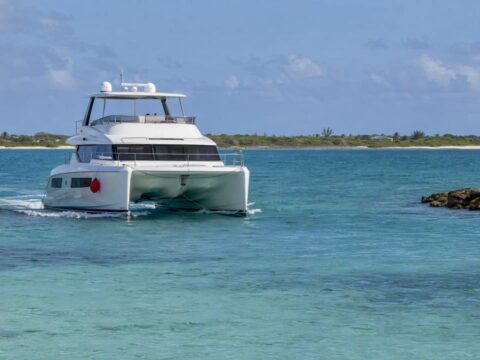
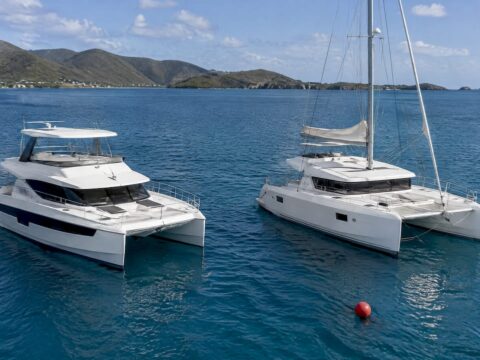
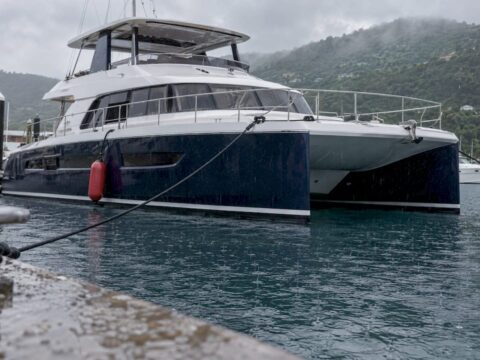
Power catamarans suit this style well: you set your own pace and can reach shelter quickly when a squall line shows up. Our power vs sailing catamaran comparison explains why many guests pick power.
The calmer way to avoid hurricane season
If you want the simplest answer, charter between December and April. A Daily Times report notes that visiting between December and April steers clear of hurricane season. The cost is demand: the best boats and holiday weeks go first. Our guide to booking 6 to 12 months ahead lays out the timing, and the best time to visit the BVI for a yacht charter compares seasons side by side.
What a charter costs
Published weekly rates on our site, so you can budget:
| Charter type | Price per week |
|---|---|
| 3-cabin power catamaran (bareboat) | £6,000 to £10,000 |
| 4-cabin power catamaran (bareboat) | £8,000 to £14,000 |
| 5+ cabin luxury power catamaran (bareboat) | £12,000 to £20,000 |
| Premium catamaran, 4 to 6 guests (crewed) | $25,000 to $35,000 |
| Luxury catamaran, 6 to 10 guests (crewed) | $35,000 to $70,000 |
| High-end luxury catamaran or motor yacht (crewed) | $70,000 to $120,000 |
A standard captain is $250 per day, or $300 per day for a training captain, if you want a skipper aboard. Details are on our charter costs page, and the BVI yacht charter cost guide shows what U.S. travelers should budget overall.
Before you book: insurance and official guidance
The U.S. State Department’s BVI advisory, dated May 22, 2026, rates the territory at “Exercise normal precautions” and notes that the BVI regularly experiences hurricanes. It recommends that U.S. travelers:
- Enroll in the Smart Traveler Enrollment Program (STEP), a free service that lets the U.S. embassy contact you in an emergency.
- Buy travel insurance covering evacuation assistance, medical care and trip cancellation.
- Check CDC travel health information before departure.
Lonely Planet also advises trip insurance for hurricane-season visits. Read the policy for named-storm clauses and the cutoff for buying cover, since many policies exclude a storm already named at purchase. Our charter travel insurance guide covers what charterers should look for.
Packing also shifts in the wet months: a light rain jacket, quick-dry clothing and waterproof bags for devices. See our BVI packing list.
Preparing when a storm enters the forecast
BVI Disaster Management’s director urges preparation before a storm enters the forecast area, not once it is imminent. For travelers that means checking forecasts daily, keeping a copy of your insurance and contacts, and knowing your plan before you leave the dock. General storm-prep habits, such as charging devices and keeping documents together, are covered well in this hurricane season prep guide.
On a charter, your base and the forecast decide the route. Talk to our team about how itineraries change if a system approaches.
Our perspective
We have run charters from Tortola for 30 years, and our advice is consistent: choose your weeks with the calendar in mind, then build flexibility into the trip.
For guests who want the most settled weather, the winter months are hard to beat, and we encourage early booking. For guests who love quiet anchorages and lower rates, the shoulder weeks can be wonderful when planned with a flexible itinerary and proper insurance.
Either way, a well-maintained boat and direct access to people who know these waters make the difference. That is why our fleet is curated for maintenance and why you can speak with our staff while planning.
alexia
Plan your charter with Virgin Charter Yachts
Whether you want a bareboat power catamaran or a fully crewed yacht, we will help you choose the right boat and the right weeks. Compare bareboat catamaran pricing or see our luxury crewed charters.
Not sure which suits your group? Our crewed vs bareboat guide helps you decide, and the BVI charter FAQ answers common questions.
FAQ
Is it safe to sail in the BVI during hurricane season?
The U.S. State Department rates the BVI “Exercise normal precautions” while noting regular hurricane exposure. Most days in the season bring ordinary tropical weather. Choose short hops between sheltered anchorages, check forecasts daily and carry insurance.
Which months are best to avoid hurricanes?
December through April sits outside the season. If you travel June to November, the peak around September 10 and the mid-August to mid-October stretch carry the highest chance of storms.
Will restaurants and bars be open?
Many businesses close in September and early October, according to Lonely Planet. Stock your yacht well and treat shore dinners as a bonus rather than a plan.
Do I need travel insurance for a BVI charter?
The State Department recommends coverage for evacuation, medical care and trip cancellation. Buy it early and read the named-storm terms before you pay your deposit.
Sources
- BVI Disaster Management: Residents Urged to Finalise Seasonal Storm Preparations
- Hurricanes in the Virgin Islands
- Caribbean Development Bank: BVI Country Economic Report 2018
- UNDP: Impact of Hurricanes Irma and Maria
- Central Florida Public Media: NOAA hurricane outlook 2026
- Lonely Planet: Best time to visit the US and British Virgin Islands
- U.S. State Department: British Virgin Islands Travel Advisory
- Daily Times: Hurricanes and the pandemic left BVI tourism in tatters
Recommended
- BVI Weather by Month: When to Sail and What to Expect
- Charter Travel Insurance: What Yacht Charterers Need to Know
- Best Time to Visit BVI for a Yacht Charter
Did You Know?
The BVI are only accessible by boat. Check out our charter yachts that can get you there. View Our Fleet