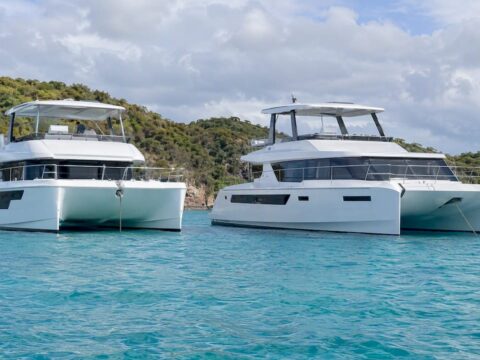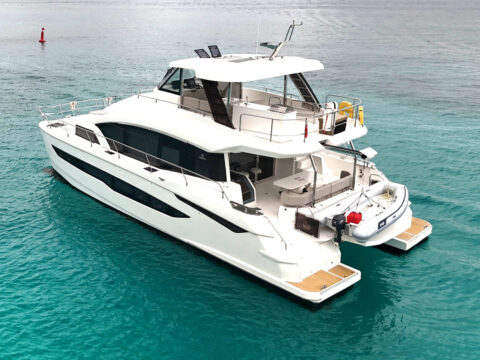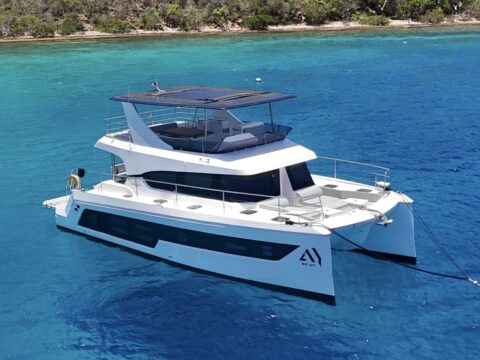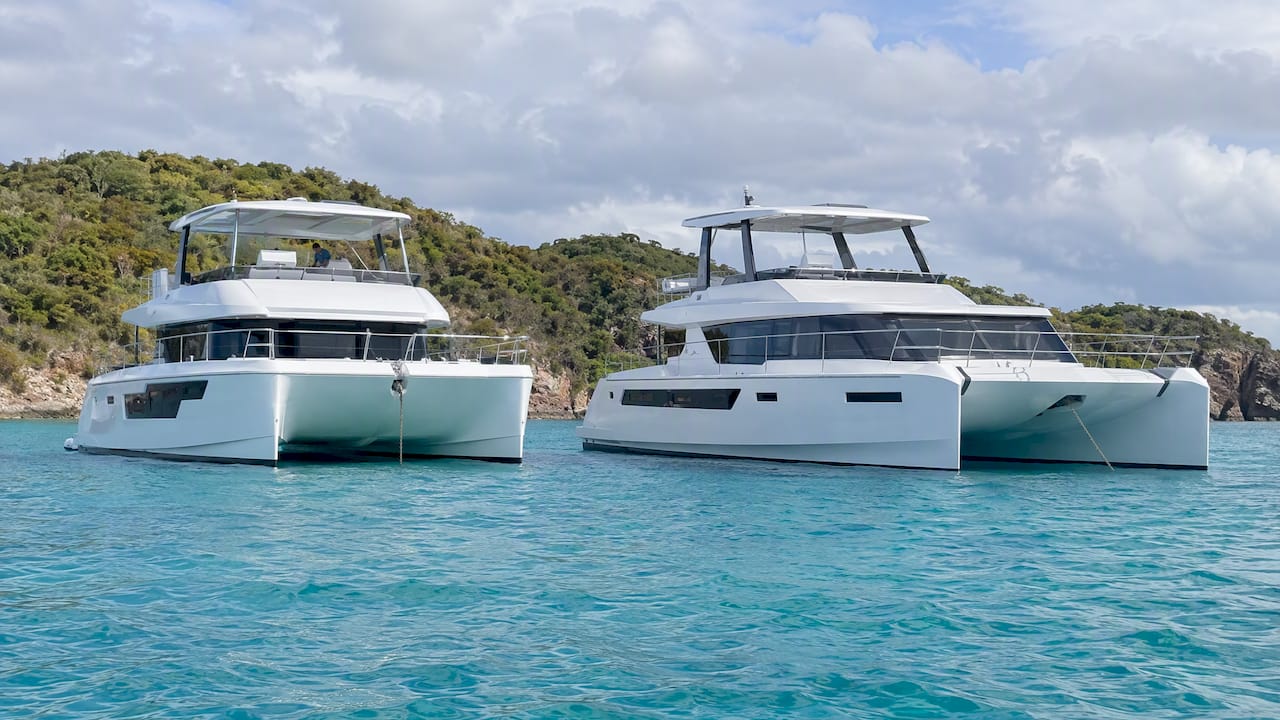

For most experienced crews planning a week of BVI island-hopping, the Fountaine Pajot MY6 is the stronger pick thanks to its IPS joystick handling and longer range, while the Leopard 53 rewards groups who prioritize outdoor living and social space over mechanical simplicity. The real trade-off comes down to serviceability versus amenities, and the sections below break down specs, handling, layout, and energy systems to help you decide.
TL;DR:
- The Leopard 53 draws 1 meter versus the MY6’s 4 feet 4 inches, giving extra clearance near shallow anchorages such as Anegada.
- Pod drives make docking easier but can be harder to repair remotely; arrange joystick practice and confirm local technician or backup support before departure.
- Request actual fuel burn at cruising speed and verify maintenance logs, nearest service ports, and installed battery, solar, and watermaker options before booking.
- The MY6’s three en suite double cabins suit couples seeking private bathrooms, while the Leopard’s modular Alfresco cockpit supports outdoor dining and separate lounging.
Table of Contents
- MY6 vs Leopard 53: specs and charter-relevant differences at a glance
- Choosing the right model for your BVI itinerary
- Propulsion, handling, and remote serviceability compared
- Onboard layout and guest comfort for a week aboard
- Power, autonomy, and maintenance for island-hopping
- How we help experienced charterers choose and run these powercats
- What actually matters when comparing these two powercats
- Book a BVI powercat with us
- FAQ
- Sources
MY6 vs Leopard 53: specs and charter-relevant differences at a glance
Both boats target the same charter party, but they solve different problems. The Fountaine Pajot MY6 measures roughly 50’8" with a 21’8" beam and a shallow 4’4" draft, while the Leopard 53 runs longer at 53’1" with a 7.67 meter beam and an even shallower 1 meter draft, a meaningful edge for tucking into tight BVI anchorages.
- Propulsion: the MY6 pairs Volvo Penta IPS500 or IPS650 pod drives with joystick control for precise docking; the Leopard 53 typically runs conventional shaft-drive setups that favor mechanical simplicity over close-quarters finesse.
- Cabins and capacity: the MY6 offers three double en-suite cabins, a layout well suited to two or three couples sharing a week-long charter.
- Range and fuel: the MY6 carries a substantial amount of fuel and fresh water, with a manufacturer-quoted range that comfortably exceeds typical BVI cruising needs, far more than a typical BVI loop requires but useful buffer for longer passages.
- Outdoor living: the Leopard 53 leans into its redesigned ‘Alfresco’ modular cockpit and an optional electric lifting bathing platform, both strong for swim stops and sundowners at anchor.
- Best for: the MY6 suits crews who want efficient handling and simpler systems; the Leopard 53 suits groups who plan to spend most daylight hours lounging on deck and in the water.
Choosing the right model for your BVI itinerary
Before locking in a boat, walk through a short checklist built around how you actually plan to cruise.
- Check your draft needs. If your itinerary includes shallow anchorages like the Bight at Norman Island or the reef-lined approaches to Anegada, the Leopard 53’s 1 meter draft gives you more margin than most monohulls or deeper-draft powercats.
- Match crew experience to the drivetrain. If nobody aboard has handled joystick pod controls before, ask whether a training captain makes sense for the first day or two.
- Confirm energy needs against your trip length. A seven-day loop with nightly generator runs demands more fuel and battery capacity than a marina-hopping itinerary with shore power most nights.
- Ask about maintenance history and nearest service ports. Request recent maintenance logs and find out which marina handles warranty or mechanical work if something needs attention mid-charter.
- Review which optional packages are installed. Electric lift platforms, lithium battery banks, and extra watermaker capacity all change how self-sufficient the boat is, and how much there is to maintain.
Pro Tip: Ask your charter operator for the boat’s actual fuel burn at cruise speed, not just the manufacturer’s top-line range figure. Real-world BVI conditions (wind, current, AC load) change the math.
Before booking, review the bareboat charter requirements and captain qualifications so you know what certification or experience the boat you want actually requires.
Propulsion, handling, and remote serviceability compared
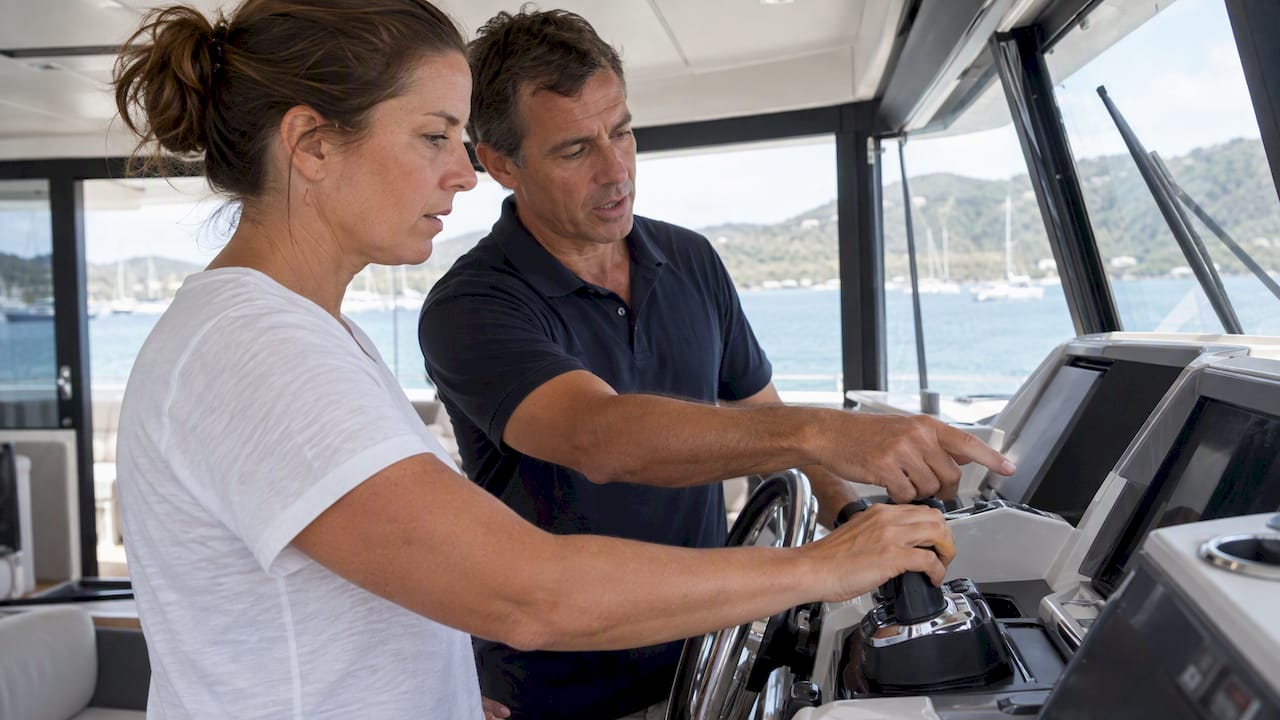
The technical gap between these two boats shows up most clearly once you leave the dock. Pod drive systems give the MY6 genuinely easier close-quarters handling: joystick control lets a shorthanded crew spin the boat in place, crab sideways into a slip, or hold position in a crowded mooring field without the usual dance of throttle and rudder coordination.
- Maneuvering: IPS joysticks make single-handed docking far more forgiving than traditional shaft-drive setups, a real advantage in the busy anchorages around Soper’s Hole or Marina Cay.
- Repair complexity: pod drives are more mechanically intricate than shaft drives, and parts or qualified technicians for them can be harder to find on short notice in a remote marina.
- Machine room design: the Leopard 53’s redesign groups major systems into a sealed machine room specifically to cut noise and vibration at anchor, which matters more than most charterers expect after a few nights aboard.
- Noise and liveability: better sound insulation and ventilation translate directly into better sleep and less generator fatigue on a multi-day hop between islands.
Experienced skippers should treat joystick convenience and remote-repair risk as two sides of the same coin: plan a short familiarization run with pod controls before you need them under pressure, and confirm with your operator what backup support exists if a drive unit needs attention mid-charter.
Onboard layout and guest comfort for a week aboard
Daily life aboard either boat comes down to how the cabins, galley, and social spaces work together for your actual group.
- The MY6’s three en-suite double cabins suit couples traveling together who want private heads and genuine separation between berths, not just curtained bunks.
- Flybridge and cockpit ergonomics matter more than people expect: a well-laid-out flybridge with good sightlines makes nightwatch duties and sundowner hangouts far more comfortable for a social group of six to eight.
- The Leopard 53’s Alfresco cockpit configuration extends usable outdoor living space, which helps when half the group wants to eat on deck while the other half naps below.
- Galley layout shapes your provisioning strategy: a well-ventilated galley with generous counter space makes it realistic to cook aboard most nights rather than relying on dinghy trips ashore for every meal.
For itinerary ideas that pair naturally with either layout, our guide to island-hopping in the BVI covers routes that work well for groups spending most of their time on deck.
Power, autonomy, and maintenance for island-hopping
How long you can stay off a dock without worry depends almost entirely on what power package is fitted, not just which hull you choose.
- Standard chargers and converters cover basic needs at anchor, but an optional LiFePO4 battery upgrade or solar panel pack meaningfully extends how long you can run appliances without the generator.
- A properly sized watermaker lets you top off fresh water tanks at anchor instead of timing refills around marina stops, which matters on a seven-night loop through outer islands.
- Electrically powered amenities like lift platforms, ice makers, and washer/dryer units add real convenience, but each one is another system that can fail mid-charter and another line item in your energy budget.
Pro Tip: Ask whether solar and lithium upgrades are already installed rather than optional add-ons. Retrofitting mid-charter isn’t an option, so confirm the power package before you book.
How we help experienced charterers choose and run these powercats
We have operated out of Tortola since 1996, and that local footprint shapes how we curate our fleet of modern power catamarans, including models like the Fountaine Pajot MY6 and Leopard 53. We configure each boat for bareboat clients with maintenance records and system walkthroughs so you know exactly what you’re boarding, and we offer training captains for guests who want a hand with joystick or pod-drive controls before heading out solo. Beyond the boat itself, our team helps with provisioning lists, local mooring recommendations, and support if something needs attention once you’re out cruising, the kind of hands-on help a smaller, family-run operation can give that larger outfits often can’t.
What actually matters when comparing these two powercats
Most comparisons of these two boats spend too much time on spec sheets and not enough on what breaks a charter week: generator noise at 2 a.m., a drive unit that needs a technician who isn’t on the island, or a cockpit too small for the whole group to eat together. The conventional wisdom treats range and top speed as the deciding factors, but on a BVI loop where no leg exceeds twenty nautical miles, that’s rarely where either boat gets tested.
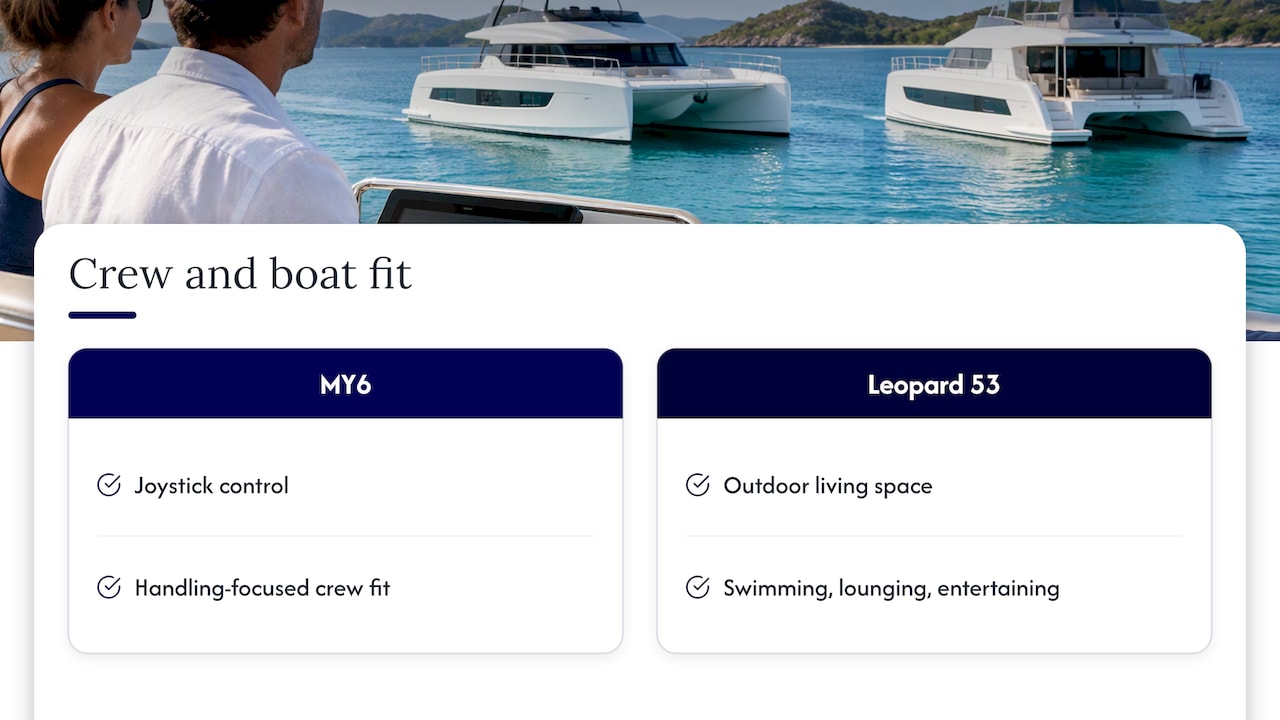
What matters more is whether your crew can handle the boat confidently and whether the systems aboard match how you actually plan to use them. A group that wants to swim, lounge, and entertain will get more daily value from the Leopard 53’s outdoor living space than from a faster passage time they’ll never use. A smaller, handling-focused crew will appreciate the MY6’s joystick control far more than extra deck furniture. Pick the boat that matches your crew’s actual week, not the one with the longer spec sheet.
— alexia
Book a BVI powercat with us
Once you know which layout fits your crew, the next step is checking real availability and current rates. Our bareboat charter pricing page covers 3-cabin, 4-cabin, and 5+ cabin power catamaran packages, while our charter cost breakdown walks through what’s typically included, from standard captains to training captains for joystick-equipped boats.
Reach out through either page and we’ll help match your crew’s experience and itinerary to the right boat in our fleet.
FAQ
What are some reputable boat charter companies in the BVI?
The BVI has a mix of large international operators and smaller, family-run companies; we’ve operated out of Tortola since 1996 with a fleet curated specifically for personalized, well-maintained bareboat and crewed charters. When comparing operators, ask about fleet age, maintenance records, and local support availability during your trip.
Do the below deck guests pay?
This question applies to the crewed charter TV format, not standard BVI bareboat or crewed charters, where every guest aboard is simply part of the booking party. Charter costs are quoted per boat per week, covering the whole group rather than per individual guest.
Is a catamaran safer than a yacht?
Catamarans offer greater initial stability than monohull yachts because of their wide beam, which many experienced charterers find reassuring in typical BVI conditions. Safety still depends heavily on crew experience, weather awareness, and proper handling regardless of hull type.
Where are the best places to go yachting?
The British Virgin Islands are widely regarded as one of the most popular destinations for catamaran charters thanks to short, line-of-sight passages between islands and consistent trade winds. For travelers weighing other options, our partner’s guide comparing a Gulf Coast vacation to a Caribbean one lays out how the two cruising styles differ.
Sources
- Leopard 53 Powercat, exterior fittings, noise, manoeuvring: choices that count
- Fountaine Pajot MY6 Boat
Recommended
Did You Know?
The BVI are only accessible by boat. Check out our charter yachts that can get you there. View Our Fleet