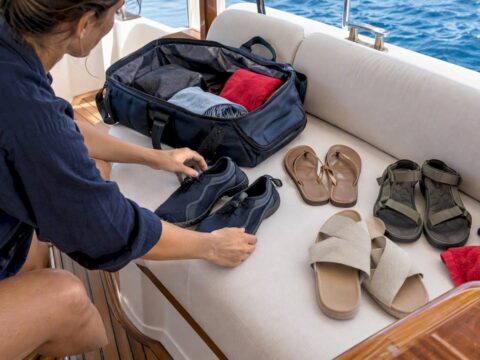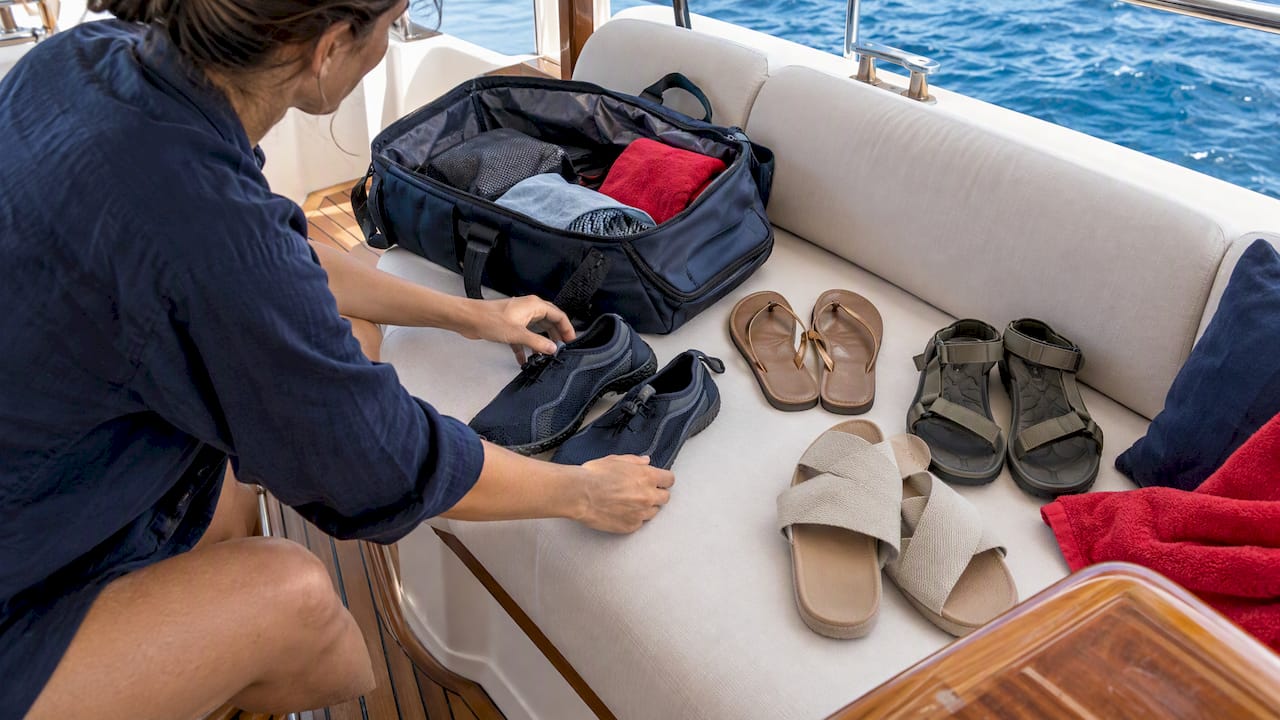

For technical wet terrain, rocky shores, kayaking, and stream crossings, water shoes win on traction and protection. For casual beach days, pool lounging, and long dry walks, sandals win on comfort and airflow. When your trip mixes both, a hybrid, like a closed-toe sandal or a water-friendly clog, splits the difference.
TL;DR:
- Water shoes with reinforced toes and softer, tackier rubber outperform sandals for rocky shores and wet rock crossings due to better grip and protection.
- Closed-toe water shoes with secure straps and quick-drying mesh are essential for safety and stability on technical terrain like algae-covered rocks.
- Sandals excel on long, dry walks and hot climates because of their ventilation, quick-on-and-off design, and support for comfort.
- Choosing footwear depends on activity, with hybrids offering a balance of protection and breathability for varied beach and trail conditions.
- Proper fit, drainage features, and regular rinsing extend the lifespan of water shoes, while sizing up half a size is recommended in case of swelling or dampness.
Table of Contents
- Quick comparison by activity
- Why water shoes beat sandals for technical wet terrain
- Why sandals win for casual, long-walk beach days
- Types and hybrids: matching footwear design to the activity
- How to choose: a shopping and fitting checklist
- Keeping your footwear working trip after trip
- What this means for a yacht charter or organized water trip
- Planning your packing list for a Caribbean charter
- FAQ
- Sources
Quick comparison by activity
Matching footwear to the activity, not the destination, solves most of the guesswork. A few situations come up again and again for beachgoers, hikers, and anyone touring the coast.
- Rocky shores and tidepools: water shoes with reinforced toes protect against sharp shells and barnacles.
- Kayaking or paddleboarding: water shoes or secure water sandals keep footwear on if you capsize or wade.
- Boat decks and docks: low-profile water shoes or molded clogs grip wet fiberglass without marking the surface.
- Sandy beaches and pool decks: sandals win for ventilation and easy on-off between dips.
- Hiking with stream crossings: water shoes with real lug patterns handle both trail grip and wet rock.
Two safety notes matter more than style: slick wet rock causes most footwear-related falls on shore excursions, and sharp coral or broken shells cause the most puncture injuries. On the comfort side, sandals breathe better in humid climates, while a contoured footbed reduces fatigue on long boardwalk or beach walks.
Why water shoes beat sandals for technical wet terrain
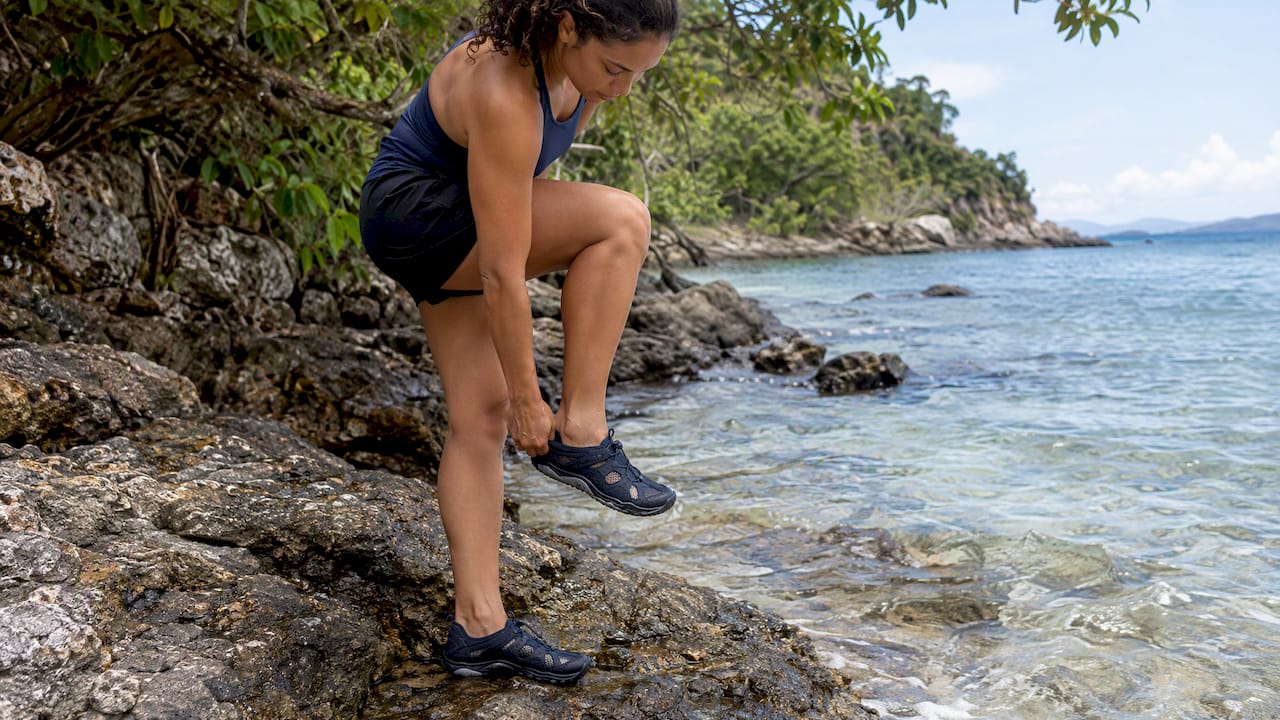
The advantage comes down to rubber and geometry. Many water shoes use a softer, tackier rubber compound on the outsole, which grips wet rock and algae far better than the harder rubber on a typical sandal or sneaker. Gear reviews note that softer compounds provide superior grip on slick, algae-covered rock, though they wear down faster than harder rubber designed for durability.
Closed-toe construction matters just as much as the sole. A toe bumper and a thicker midsole reduce the chance of a stubbed toe or a puncture from a shell, urchin spine, or hidden rock, something no open sandal strap can offer. Expert testing finds that closed-toe water shoes protect against underwater hazards more reliably than even high-performance river sandals, which still expose more of the foot.
Fit security is the other deciding factor. Heel cups, locking laces, and adjustable straps keep a water shoe anchored to your foot in moving current, while a loose sandal can slip off and float away the moment a wave or current catches it. Drainage ports and quick-dry mesh uppers finish the job, letting water flush out fast so you’re not sloshing around once you’re back on dry land.
Pro Tip: Test the heel retention before you travel: if you can pull the shoe off your heel without undoing a strap or lace, it will likely come off in moving water too.
Published long-form reviews weigh grip, drainage, and comfort as the three metrics that separate a dependable water shoe from one that fails on a slick crossing.
Why sandals win for casual, long-walk beach days
Sandals solve a different problem: comfort over hours of walking, not grip on technical terrain. A contoured, molded footbed supports your arch on a long boardwalk stroll or a mile of packed sand in a way that a minimalist water shoe, built for drainage rather than cushioning, usually can’t match.
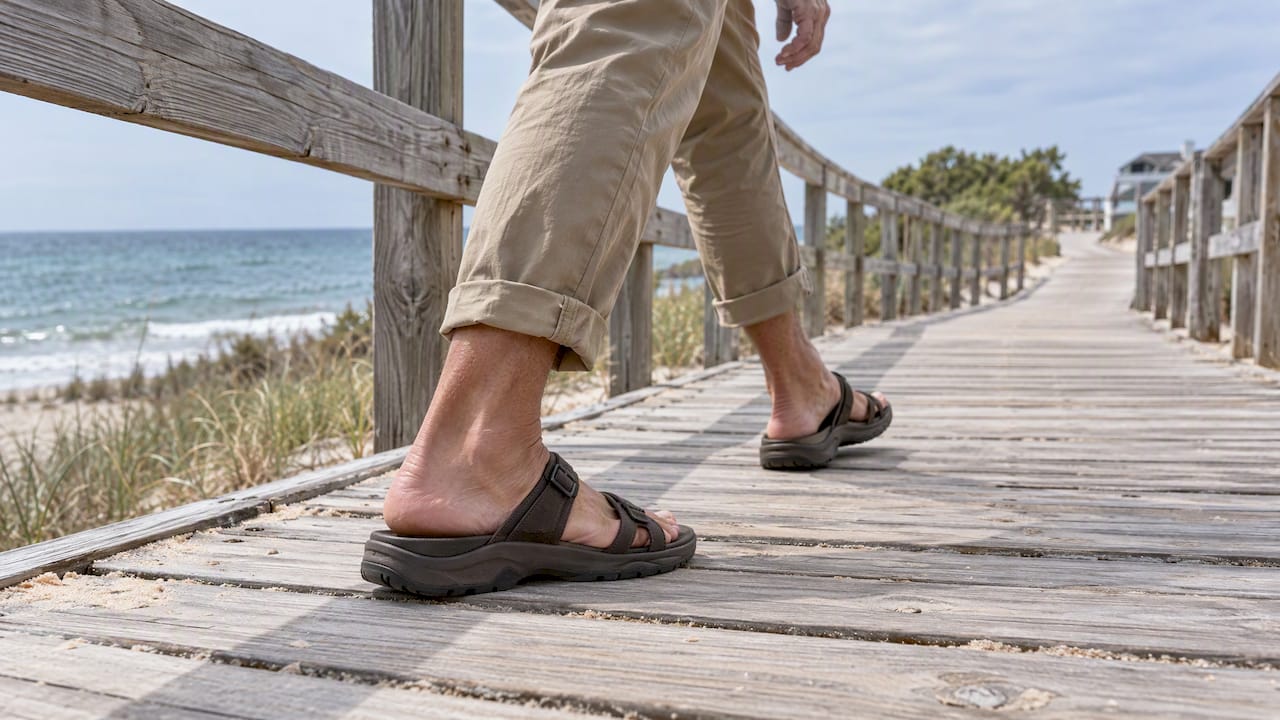
Open design means better airflow, which matters in hot, humid climates where closed shoes trap heat and moisture. Sandals also go on and off in seconds, ideal for quick stops at a beach bar, a shaded lunch spot, or a shower rinse between swims.
The trade-offs show up fast on rougher ground:
- Open straps offer no protection from shells, rocks, or hot pavement.
- A smooth sandal sole slips more easily on wet tile, algae, or a slick boat ramp.
- Most sandals lack a secure heel strap, so running or wading in current may risk losing one.
- Closed-toe sandal hybrids, with a covered front and adjustable back strap, close some of these gaps without sacrificing all the ventilation.
If your day is mostly sand, a pool deck, or a paved waterfront, sandals are the more comfortable choice. The moment the terrain turns rocky or wet and uneven, their limits show.
Types and hybrids: matching footwear design to the activity
Footwear for water activities falls into a handful of categories, each built for a specific job.
- Minimalist water shoes: thin, flexible soles with drainage holes, best for kayaking, paddleboarding, and wading where you need to feel and are quick drying.
- Neoprene booties: insulated with a thin trapped layer of water for warmth, ideal for cold-water surfing or snorkeling but not built for long walks.
- Closed-toe hybrids: part sandal, part shoe, with a covered toe and open sides, a solid middle ground for reef walking or mixed beach-and-trail days.
- Molded foam clogs: think Crocs-style slip-ons, easy to rinse and comfortable on a boat deck, but reviewers note their low-profile soles generally lack the multidirectional lugs needed for secure footing on slippery rock.
- Hiking sandals: rugged straps and aggressive tread for stream crossings on a trail, a strong option when you want sandal ventilation with more grip than a beach sandal offers.
Each type trades protection for breathability somewhere along the spectrum. Neoprene booties sacrifice ventilation for warmth, clogs sacrifice traction for ease, and hiking sandals sacrifice full foot coverage for airflow. Matching the trade-off to your actual itinerary, not just the prettiest option in the store, keeps your feet comfortable and your footing secure.
How to choose: a shopping and fitting checklist
Before buying or packing, run through a short checklist built around your actual plans rather than the shoe’s marketing copy.
- Activity: will you be wading, hiking, paddling, or mostly lounging?
- Sole and traction: look for multidirectional lugs and a softer rubber compound for wet rock.
- Closure: laces or straps that lock down the heel matter more than style.
- Drainage: mesh panels and drain ports prevent that heavy, waterlogged feeling.
- Weight and packability: a lightweight pair folds flat for a suitcase or dry bag.
- Insulation needs: neoprene only if you’re dealing with genuinely cold water.
Sizing deserves its own attention. Feet swell slightly in heat and after hours of walking, so many reviewers recommend sizing up half a size from your regular shoe, especially if you plan to wear thin water socks underneath. Reviewers also recommend trying on new water shoes and practicing putting them on and off before a trip, since break-in problems are easier to catch at home than on a slick dock.
Pro Tip: Try your water shoes on wet feet in the shower before your trip. A shoe that fits fine dry can feel completely different once your foot swells and the fabric gets damp.
Watch for a few red flags at the store: rubber that feels soft enough to dent with a fingernail wears out fast, a heel that lifts when you walk means poor retention, and heavy neoprene construction is miserable in a hot, humid destination.
Keeping your footwear working trip after trip
A quick rinse after every use extends the life of any water shoe or sandal. Salt and sand grind into rubber and fabric, so a freshwater rinse and full air-dry between wears prevents both material breakdown and odor buildup.
- Rinse with fresh water and air-dry fully before storing.
- A light dusting of baking soda or a quick-dry spray handles odor between uses.
- Replace shoes once the lug pattern flattens noticeably, since worn traction is the main reason grip fails on wet rock.
- For blisters or heel slip, a strip of foot tape or a thin quick-dry liner sock solves most discomfort in the field.
- On multi-day trips, pack a lightweight spare pair in case one gets lost or damaged.
What this means for a yacht charter or organized water trip
Guests on an organized water trip usually need both. We recommend packing a lightweight water shoe for rocky shore excursions, reef walks, and dinghy landings, plus a supportive sandal for lounging on deck or walking into town. Closed-toe protection matters most anywhere the entry point involves rock, coral, or an uneven seabed rather than soft sand.
— alexia
Planning your packing list for a Caribbean charter
Footwear is one small detail in a much bigger packing list, and it’s the kind of thing we get asked about often when guests are mapping out a week on the water. Between rocky anchorages, shore excursions, and days spent entirely on deck, the right mix of water shoes and sandals makes a real difference in comfort.

If you’re planning a trip through the British Virgin Islands or wider Caribbean, our island guide walks through the kinds of landings and excursions you’ll encounter at each stop, which helps you decide what footwear earns a spot in your bag. When you’re ready to look at options for the charter itself, our bareboat charter pricing page lays out fleet choices and weekly rates for a self-driven trip.
FAQ
Are water shoes better than flip-flops?
For anything beyond flat, dry sand, yes. Water shoes grip wet rock and protect against sharp debris in ways flip-flops simply can’t, since an open flip-flop offers no heel retention and a smooth sole with little traction.
Do your feet get wet in water shoes?
Yes, and that’s intentional. Water shoes are designed to let water in and drain out quickly, unlike waterproof shoes, which try to keep water out and can trap it if they flood.
What is the point of water shoes?
Water shoes protect your feet from sharp rocks, shells, and uneven terrain while providing traction on wet, slippery surfaces that regular shoes or sandals can’t handle safely. They’re built to drain fast and dry quickly, so they stay comfortable as you move between water and land.
Are Crocs ok as water shoes?
Molded foam clogs work fine for casual use like boat decks or beach camps, since they’re easy to rinse and comfortable to wear. Reviewers note they generally lack the aggressive tread needed for slippery rock scrambles, so they’re not the best choice for technical wet terrain.
Sources
- 10 Best Water Shoes of 2026 | Tested & Ranked — Outside Online
- Best water shoes — OutdoorGearLab
- Best men’s water shoes of 2026 — TreeLine Review
Recommended
- BVI Bareboat Packing List: What to Bring & Skip
- How to Pack for Your BVI Yacht Charter Vacation
- What to Pack for a BVI Charter
- BVI Packing List for Yacht Charters: What to Bring
Did You Know?
The BVI are only accessible by boat. Check out our charter yachts that can get you there. View Our Fleet