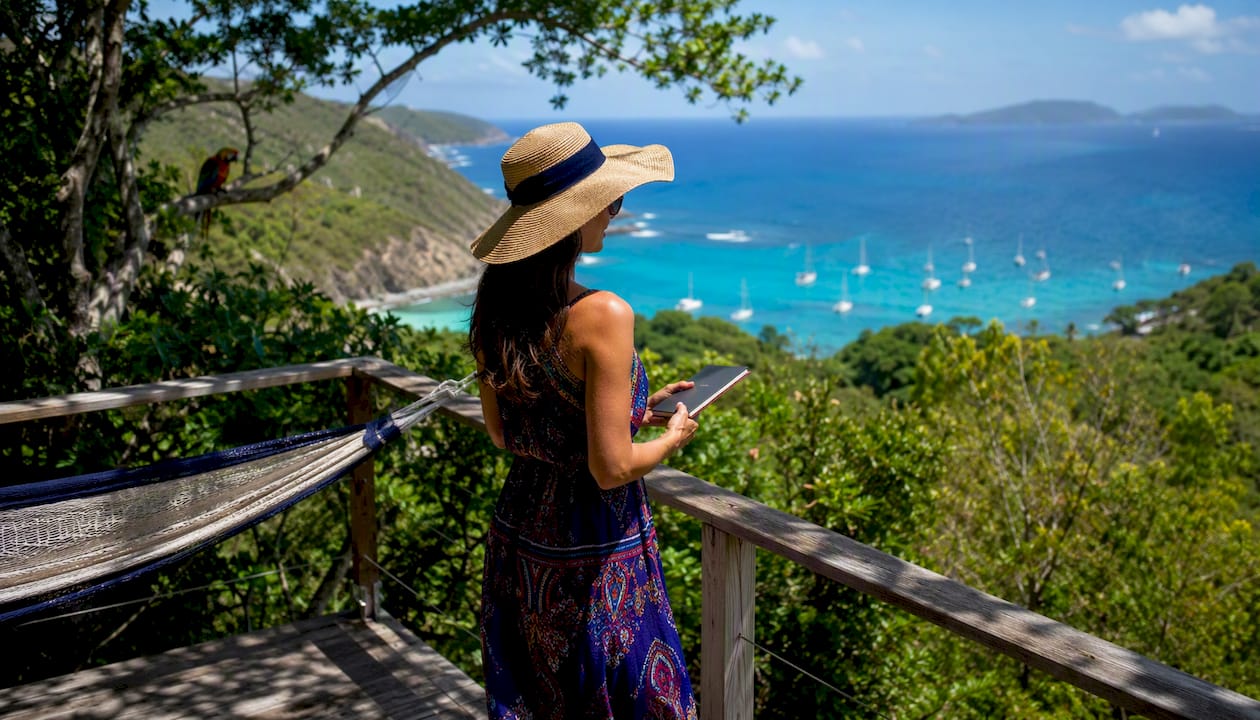

For most U.S. travelers who want easy logistics and a mix of land-based activities, the USVI is the smarter pick. For sailors, honeymooners, and anyone chasing secluded cays, the BVI wins without much debate.
Here is the short version of why:
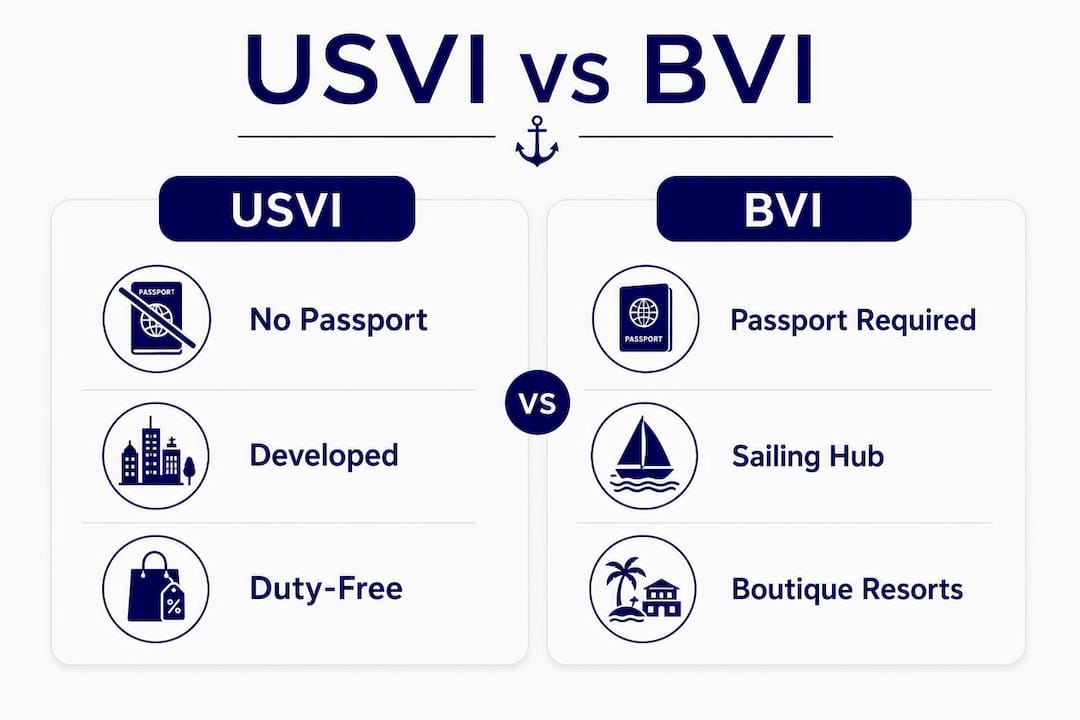
- Accessibility: St. Thomas (STT) receives direct flights from major U.S. hubs, and U.S. citizens don’t need a passport to enter the USVI. The BVI requires a valid passport and British Customs clearance, which adds time and paperwork.
- Vibe: The USVI feels more developed and American-style in its infrastructure, with chain resorts, shopping in Charlotte Amalie, and a lively nightlife scene. The BVI runs on a slower, boat-centered rhythm with boutique properties and quieter coves.
- Primary activity advantage: The BVI is widely recognized as the Sailing Capital of the Caribbean, with a large modern charter fleet, a well-developed mooring ball network, and dozens of short island hops. The USVI counters with a large national park covering much of St. John, world-class scuba on St. Croix, and easier family logistics.
If you have 10 or more days, consider combining both. Fly into STT, spend three or four days exploring the USVI by land, then take a ferry or charter across to the BVI for a week of sailing. Many travelers now blend both to capture easy access and yacht-forward exploration in a single trip.
Table of Contents
- How do USVI and BVI compare side by side?
- What are the main islands and what is each one good for?
- How do you get there, and what documents do you need?
- How do you get around once you’re there?
- What is the vibe like, and who goes to each place?
- What are the best activities in each territory?
- How does sailing and chartering differ between the BVI and USVI?
- Where do you stay, and what should you budget?
- Which territory is right for your trip?
- Two sample itineraries to get you started
- Key Takeaways
- The case for picking a side (and sticking with it)
- Virgincharteryachts makes BVI charter planning straightforward
- Useful sources and further reading
How do USVI and BVI compare side by side?
| Category | USVI | BVI |
|---|---|---|
| Ease of access | Direct flights from U.S. hubs to STT and STX | Ferry or short flight from USVI, Miami or San Juan |
| Passport required? | No (U.S. citizens) | Yes — passport + British Customs |
| Best for | Families, resort travelers, divers, hikers | Sailors, honeymooners, boutique luxury |
| Typical cost | Moderate; more direct flight options keep costs down | Higher overall; boutique focus and transfer costs add up |
| Accommodation | Chain hotels, resorts, Airbnbs, villas | Boutique resorts, private villas, charter yachts |
| Transport | Taxis, ferries, car rentals, commuter flights | Private charters, public ferries, limited car rentals |
| Crowding | Cruise ship traffic on St. Thomas; St. John quieter | Less crowded overall; popular anchorages fill in season |
| Charter infrastructure | Shorter day trips; PVSA/Jones Act constraints in U.S. waters | Extensive mooring network; multi-island itineraries standard |
Top strength, at a glance:
- USVI: No passport required for U.S. citizens, direct flights, and a national park on St. John that rivals any in the Caribbean.
- BVI: The Caribbean’s premier sailing destination, with protected anchorages, iconic beach bars, and a charter fleet built for island hopping.
U.S. passport holders can enter the USVI without a passport as a U.S. territory. Crossing into the BVI requires a valid U.S. passport and British Customs clearance, so check your documents before you book.
What are the main islands and what is each one good for?
USVI: three islands, three distinct personalities
St. Thomas is the entry point for most visitors. Charlotte Amalie is one of the Caribbean’s busiest duty-free shopping ports, and the nightlife around Red Hook draws a younger crowd. The beaches are good, but the real draw is convenience: ferries, flights, and provisioning are all easy here.
St. John is the quieter counterpart. About 60% of the island is protected as Virgin Islands National Park, which means hiking trails, pristine snorkeling at Trunk Bay, and a pace that feels genuinely unhurried. Cruz Bay has a handful of good restaurants and bars, but St. John is not a party island.
St. Croix sits about 40 miles south of the other two and has a different character entirely. It is pastoral, historically rich, and home to some of the best scuba diving in the U.S. Caribbean, including the Cane Bay Wall and the Frederiksted pier wreck.
BVI: a sailing archipelago with iconic stops
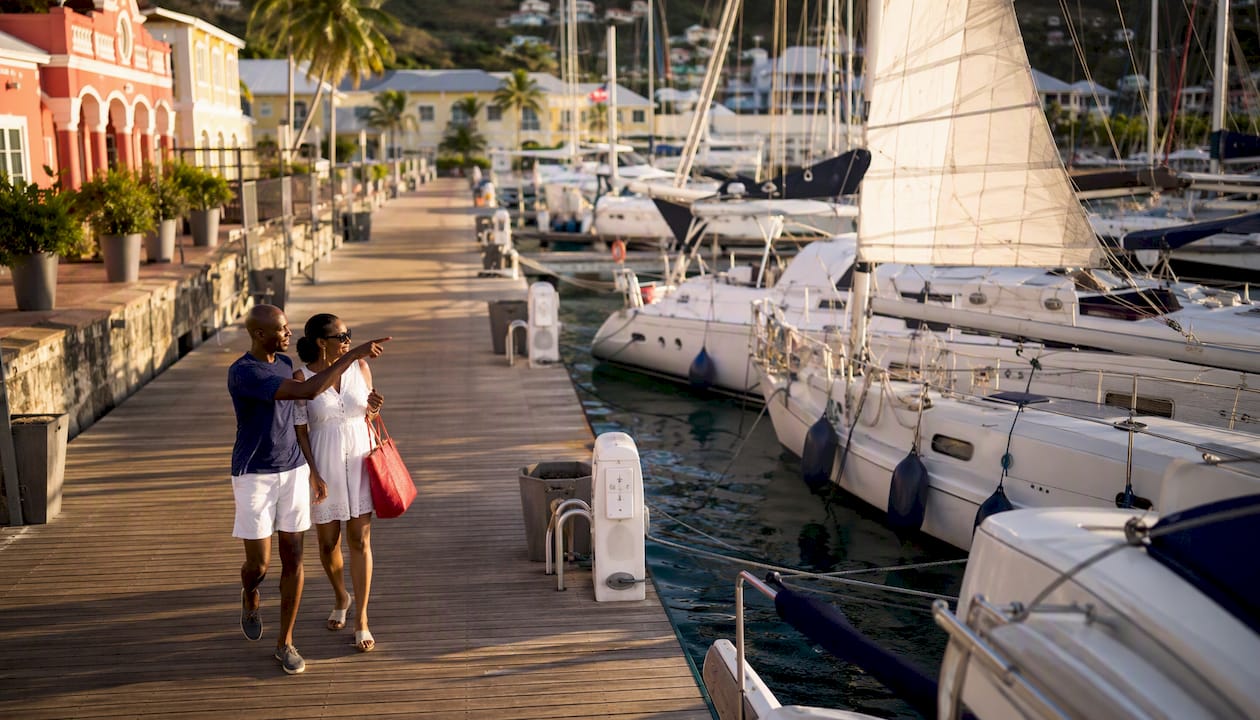
Tortola is the BVI’s main island and its sailing hub. Road Town has provisioning, marinas, and charter bases. Most BVI itineraries start and end here.
Virgin Gorda is famous for The Baths, a geological formation of massive granite boulders that create sea-filled grottos at the waterline. Worth a half-day even if you never snorkel.
Jost Van Dyke is tiny and legendary. White Bay is home to the Soggy Dollar Bar, where the Painkiller cocktail was reportedly invented. The beach bar culture here is a BVI institution.
Anegada is the outlier: flat, coral-based, and ringed by shallow turquoise water. It is known for lobster dinners on the beach and a reef system that has claimed hundreds of ships over the centuries.
Beyond these four, the BVI has dozens of smaller cays, including Norman Island, Cooper Island, and Peter Island, each with sheltered anchorages and short hops between them. That density of stops is exactly what makes the BVI so well-suited to chartering.
How do you get there, and what documents do you need?
Flights and entry for U.S. travelers
Getting to the USVI is straightforward. Cyril E. King Airport (STT) on St. Thomas receives direct flights from Atlanta, Miami, New York (JFK and Newark), Charlotte, and other major hubs. Henry E. Rohlsen Airport (STX) on St. Croix has fewer direct options but connects through San Juan. No passport is required for U.S. citizens arriving in the USVI, which is a genuine convenience for families and last-minute travelers.
The BVI has direct international flights from Miami via American Airlines. You can also get to BVI via either a ferry from St. Thomas or St. John (roughly 45 minutes to an hour to Tortola’s West End or Road Town), a short commuter flight from San Juan or STT, or arriving by charter yacht. Every one of those routes requires a valid U.S. passport and British Customs clearance on arrival.
Border crossings into the BVI require passport and British Customs clearance, and some operators note per-person environmental and customs fees. Build at least two to three extra hours into your first BVI day to account for ferry schedules and the clearance process.
Pro Tip: If you plan to cross into the BVI even once during your trip, bring your passport regardless. Customs officers at West End and Road Town do not accept alternatives, and ferry operators will turn you away without one.
Ferry schedules and practical timing
Ferries between St. Thomas and Tortola run multiple times daily, but schedules thin out in the late afternoon. Book in advance during high season (December through April), and confirm departure points: ferries leave from Charlotte Amalie harbor and from Red Hook on the east end of St. Thomas, with different transit times to different BVI ports.
How do you get around once you’re there?
USVI inter-island travel
Within the USVI, taxis are the default on St. Thomas and St. Croix. Open-air safari buses are common and inexpensive for short hops. Car rentals are available on all three main islands and give you the most flexibility, especially on St. Croix where distances are longer. Note that both the USVI and BVI drive on the left, despite the USVI using American-style road signs and right-hand-drive vehicles.
Ferries connect St. Thomas to St. John in about 20 minutes from Red Hook, making a day trip between the two easy. St. Croix is a short commuter flight or a longer ferry ride from St. Thomas, so most travelers pick one or the other rather than island-hopping between all three.
BVI inter-island travel
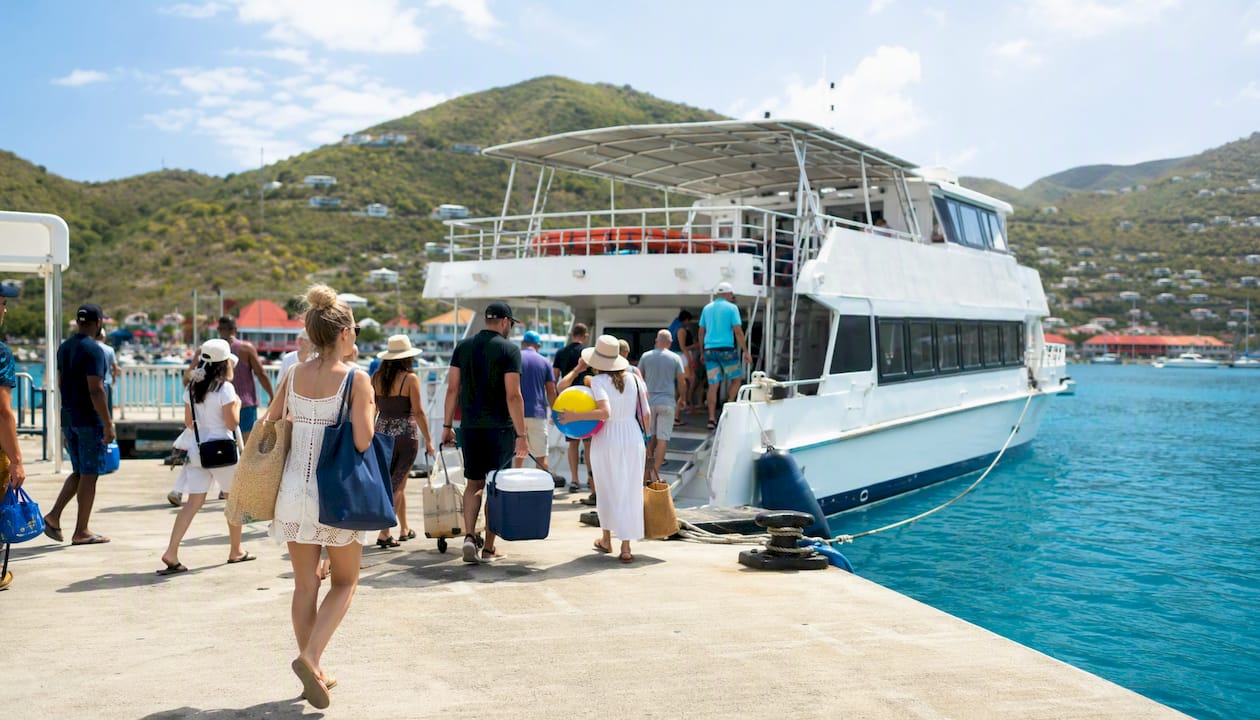
In the BVI, a charter yacht is the most practical way to move between islands. Public ferries connect the main islands, but schedules are limited and some smaller cays have no ferry service at all. Car rentals are available on Tortola and Virgin Gorda, but roads are steep and narrow.
For charter travelers, the BVI’s mooring ball network reduces the logistical burden considerably.
- Fuel and provisioning are best handled in Road Town (Tortola) or at Nanny Cay before departure.
- Mooring fees vary by location; most are paid on-site via the BVI National Parks Trust.
- Moorings can be pre-booked in some locations via BoatyBall
- Clear customs before leaving Tortola if you plan to return to the USVI, as re-entry procedures apply.
What is the vibe like, and who goes to each place?
The USVI and BVI attract genuinely different travelers, and the gap is wider than the geography suggests.
The USVI is more developed in every measurable way: American chain hotels, familiar fast food alongside local restaurants, a busy cruise ship port in Charlotte Amalie, and the kind of infrastructure that makes first-time Caribbean travelers comfortable. Families with young children tend to do well here. So do travelers who want a Caribbean trip without the logistical complexity of a foreign country.
The BVI operates on a different frequency. There are no large all-inclusive resorts. The pace is set by the boat, the wind, and wherever you feel like anchoring for the night. The crowd skews toward experienced sailors, honeymooners, and travelers who have done the resort circuit and want something less scripted. Cruise ships do call at Road Town occasionally, but the BVI’s overall development level keeps it from feeling overrun the way St. Thomas can on a busy port day.
St. John sits somewhere between the two in feel: protected parkland, no cruise ship port, and a quieter bar scene. If you want the USVI without the commercial bustle, St. John is the answer.
What are the best activities in each territory?
USVI highlights
- Virgin Islands National Park: — Hiking trails ranging from easy coastal walks to longer ridge routes with panoramic views.
BVI highlights
BVI highlights include The Baths on Virgin Gorda, White Bay on Jost Van Dyke, Anegada’s lobster beaches, and the RMS Rhone wreck dive, which sits in about 80 feet of water near Salt Island and is considered one of the best wreck dives in the Western Hemisphere.
- The Baths, Virgin Gorda: Arrive early (before 10 AM) to beat the day-charter crowds.
- White Bay, Jost Van Dyke: Anchor off the beach and swim ashore for a Painkiller at the Soggy Dollar Bar.
- Anegada: Reserve your lobster dinner in advance at one of the beachside restaurants; they source fresh daily and run out.
- Norman Island: The caves at Treasure Point offer snorkeling in clear, shallow water, and the floating bar nearby is a BVI institution.
Pro Tip: Snorkeling and diving visibility peaks between January and April, when trade winds keep the water clear and temperatures hover around 78–80°F. Summer months bring calmer seas but occasionally reduced visibility from plankton blooms.
How does sailing and chartering differ between the BVI and USVI?
The BVI’s reputation as the Sailing Capital of the Caribbean is not marketing copy. It reflects a specific combination of geography and infrastructure that no other Caribbean destination fully replicates: dozens of protected anchorages within short sailing distances, a well-maintained mooring ball network, and a charter fleet built specifically for island hopping.
Why the BVI works so well for charters
The BVI’s mooring ball network and short inter-island hops reduce crew hours and fuel for multi-stop sailing, while USVI charter days often center on shorter runs and scenic snorkel stops. A typical BVI charter day might cover a couple of different anchorages, each with its own character. A USVI charter day tends to be a single destination with more time at anchor.
Charter checklist for BVI trips
- Confirm your yacht’s flag state and whether your planned itinerary complies with PVSA rules.
- Carry valid passports for all passengers — British Customs requires them on entry.
- Pre-book mooring balls at high-demand sites during December through April.
- Provision in Road Town before departure; provisioning options thin out quickly on smaller islands.
- Budget for BVI customs and environmental fees per person on entry.
- Confirm whether your charter is bareboat or crewed, and what documentation each requires (bareboat typically requires proof of sailing competency).
Pro Tip: Bareboat charters require an approved sailing resume for approval. If your experience is limited, a crewed charter removes that requirement entirely and adds a local captain who knows the anchorages, the weather patterns, and where to get the best lobster on Anegada.
Virgincharteryachts has operated out of Tortola since 1996 and handles the PVSA routing question, customs logistics, and provisioning coordination as part of the planning process, which is exactly the kind of local knowledge that saves a charter week from turning into a paperwork headache.
Where do you stay, and what should you budget?
USVI accommodation
The USVI has the fuller range of options. St. Thomas has large chain resorts, boutique hotels, and a healthy Airbnb market. St. John leans toward eco-lodges, private villas, and the Caneel Bay area (currently under redevelopment). St. Croix has smaller boutique properties and a handful of plantation-style inns that reflect its agricultural history.
Budget travelers can find reasonable options in the USVI, particularly outside peak season. Mid-range hotels on St. Thomas run the gamut from basic to genuinely comfortable, and the direct flight options keep airfare competitive.
BVI accommodation
The BVI’s accommodation mix is narrower and pricier. Boutique resorts, private villa rentals, and charter yachts cover most of the market. There are no large all-inclusive resorts, and that is by design. The BVI has historically limited large-scale development to protect the sailing and nature-focused character of the islands.
Travel costs are generally higher in the BVI than in the USVI due to extra transfer steps, boutique pricing, and higher per-activity costs. A week-long crewed charter in the BVI will cost significantly more than a comparable week at a USVI resort, but the experience is categorically different: you wake up in a new anchorage every morning, and the boat is both your hotel and your transport.
Both territories use the U.S. dollar, which simplifies budgeting. Credit cards are widely accepted at resorts and marinas, but carry some cash for smaller beach bars, mooring fees, and local markets.
Which territory is right for your trip?
Work through these questions before you book:
- Do you have a valid passport? If not, the USVI is your only option.
- How much time do you have? Less than five days favors the USVI for ease of access. Seven or more days opens up a BVI charter or a combined itinerary.
- Is sailing the point of the trip? If yes, the BVI. If sailing is a nice-to-have, the USVI has day-charter options without the full charter commitment.
- What is your budget? The BVI runs higher across the board. If cost is a primary constraint, the USVI gives you more for the money.
- Do you want nightlife and shopping? Charlotte Amalie and Red Hook on St. Thomas. The BVI has beach bars, not nightclubs.
- Are you traveling with young children? The USVI’s infrastructure, familiar food options, and easier logistics make it the more family-friendly choice.
- Do you want seclusion? The BVI’s smaller cays and boutique character deliver it more reliably than the USVI.
Non-negotiables by traveler type:
- No passport → USVI only
- Must sail daily → BVI
- Family with young kids → USVI or BVI
- Honeymoon or romantic escape → BVI (or St. John as a USVI compromise)
- Serious diver → St. Croix (USVI) for shore diving; BVI for the RMS Rhone wreck
- 10+ days available → combine both
Combining both: Fly into STT, spend three nights on St. Thomas or St. John, then take the ferry to Tortola and pick up your charter. End the charter back in Road Town, and fly home from STT. This structure minimizes dead travel days and captures the best of both territories.
Two sample itineraries to get you started
5-day USVI land-based itinerary
- Day 1: Arrive STT, check in, explore Charlotte Amalie for duty-free shopping and dinner at a waterfront restaurant.
- Day 2: Ferry to St. John. Hike the Reef Bay Trail in the morning, snorkel Trunk Bay in the afternoon, overnight in Cruz Bay.
- Day 3: Full day on St. John. Rent a Jeep, drive to Coral Bay, and spend the afternoon at Salt Pond Bay.
- Day 4: Ferry back to St. Thomas. Half-day snorkel charter from Red Hook, afternoon at Magens Bay.
- Day 5: Depart from STT.
7-day BVI yacht-based itinerary
- Day 1: Fly into STT, take the afternoon ferry to Road Town, Tortola. Board your charter, provision, and overnight at Nanny Cay marina.
- Day 2: Sail to Norman Island. Snorkel the caves at Treasure Point, anchor at the Bight overnight.
- Day 3: Sail to Jost Van Dyke. Anchor Great Harbor and dinghy to White Bay, swim ashore for lunch at the Soggy Dollar Bar, overnight at Great Harbour.
- Day 4: Sail to Virgin Gorda. Morning at The Baths (arrive before 9 AM), afternoon sail to North Sound, overnight at Bitter End area.
- Day 5: Sail to Anegada. Reserve lobster dinner in advance, explore the beaches, overnight at Setting Point.
- Day 6: Sail back toward Tortola via Cooper Island or Peter Island for a final anchorage night.
- Day 7: Return to Road Town, clear out, ferry to STT for departure.
Pre-trip checklist for U.S. travelers
- Valid U.S. passport (required for BVI; strongly recommended even for USVI trips)
- Travel insurance covering medical evacuation (the nearest major hospital to the BVI is in St. Thomas)
- Prescription medications in original labeled containers
- Reef-safe sunscreen (required in many BVI anchorages)
- Confirmed ferry or charter booking for BVI crossings, especially December through April
- BVI customs and environmental fee budget per person
- Provisioning list finalized before leaving Road Town
Booking tip: Ferry and charter availability tightens significantly from late December through March. Book at least three months out for peak-season travel, and confirm mooring ball reservations directly with the BVI National Parks Trust.
Key Takeaways
The USVI suits travelers who want easy access and land-based variety; the BVI is the right call for sailors and anyone prioritizing secluded, boutique island hopping.
| Point | Details |
|---|---|
| Passport requirement | U.S. citizens need no passport for the USVI; a valid passport is required for the BVI. |
| Best for sailing | The BVI’s mooring network and short inter-island hops make it the Caribbean’s top charter destination. |
| Cost difference | The BVI runs higher overall due to boutique pricing, transfer logistics, and charter costs. |
| Virgincharteryachts | Virgincharteryachts has operated BVI charters from Tortola since 1996, handling customs, provisioning, and PVSA-compliant routing. |
The case for picking a side (and sticking with it)
The most common mistake travelers make with this decision is trying to hedge. They book a USVI resort, add a BVI day trip, and end up spending two of their best vacation days on ferries and in customs queues. The territories are close on a map but genuinely different in character, and each rewards travelers who commit to it.
The USVI is not a consolation prize for people who can’t get to the BVI. St. John’s national park is one of the most beautiful protected areas in the entire Caribbean, and Cane Bay on St. Croix is the kind of shore dive that serious divers plan entire trips around. The USVI has real depth if you go looking for it.
The BVI, on the other hand, is genuinely hard to replicate anywhere else in the world. The combination of protected anchorages, short sailing distances, and a charter culture built over decades creates something that no single resort can match. But it asks more of you: a passport, a higher budget, and a willingness to let the itinerary breathe.
If you have the time and the budget to do both properly, do both. If you have to pick one, pick based on what you actually want to do, not what sounds more exotic. The traveler who spends a week hiking St. John and diving St. Croix will have a better trip than the sailor who spends three days in the BVI wishing they had more time.
Virgin Charter Yachts makes BVI charter planning straightforward
Choosing the BVI is the easy part. Figuring out which yacht fits your group, which anchorages to prioritize, how to handle customs clearance, and how to provision for a week at sea is where most first-time charter travelers get stuck.
Virgin Charter Yachts has been based on Tortola since 1996, which means 30 years of local knowledge on the water, not in a booking office on another continent. The fleet covers bareboat and crewed options across brands like Fountaine Pajot, Leopard, Aquila, Lagoon, and Horizon, with each yacht maintained to a standard that reflects a family-run operation’s reputation rather than a volume-based fleet manager’s spreadsheet. They handle all aspects of your charter including; provisioning coordination, and itinerary planning as part of the process, so you arrive in Road Town with a plan that actually works.
If you have decided the BVI is your destination, browse the fleet and start your charter inquiry at Virgin Charter Yachts to check availability and get a quote matched to your group size and dates.
Useful sources and further reading
- National Geographic: How to choose between the U.S. Virgin Islands and British Virgin Islands
- Lonely Planet: USVI vs BVI
- Wanderlust Chloe: USVI vs BVI
- Voyage Roams: USVI vs BVI Caribbean Guide
- TravelLemming: US vs British Virgin Islands
- U.S. State Department: British Virgin Islands travel information
- ShermansTravel: Which U.S. Virgin Island Is for You?
- Virgincharteryachts: BVI charter fleet and booking
Did You Know?
The BVI are only accessible by boat. Check out our charter yachts that can get you there. View Our Fleet