
SNUBA is a surface-supplied, tethered diving experience built for beginners; scuba is self-contained diving that requires certification but opens up deeper, longer, more independent exploration. If you have an afternoon, no training, and want a taste of breathing underwater, SNUBA wins. If you want to plan real dive trips, go deeper than 20 feet, and explore reefs and wrecks on your own schedule, scuba is the only path there.
- Choose SNUBA if: you have under an hour, you’re traveling with kids or non-swimmers, or you just want a quick underwater experience without gear training.
- Choose scuba if: you’re willing to invest a few days in certification, want to dive to 60 feet or more, and plan to make diving a recurring part of your travels.
- Safety note: SNUBA needs only a short safety briefing from a guide; scuba requires a recognized certification like PADI or NAUI before you can dive unsupervised.
Key Takeaways
SNUBA offers a shallow, tether-supplied introduction to underwater breathing with minimal orientation, while scuba requires certification but unlocks depth, duration, and independence SNUBA can’t match.
| Point | Details |
|---|---|
| Core difference | SNUBA uses a surface raft and hose; scuba divers carry self-contained tanks and gear. |
| Depth and time | SNUBA tops out around 20 feet for 20 to 30 minutes; certified scuba divers reach 40 to 60 feet or more. |
| Training gap | SNUBA needs a short briefing; scuba certification involves classroom, pool, and open-water training over several days. |
| Gear weight | Full scuba setups can exceed 40 pounds out of water; SNUBA gear is limited to a mask, fins, and harness. |
| Best next step | Try SNUBA or Discover Scuba first if unsure, then pursue Open Water certification if you want to keep diving. |
Table of Contents
- What Is SNUBA Diving?
- What Is Scuba Diving?
- SNUBA vs Scuba Equipment: What You Actually Wear
- How Much Training Does Each One Require?
- How Deep Can You Go, and How Long Does It Take?
- What Are the Real Safety Risks?
- Who Should Choose SNUBA vs Scuba?
- Quick Decision Guide: SNUBA or Scuba?
- Do SNUBA and Scuba Affect the Reef Differently?
- What Does Each Activity Actually Cost?
- Do You Need to Be Fit to Try SNUBA or Scuba?
- What Should You Do After the Dive?
- Where Can You Try SNUBA or Scuba?
- Frequently Asked Questions
- Sources
What Is SNUBA Diving?
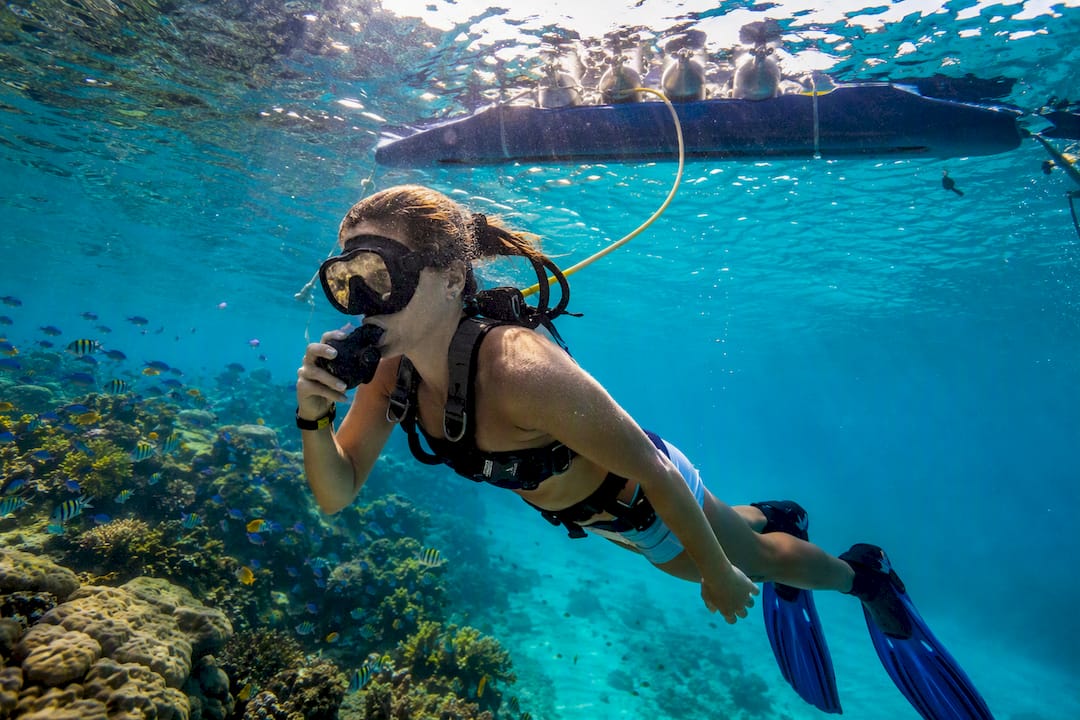
SNUBA sits in the gap between snorkeling and scuba. Instead of strapping a tank to your back, you swim below a floating raft that carries the air tank, and you breathe through a long hose connected to a regulator in your mouth. The setup lets divers descend to about 20 feet, which is deep enough to see real reef structure and marine life without the training curve of scuba.
A typical session lasts 20 to 30 minutes underwater, bookended by a short briefing on the surface. That briefing covers breathing through the regulator, clearing your mask, and basic hand signals. There’s no written exam, no confined-water skills test, and no card to earn. You show up, get outfitted, and go.
Who runs it and how it looks in practice:
- Resort water-sports teams, cruise excursion desks, and dedicated dive shops all offer guided SNUBA tours, almost always with an instructor swimming alongside the group.
- Launches happen from beaches (walk straight into the water) or from small boats anchored over a shallow reef.
- Most operators set a minimum age around 8, since the activity requires enough comfort in water to relax with a hose in your mouth, but there’s no upper age limit tied to fitness certification.
Pro Tip: If you’ve never breathed through a regulator before, try a pool trial run at a resort if one’s offered. It removes the “what does this feel like” anxiety before you’re floating over a reef.
What Is Scuba Diving?
Scuba, short for self-contained underwater breathing apparatus, means you carry your own air supply on your back instead of relying on a hose to the surface. That single design choice changes everything about the experience, from training time to how far you can roam.
Core gear every scuba diver manages:
- A tank (cylinder) holding compressed air or nitrox
- A regulator that delivers air on demand
- A buoyancy control device, or BCD, that lets you float, sink, or hover
- A dive computer or gauges to track depth, time, and remaining air
Recreational scuba equipment is personal gear that can weigh more than 40 pounds out of the water, which is one reason first-timers often feel intimidated before they even get wet. In the water, that weight disappears and buoyancy takes over, but you still have to manage it.
Getting certified is the real gatekeeper. Entry-level PADI Open Water certification involves classroom study, confined-water pool sessions, and open-water checkout dives, usually spread across three to four days. A shorter option called Discover Scuba lets you try a supervised dive without full certification, but it comes with depth limits and constant instructor supervision.
Certified recreational divers typically operate in the 40 to 60 foot range, with advanced certifications pushing past 100 feet. Dive times run 30 to 60 minutes depending on tank size, depth, and air consumption, giving scuba divers far more time and range per outing than a SNUBA session allows.
SNUBA vs Scuba Equipment: What You Actually Wear
The physical difference between these two activities shows up the moment you gear up. SNUBA participants wear a mask, fins, and a harness connecting them to the hose. That’s it. The tank stays on the raft above, so there’s nothing heavy strapped to your back and nothing to manage beyond breathing normally.
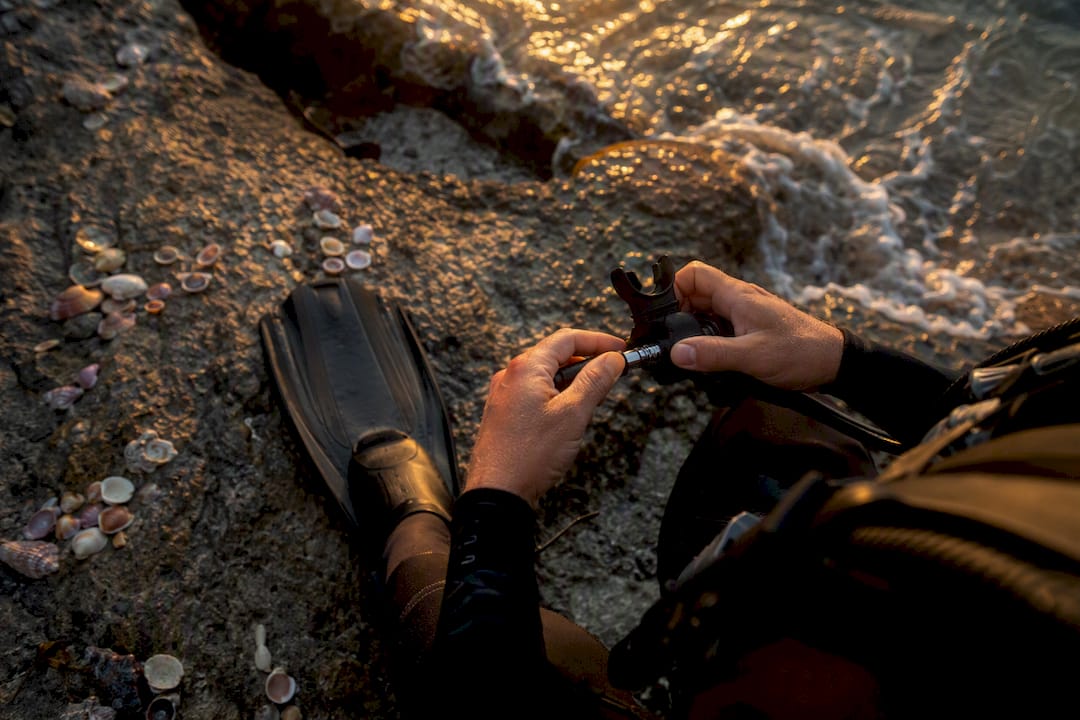
Scuba divers carry the whole life-support system with them. A full setup, tank, BCD, regulator, and weight belt, often tops 40 pounds when you’re standing on dry land. Once submerged, proper weighting makes you neutrally buoyant, so the gear feels far lighter underwater than it does walking to the boat. Still, someone has to carry it, rinse it, and pack it.
Quick equipment comparison:
- SNUBA: mask, fins, harness, hose connection. Minutes to gear up.
- Scuba: tank, BCD, regulator, dive computer, weight system, exposure suit. Fifteen to twenty minutes to gear up and check.
- Scuba includes built-in redundancy, like an alternate air source (the “octopus”) and a backup buoyancy bladder, that SNUBA systems typically don’t carry because the surface connection itself acts as the backup air source.
Pro Tip: Ask your operator whether SNUBA gear rental is bundled into the tour price. Most SNUBA outfits include everything; scuba trips often separate tank/weight rental from the boat fee, so read the fine print before booking.
For trip planning, this equipment gap matters more than people expect. SNUBA requires zero packing since gear stays with the operator. Scuba divers who own their mask, fins, and regulator often have to think about airline baggage weight, since a full dive bag can push toward 30 pounds before clothes go in.
How Much Training Does Each One Require?
The time investment is where SNUBA and scuba diverge hardest. SNUBA needs a short orientation, often 15 to 30 minutes, covering breathing, communication signals, and what to do if the hose feels tight. Scuba certification is a structured course spanning multiple sessions.
What each path actually covers:
- SNUBA orientation: how to breathe through the hose, basic hand signals, staying close to the group, and what to do if you feel discomfort.
- Discover Scuba programs: a supervised introductory dive, usually in shallow water, that lets you feel the equipment under direct instructor control but carries strict depth and autonomy limits compared to certification.
- Full Open Water certification: classroom theory, pool skills practice, and open-water dives that test your ability to manage air, buoyancy, and emergency procedures independently.
Age and health matter for both. Most operators set minimum ages around 8 for SNUBA and 10 for Discover Scuba, with full certification typically open from age 10 or 12 depending on the agency. Anyone with a history of heart conditions, seizures, collapsed lung, or serious respiratory issues should talk to a physician before either activity, since pressure changes affect the body differently than normal swimming.
Certification exists because independent diving demands independent judgment: tracking your own air supply, managing ascent rates, and recognizing early signs of trouble before they become emergencies.
Pro Tip: If you’re on the fence, book a Discover Scuba session before committing to a full certification course. It’s the cheapest way to find out if you actually like breathing underwater before investing three days in classroom time.
How Deep Can You Go, and How Long Does It Take?
Depth is the single clearest dividing line between these two activities. SNUBA tops out around 20 feet, a limit set by the hose length and the physics of the surface-supplied system. Scuba divers with Open Water certification commonly reach 40 to 60 feet, and advanced training extends that well past 100 feet.
Time underwater follows the same pattern. A SNUBA session runs 20 to 30 minutes from entry to exit, shaped by tour scheduling and group size as much as by the equipment itself. A single scuba tank typically lasts 30 to 60 minutes depending on depth, exertion, and lung efficiency, and many trips include two tanks across a half-day outing.
Logistics that shape the day:
- SNUBA tours almost always launch from a beach or a small anchored boat over a shallow, protected reef, since the raft and hose need calm water to work safely.
- Scuba trips range from shore dives at accessible sites to full boat excursions reaching offshore reefs, walls, and wrecks inaccessible from land.
- Current, visibility, and boat traffic all affect SNUBA more than scuba, since the surface raft has to track with swimmers and can drift or drag in choppy conditions.
- Resort and cruise programs favor SNUBA for its speed and simplicity; dedicated dive shops and liveaboards are built around scuba’s flexibility and range.
What Are the Real Safety Risks?
Neither activity is risk-free, and the risks aren’t the same. SNUBA’s main hazards come from the tether itself: hose entanglement, raft drift in current, and reduced surface visibility for the operator watching the group. The surface connection eliminates the need to manage your own air supply, but it introduces mechanical risks that scuba divers simply don’t face.
Scuba’s risks run deeper, literally. Ascending too fast can cause decompression sickness. Breathing compressed air at depth can trigger nitrogen narcosis, sometimes called “the narcs,” which dulls judgment exactly when clear thinking matters most. Equipment failure, while rare with proper maintenance, is why certification training builds in redundant systems like alternate air sources and backup buoyancy control.
The tether that makes SNUBA approachable also creates its one real vulnerability. Guides train specifically to keep divers from pulling on the hose or drifting into current, because the raft above them isn’t just equipment, it’s the whole air supply chain.
Shared safety fundamentals that apply to both:
- Never hold your breath underwater; both activities depend on continuous, normal breathing.
- Equalize your ears on descent to avoid pressure injury.
- Disclose any heart, lung, or ear condition before you get in the water.
- Sit out either activity if you’re congested, exhausted, or have been drinking.
Operators mitigate these risks differently. SNUBA guides manage group positioning and site selection to avoid strong current. Scuba instructors teach dive planning, conservative depth limits, and buddy checks before every single dive.
Who Should Choose SNUBA vs Scuba?
Match the activity to your trip, not the other way around.
- Families with young kids or nervous swimmers: SNUBA removes the certification barrier and the gear-management stress, making it the easier group activity for mixed-comfort-level travelers.
- Time-limited travelers on a single-day excursion: A 20 to 30 minute SNUBA session fits into a beach afternoon without eating into the rest of your itinerary.
- Divers chasing depth, wrecks, or extended bottom time: Scuba is the only route to sites below 20 feet, and certification pays for itself if you plan to dive more than once or twice in your life.
- Photographers and thrill seekers wanting autonomy: Scuba lets you control your own pace and positioning; SNUBA keeps you tethered to a raft and a group.
- Curious first-timers unsure if diving is “for them”: Try SNUBA or a Discover Scuba session first, since both act as low-commitment entry points before investing in full certification.
Pro Tip: Booking for a mixed group? Some resorts and excursion desks let non-divers do SNUBA while certified friends do a separate scuba dive on the same trip, so nobody has to sit out.
Budget and time trade-offs are real. SNUBA costs less and takes an afternoon. Scuba certification runs several hundred dollars and multiple days, but it unlocks every dive site you’ll ever want to visit for the rest of your life, not just the one your resort happens to run tours to.
Quick Decision Guide: SNUBA or Scuba?
Answer these questions honestly and the choice usually makes itself.
- How much time do you have? An afternoon or less points to SNUBA; several days points to scuba certification.
- How deep do you want to go? If 20 feet sounds plenty, stay with SNUBA. If you’re dreaming of wrecks and walls, scuba is non-optional.
- Are you willing to sit through classroom and pool training? If yes, Open Water certification is worth the investment. If no, SNUBA or a Discover Scuba session covers the itch.
- Any age, fitness, or medical concerns in your group? Younger kids and less confident swimmers usually do better with SNUBA’s shorter, simpler format.
- Do you plan to dive again after this trip? If diving might become a habit, get certified now rather than repeating orientation briefings on every future vacation.
Whichever you pick, confirm the operator’s credentials and check current site conditions before booking. A reputable SNUBA outfit runs guided tours with a visible safety briefing every time; a reputable dive shop will ask for your certification card before letting you touch a tank.
Do SNUBA and Scuba Affect the Reef Differently?
Both activities put swimmers directly above living coral, and both carry real environmental stakes if guides and divers aren’t careful. SNUBA’s tethered raft system tends to keep groups in a tighter, more controlled area, which limits how far divers wander but concentrates fin contact and sediment disturbance in one spot if the site is small.
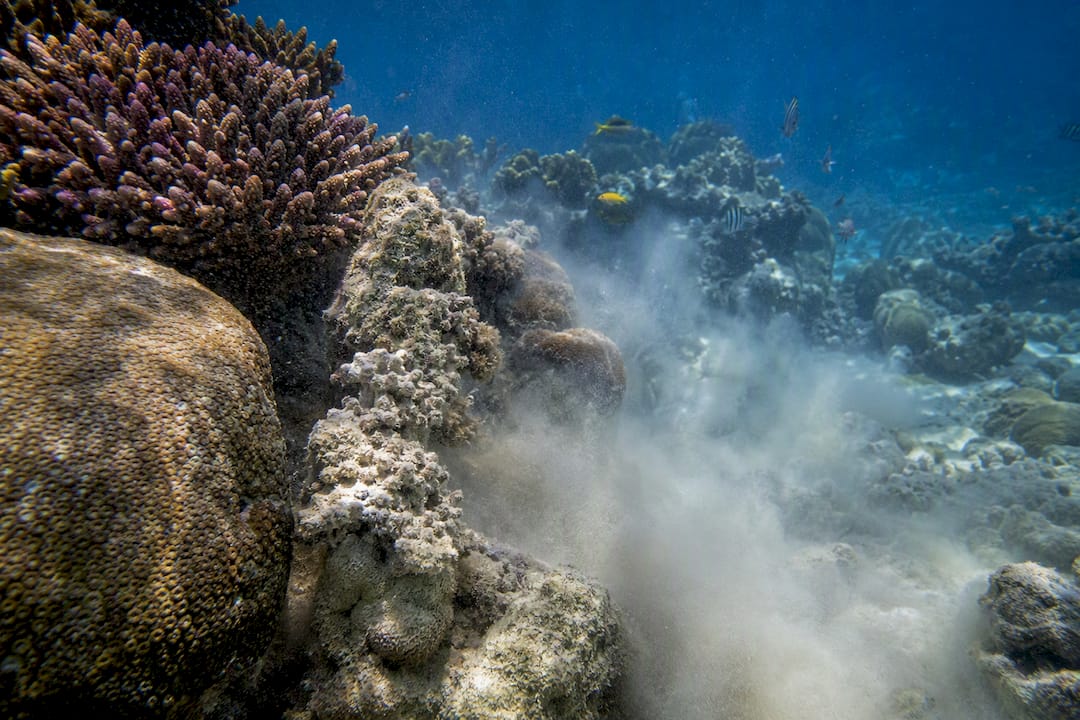
Scuba divers cover more ground per dive, which spreads impact across a wider area but also means more opportunities for careless fin kicks to snap coral that took decades to grow. Reputable operators for both activities train guides to enforce no-touch policies, maintain buoyancy control so divers don’t drag along the bottom, and rotate dive sites to let reefs recover between visits.
Marine park fees, seasonal site closures, and coral-safe sunscreen requirements are increasingly common at both SNUBA and scuba destinations, particularly in protected areas of the Caribbean where reef health directly supports tourism revenue. Choosing an operator that participates in reef monitoring or coral restoration programs is a small but meaningful way to make either activity less taxing on the ecosystem you came to see. The healthiest reefs tend to be the ones with the most disciplined dive operators, not necessarily the ones with the fewest visitors.
What Does Each Activity Actually Cost?
Money is often the deciding factor once depth and time preferences are settled. A single SNUBA session typically runs less than a one-tank scuba dive, and it includes all gear rental in the price, since nothing goes home with you and nothing needs a certification card to unlock.
Scuba costs stack differently. A Discover Scuba experience costs roughly what a SNUBA session does, but full Open Water certification adds a multi-day course fee on top, covering instructor time, classroom materials, and confined-water pool access. After certification, every dive trip still requires tank and weight rental unless you own gear, and a basic personal setup (mask, snorkel, fins, and a dive computer) represents a real upfront investment for divers who plan to make this a regular hobby.
The math tends to favor SNUBA for a single vacation activity and favor scuba for anyone planning to dive repeatedly over the years. One certification course, paid once, replaces the need to re-orient or pay per-session fees on every future trip. For travelers weighing a handful of excursions against building a lifelong hobby, that’s the real budget question, not the price of any single dive.
Do You Need to Be Fit to Try SNUBA or Scuba?
Neither activity demands athletic conditioning, but both require a baseline of comfort in water and a clean bill of respiratory and cardiac health. SNUBA’s physical demands are modest: you need to float, breathe normally through a regulator, and follow a guide at a relaxed pace. Most reasonably healthy adults and older kids handle it without issue.
Scuba asks more of your body, mainly because you’re managing your own gear, buoyancy, and air consumption for a longer stretch of time. Certification agencies require a basic medical questionnaire before training, flagging conditions like asthma, heart disease, ear or sinus problems, and pregnancy as reasons to consult a physician first. Neither activity is appropriate if you’re congested, since blocked sinuses make equalizing painful or impossible at any depth.
Anyone with a history of collapsed lung, seizure disorders, or recent surgery should get medical clearance before either activity, since pressure changes underwater interact with these conditions differently than they do on land. Age minimums exist for similar reasons: young children may not have the lung development or judgment to manage pressure equalization safely, even in SNUBA’s shallow depths.
What Should You Do After the Dive?
Recovery after either activity is straightforward, but skipping it is a common rookie mistake. Rinse gear and skin in fresh water as soon as possible to remove salt, which otherwise dries out skin and corrodes zippers and metal fittings on rental equipment. Rehydrate deliberately. Both activities involve time in sun and salt water, which pulls moisture from your body faster than a normal beach day.
Scuba divers have one extra rule that matters more than any other: avoid flying or significant altitude changes for at least 12 to 18 hours after a dive, longer after multiple dives in a day. This window lets residual nitrogen clear from your bloodstream, reducing decompression sickness risk during cabin pressure changes. SNUBA’s shallow depth profile carries essentially no residual nitrogen concern, so that flight restriction doesn’t apply the same way.
Watch for warning signs after any underwater activity: unusual fatigue, joint pain, dizziness, or skin rash can signal decompression stress in scuba divers and warrant immediate medical attention. For SNUBA, mild ear discomfort or sinus pressure that lingers after surfacing is worth mentioning to a doctor if it doesn’t resolve within a day. Most people feel nothing more than pleasant tiredness after either activity, but knowing the difference between normal fatigue and a red flag is worth five minutes of reading before you book.
Where Can You Try SNUBA or Scuba?
Both activities cluster around warm, clear water destinations with reliable visibility year round. SNUBA programs are heavily concentrated at Caribbean resorts, cruise ports, and beach destinations where operators can set up a shallow, protected reef site close to shore, think the British Virgin Islands, the Cayman Islands, and much of the Mexican Riviera Maya.
Scuba destinations span a wider range, from beginner-friendly reef sites in the same Caribbean waters to bucket-list locations like the Great Barrier Reef, the Red Sea, and Indonesia’s Coral Triangle, where advanced divers chase wall dives, wrecks, and drift dives well beyond SNUBA’s depth ceiling. The British Virgin Islands in particular offer both ends of the spectrum within a short boat ride of each other, shallow coral gardens suited to SNUBA and deeper wreck and reef sites for certified divers.
For travelers piecing together a broader itinerary that mixes water activities with sightseeing, operators packaging curated boat tours alongside diving excursions show how well-run coastal trips balance a full day of activity without overloading any single stop. The best dive and snuba destinations tend to be the ones where operators actually know the local reef conditions, not just the ones with the most dive shops per mile of beach.
A Publisher’s Note on Matching Activities to Your Trip
Planning a charter means matching activities to who’s actually on board. A family with young kids and a group of certified divers need different days on the water, and getting that balance right is part of what makes a trip memorable rather than merely scheduled. We’ve built our approach around that kind of tailored planning, one reason our reviews and testimonials keep coming back to the same theme: guests felt like the itinerary was built around them, not a template. If SNUBA or scuba is on your wish list, it’s worth folding into a broader conversation about your itinerary rather than bolting it on as an afterthought.
Ready to build a trip around your group’s actual mix of divers, snorkelers, and first-timers? Virgin Charter Yachts has spent three decades in the British Virgin Islands helping guests plan itineraries that fit everyone aboard, from a quick SNUBA stop at a shallow reef to a full day of scuba diving at a nearby wreck site. Explore available yachts and start planning your custom charter itinerary today.
Frequently Asked Questions
Is SNUBA safe for someone who’s never dived before? Yes, for most healthy participants. Guides handle the technical side, and the brief orientation covers everything you need to breathe comfortably through the hose. The main risks come from currents or improper hose handling, both of which trained operators manage directly.
Can I do SNUBA if I’m not a strong swimmer? SNUBA is designed with weaker swimmers in mind, since you don’t need to tread water or manage buoyancy on your own. You do need to be comfortable putting your face in the water and breathing through a regulator.
Do I need to be scuba certified to try Discover Scuba? No. Discover Scuba programs are designed for people with zero certification. An instructor supervises you directly, and the experience is limited in depth and duration compared to what a certified diver can do independently.
How much deeper can scuba divers go compared to SNUBA? SNUBA caps out around 20 feet due to the hose-and-raft system. Certified recreational scuba divers commonly reach 40 to 60 feet, with advanced certifications allowing dives beyond 100 feet.
Which one should I choose for a family vacation with young kids? SNUBA generally works better for mixed-age families since it requires no certification and keeps the group together with a guide. Older teens and adults who want a longer, deeper experience might prefer pairing a SNUBA session with a separate Discover Scuba or certified dive.
Will trying SNUBA help me decide if I want to get scuba certified? It can. SNUBA gives you a low-commitment feel for breathing underwater, though the tethered system feels different from managing your own tank and buoyancy. A Discover Scuba session is a closer preview of what full certification training feels like.
Sources
Did You Know?
The BVI are only accessible by boat. Check out our charter yachts that can get you there. View Our Fleet