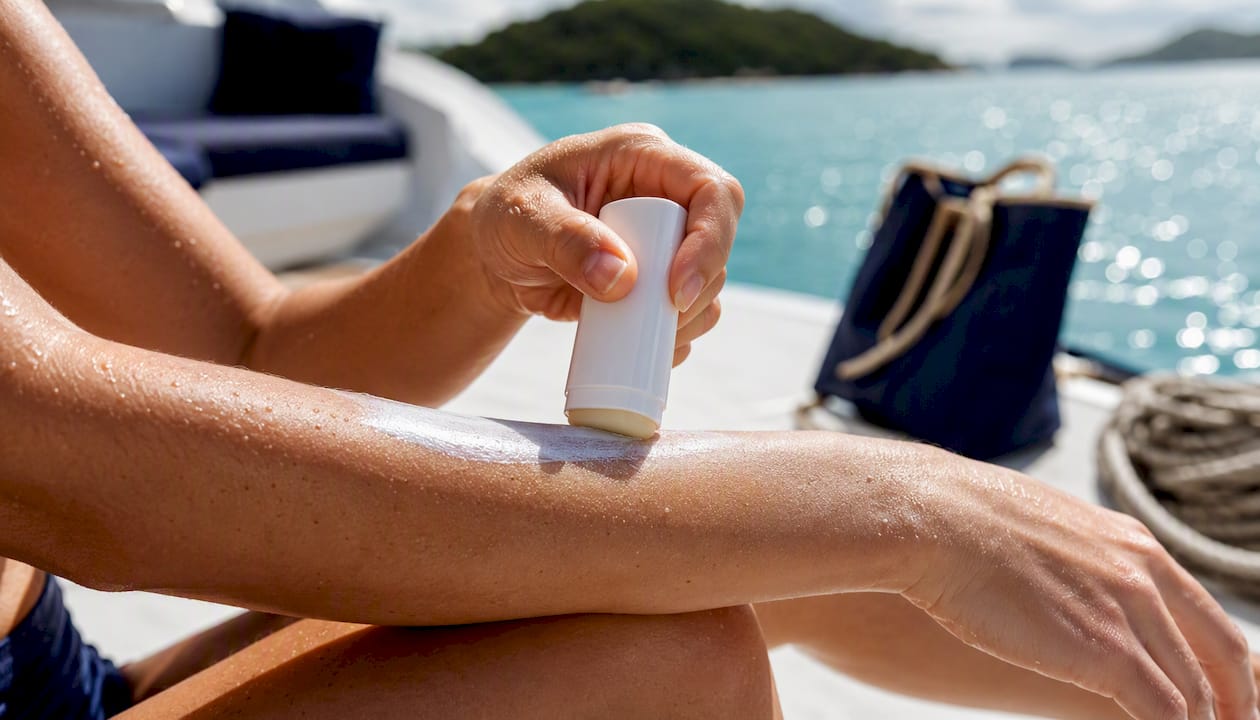

Both mineral and chemical sunscreens protect your skin from UV damage when used correctly. The choice comes down to your skin type, cosmetic preferences, and where you’re applying it. Mineral formulas (zinc oxide, titanium dioxide) suit sensitive skin, infants, and anyone swimming near coral reefs. Chemical filters (avobenzone, oxybenzone, octisalate, and others) tend to feel lighter, spread more easily, and leave no white cast, making them the practical pick for daily face use or darker skin tones. According to Cleveland Clinic dermatologists, both classes are effective, and the best sunscreen is simply the one you’ll actually use every day.
Quick picks:
- Sensitive skin, infants, or reef swimming: Choose a mineral formula with zinc oxide or titanium dioxide, broad-spectrum, SPF 30+, water-resistant.
- Daily face use, darker skin tones, or under makeup: A chemical or hybrid formula (broad-spectrum, SPF 30+) is easier to wear and less likely to leave a white cast.
- Traveling to the Caribbean or BVI: Opt for a reef-considerate mineral or hybrid formula that avoids oxybenzone and octinoxate.
Two non-negotiables regardless of type: broad-spectrum coverage and SPF 30 or higher.
Pro Tip: If you find yourself skipping sunscreen because of texture or white cast, switch types. Consistent daily use beats the “perfect” formula you leave on the shelf.
Key Takeaways
Both mineral and chemical sunscreens protect effectively when applied correctly: choose based on skin sensitivity, cosmetic preference, and reef exposure, and use broad-spectrum SPF 30+ every day.
| Point | Details |
|---|---|
| Both types work | Mineral and chemical sunscreens both reduce UV damage; filter class matters less than consistent daily use. |
| Mineral for sensitive skin and reefs | Zinc oxide and titanium dioxide suit infants, sensitive skin, and reef swimming; choose non-nano for marine environments. |
| Chemical for cosmetic ease | Chemical and hybrid formulas leave no white cast and layer better under makeup, improving daily adherence. |
| Read the full label | Many “mineral-only” products include organic UV absorbers; check the full ingredient list, not just the active section. |
| Apply enough and reapply | Use about one ounce for the body; reapply every two hours or after swimming, regardless of SPF number. |
The view from the water
Spending time on a boat changes the sunscreen calculus in ways that a standard dermatology article doesn’t fully address. Water reflection amplifies UV exposure significantly, wind masks how hot and burned you’re getting, and you’re reapplying over salt-damp skin every couple of hours. In that context, a reef-considerate mineral formula isn’t just an environmental courtesy; it’s often the more practical choice because it works immediately on application and doesn’t require a dry-skin window before you jump in.

At Virgin Charter Yachts, guests charter through some of the most ecologically sensitive waters in the Caribbean. Recommending reef-considerate sunscreen is part of how the team approaches responsible hospitality, not an afterthought. A non-nano zinc oxide formula in a water-resistant stick format is easy to pack, easy to reapply on deck, and won’t compromise the reef systems that make those waters worth visiting in the first place.
The broader point: the best sunscreen for travel is the one you’ll actually use, in a format that fits your day. For most people on the water, that means a mineral or hybrid formula with SPF 50, water resistance rated at 80 minutes, and no oxybenzone on the label.
Table of Contents
- How do mineral and chemical sunscreens actually protect your skin?
- What are the key active ingredients in each type?
- Mineral vs. chemical sunscreen: pros, cons, and who each suits
- Which sunscreen type is best for your skin type or situation?
- What does the FDA actually say about sunscreen safety?
- Is “reef-safe” sunscreen a real standard or just marketing?
- How to shop for sunscreen: a practical checklist
- How to apply sunscreen so it actually works
- Common myths about mineral and chemical sunscreens
- Sources
How do mineral and chemical sunscreens actually protect your skin?
The most common explanation you’ll hear is that mineral sunscreens “reflect” UV rays while chemical ones “absorb” them. That’s a useful shorthand, but it’s not quite accurate. Both filter types reduce the UV energy that reaches living skin cells, just through different physical and chemical mechanisms.
Zinc oxide and titanium dioxide are inorganic compounds that sit at the stratum corneum (the outermost skin layer). They intercept UV photons and convert the energy into small amounts of heat. Organic (chemical) filters like avobenzone and oxybenzone work similarly: they absorb UV photons and release the energy as heat or longer-wavelength light. The practical result for your skin is nearly the same.
The science matters here: Analysis published in The Conversation confirms that modern inorganic filters primarily absorb rather than reflect UV, and that the functional difference between the two filter classes is smaller than most marketing suggests.
What are the key active ingredients in each type?
Mineral actives: zinc oxide and titanium dioxide
Zinc oxide covers both UVA and UVB wavelengths on its own, which is why it appears in so many broad-spectrum formulas. Titanium dioxide is strong on UVB but covers a narrower UVA range, so it’s often paired with zinc oxide for full-spectrum protection.
Both come in nano and non-nano particle sizes. Hand-sized particles reduce the white cast significantly, which is why most modern mineral sunscreens don’t look as chalky as older versions. Current evidence shows limited penetration of nanoparticles beyond the stratum corneum in healthy skin, though the topic remains under consumer scrutiny.
Chemical filters common in U.S. products
- Avobenzone: Broad UVA coverage, but degrades in sunlight without a photostabilizer. Often paired with octocrylene or bemotrizinol.
- Oxybenzone: Effective UVA/UVB filter; the most studied for reef impact and systemic absorption concerns.
- Octisalate: Primarily UVB; used partly to stabilize avobenzone.
- Octocrylene: UVB and short UVA; photostable and helps stabilize avobenzone.
- Homosalate: UVB filter; common in high-SPF formulas.
- Bemotrizinol: Broad-spectrum, highly photostable; clinical guidance notes it has favorable properties and is available in some markets, though U.S. regulatory approvals for newer filters evolve slowly.
The hidden ingredient problem
Here’s what most label-readers miss: many products marketed as “mineral only” include UV-absorbing organic compounds to improve texture or boost SPF. Ingredients like butyloctyl salicylate and ethylhexyl methoxycrylene can absorb UV but are listed in the inactive section of the label. Lab analysis reported by The Conversation found this pattern across multiple commercial “mineral-only” products. Reading the full ingredient list, not just the active section, is the only way to know what you’re actually applying.
Mineral vs. chemical sunscreen: pros, cons, and who each suits
| Dimension | Mineral (inorganic) | Chemical (organic) |
|---|---|---|
| How it works | Absorbs and scatters UV at the skin surface | Absorbs UV and releases energy as heat |
| Active ingredients | Zinc oxide, titanium dioxide | Avobenzone, oxybenzone, octisalate, octocrylene, homosalate |
| Key pros | Broad-spectrum (zinc oxide alone), less irritating, reef-considerate options available | Lightweight feel, no white cast, easier to apply, widely available |
| Key cons | White cast (especially on deeper skin tones), thicker texture, may pill under makeup | Some filters degrade without photostabilizers; absorption questions under investigation |
| Best for | Sensitive skin, infants, acne-prone skin, reef swimming | Daily face use, darker skin tones, under-makeup wear, active outdoor use |
| White cast | Present (reduced with nano or tinted formulas) | None |
| Application timing | Can apply immediately before sun exposure | Apply 15–20 minutes before going out |
| Environmental impact | Non-nano mineral preferred near reefs; generally lower reef-impact concern | Oxybenzone and octinoxate flagged in some jurisdictions for coral risk |
| Regulatory/safety evidence | FDA considers zinc oxide and titanium dioxide generally recognized as safe; no systemic absorption concerns | Some filters show low-level systemic absorption; no demonstrated harm at topical use levels |
Pro Tip: Tinted mineral formulas with iron oxides are the practical fix for deeper skin tones. They neutralize the white cast while adding a layer of visible-light protection that standard mineral and chemical formulas don’t provide.
Which sunscreen type is best for your skin type or situation?
Skin type and life context matter more than the mineral-vs-chemical debate in most cases. Here’s how to map your situation to the right choice:
- Sensitive or reactive skin: Zinc oxide and titanium dioxide are less likely to cause irritation or allergic reactions because they don’t penetrate the skin as easily. Henry Ford Health clinical guidance specifically recommends mineral formulas for this group.
- Infants and young children: Mineral-only formulas are the standard recommendation. Chemical filters are generally not advised for babies under six months, and many pediatric dermatologists prefer mineral options for toddlers.
- Acne-prone skin: Zinc oxide has mild anti-inflammatory properties and is less likely to clog pores than some heavier chemical formulas. Look for non-comedogenic mineral options.
- Darker skin tones: The white cast from standard mineral formulas is a real cosmetic barrier. Tinted mineral products with iron oxides solve this and offer added visible-light protection. A well-formulated chemical or hybrid SPF 30+ is also a solid option.
- Oily skin: Lightweight chemical gel or fluid formulas tend to sit better on oily skin without adding heaviness. Some mineral formulas with a matte finish work well too.
- Under makeup: Chemical or hybrid formulas layer more smoothly under foundation. Mineral formulas can pill if the base isn’t fully absorbed first.
- Swimming near coral reefs (Caribbean, BVI): Non-nano mineral formulas or products that explicitly avoid oxybenzone and octinoxate are the responsible choice. Families planning boat tours with kids should pack reef-considerate sunscreen as a standard item.
MD Anderson Cancer Center recommends mineral options specifically for sensitive and acne-prone skin, while emphasizing that daily sun protection is one of the most effective tools for skin cancer prevention regardless of filter type.
What does the FDA actually say about sunscreen safety?
The short answer: both mineral and chemical sunscreens are considered safe for use, and the FDA actively encourages Americans to use broad-spectrum SPF protection daily. Zinc oxide and titanium dioxide hold “generally recognized as safe and effective” (GRASE) status under FDA rules. Most organic filters are still under review, not because they’re known to be harmful, but because the agency requires more data before granting the same designation.
The absorption question gets more attention than it probably deserves in consumer media. A peer-reviewed study published in JAMA measured low-level systemic absorption of several organic filters after repeated application. The key finding: absorption was detectable, but the study did not demonstrate harm at those exposure levels. The FDA’s position is that these findings warrant further research, not that consumers should stop using chemical sunscreens.
“Consumers should not be discouraged from using sunscreen while we gather additional data on these ingredients. The known risks of UV exposure are significant.” This reflects the FDA’s consistent guidance that the benefits of sunscreen use outweigh the theoretical risks of absorption.
Pro Tip: When reading labels, “broad-spectrum” is the regulated claim that matters most. It means the product has been tested to protect against both UVA and UVB radiation. SPF alone only measures UVB protection.
For practical label reading: “non-nano” means the mineral particles are larger than 100 nanometers and less likely to penetrate skin. “Broad-spectrum” is an FDA-regulated term. “Natural” and “clean” are marketing terms with no regulatory definition.
Is “reef-safe” sunscreen a real standard or just marketing?
Mostly marketing, at least in the United States. There is no federally regulated definition of “reef-safe,” which means any brand can print it on a bottle without meeting a specific standard. What the science does support is concern about specific ingredients, particularly oxybenzone and octinoxate, which have been linked to coral bleaching and developmental disruption in marine organisms at certain concentrations.
Hawaii became the first U.S. state to ban the sale of sunscreens containing oxybenzone and octinoxate, with the law taking effect in 2021. Parts of the U.S. Virgin Islands and several international destinations have enacted similar restrictions. The British Virgin Islands, a prime charter destination, has its own marine environment considerations, and many operators there encourage guests to use reef-considerate products.
Experts consistently recommend that consumers look for ingredient transparency rather than relying on “reef-safe” as a standalone claim. Specifically: avoid oxybenzone and octinoxate, and prefer non-nano mineral formulas when swimming near reefs.
For travelers: Check local sunscreen regulations before you arrive. Pack a non-nano mineral or oxybenzone-free formula when your itinerary includes snorkeling or swimming in reef areas. Water-resistant formulas reduce the amount that washes off into the water. Anyone planning a boat day trip near reef systems should treat reef-considerate sunscreen as standard gear, not an optional upgrade.
How to shop for sunscreen: a practical checklist
Always look for:
- Broad-spectrum (FDA-regulated; covers both UVA and UVB)
- SPF 30 or higher (SPF 50 for extended outdoor or water time)
- Water-resistant (labeled 40 or 80 minutes) if you’ll be swimming or sweating
- Active ingredient list: zinc oxide and/or titanium dioxide for mineral; avobenzone, octisalate, octocrylene, or homosalate for chemical
- “Tinted” if you have a deeper skin tone and want mineral without white cast
Prefer when near reefs:
- Non-nano zinc oxide or titanium dioxide
- No oxybenzone, no octinoxate
- Explicit absence of those two ingredients on the label (not just a “reef-safe” claim)
When a hybrid or chemical formula is fine:
- Daily face use under makeup
- Office workers with incidental sun exposure
- Anyone who finds mineral formulas too heavy or pill-prone
Pro Tip: Before committing to a full bottle, patch-test a new formula on your inner arm for 24 hours. Some people react to fragrances, preservatives, or emulsifiers in sunscreen rather than the UV filters themselves. Also scan the full ingredient list, not just the active section, for UV-absorbing additives like butyloctyl salicylate that don’t appear as “active” ingredients.
Packing sunscreen for travel? A smart packing guide can help you plan the right formats (sticks for faces, sprays for bodies, travel-size compliance) for different trip types.
How to apply sunscreen so it actually works
The standard guidance: use about one ounce (a shot glass full) for the body and roughly a quarter teaspoon for the face and neck. Applying less doesn’t give you proportionally less protection; it gives you dramatically less.
For face and body:
- Apply to dry skin before dressing or heading outside.
- For chemical sunscreens, apply 15–20 minutes before sun exposure so the filters can bind to the skin. Mineral formulas work immediately on application.
- Cover all exposed areas: ears, back of the neck, tops of feet, and the back of hands.
- Use about a quarter teaspoon for the face and neck; a full shot glass (about one ounce) for the body.
- Reapply every two hours, or immediately after swimming or heavy sweating, even if the formula is water-resistant.
- Water-resistant doesn’t mean waterproof. Reapply after the labeled duration (40 or 80 minutes in water).
Layering with skincare and makeup:
Apply sunscreen as the last step in your skincare routine, before makeup. Let it absorb for 60–90 seconds before applying foundation. Mineral formulas are more prone to pilling when layered over serums or moisturizers that haven’t fully absorbed. FDA guidance reinforces that correct application and reapplication are as important as the SPF number itself.
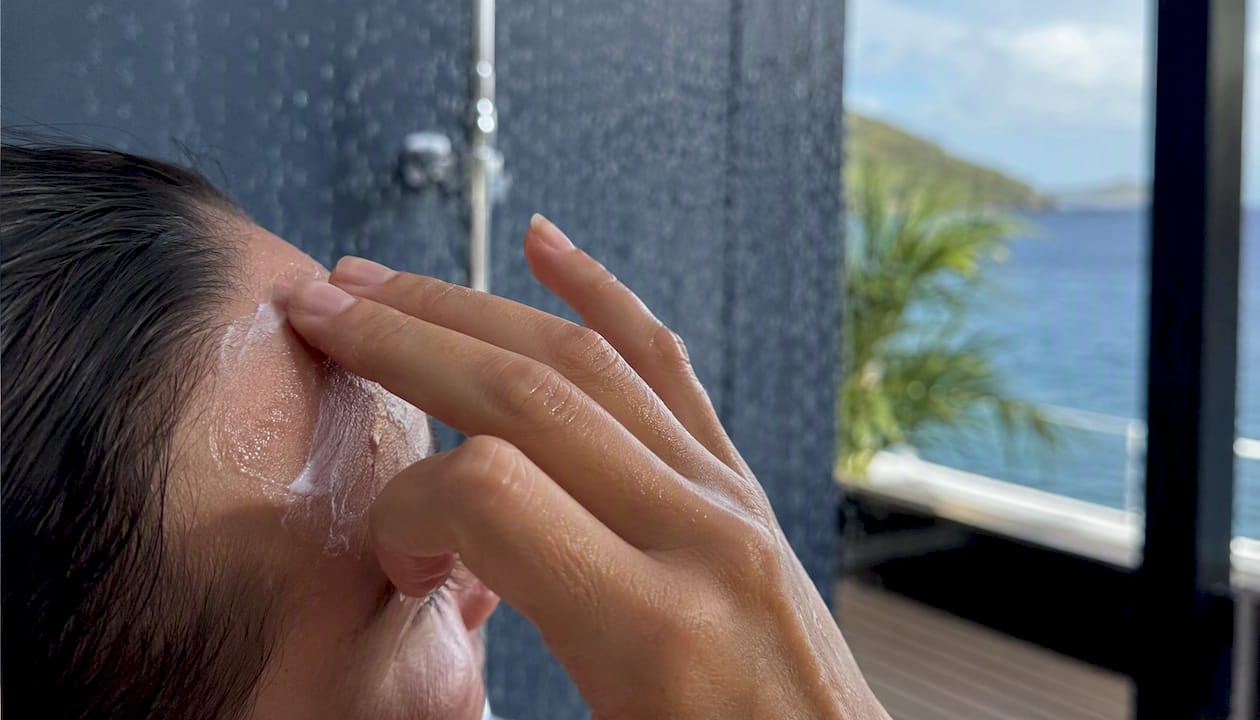
Pro Tip: Setting sprays or SPF-infused powders can help with midday reapplication over makeup, but they shouldn’t replace a full morning application of lotion or cream. Use them as a top-up, not a substitute.
Common myths about mineral and chemical sunscreens
1. “Mineral sunscreens only reflect UV; chemical ones absorb it.” This is the most persistent myth in sunscreen marketing. Modern zinc oxide and titanium dioxide primarily absorb UV radiation rather than reflecting it. The reflect-vs-absorb distinction is a simplification that doesn’t hold up to spectroscopic analysis.
2. “Mineral means natural and therefore safer.” Zinc oxide and titanium dioxide are processed compounds, not raw minerals scooped from the earth. “Natural” has no regulatory meaning on a sunscreen label. The safety profile of mineral filters is well-established, but it’s based on clinical evidence, not the word “natural.”
3. “Chemical sunscreens cause cancer.” No peer-reviewed evidence supports this claim. The JAMA absorption studies showed that some filters enter the bloodstream at low levels, but measuring a substance in blood is not the same as demonstrating harm. The FDA has called for more data, not for consumers to stop using these products.
4. “If a product says ‘mineral,’ it contains only mineral filters.” Not reliably. Lab analysis has found that many products marketed as mineral-only include organic UV-absorbing co-ingredients to improve texture or reach higher SPF values. The only way to confirm is to read the full ingredient list, not just the active section.
5. “Higher SPF means you can apply less or skip reapplication.” SPF measures UVB protection intensity, not duration. SPF 100 doesn’t last twice as long as SPF 50. Reapplication every two hours remains necessary regardless of SPF number.
Sources
- Fda
- Pubmed
- Mineral vs chemical sunscreens? Science shows the difference is smaller than you think
- Mineral vs. Chemical Sunscreen: Which Is Better?
- Mineral or chemical sunscreen: Which should you choose?
Did You Know?
The BVI are only accessible by boat. Check out our charter yachts that can get you there. View Our Fleet