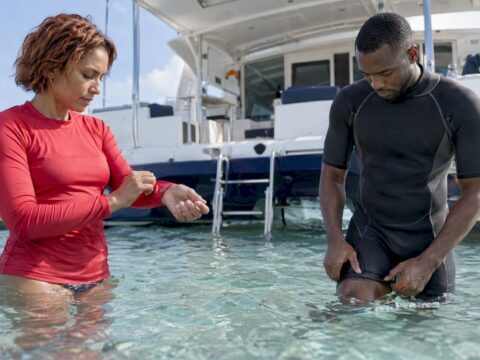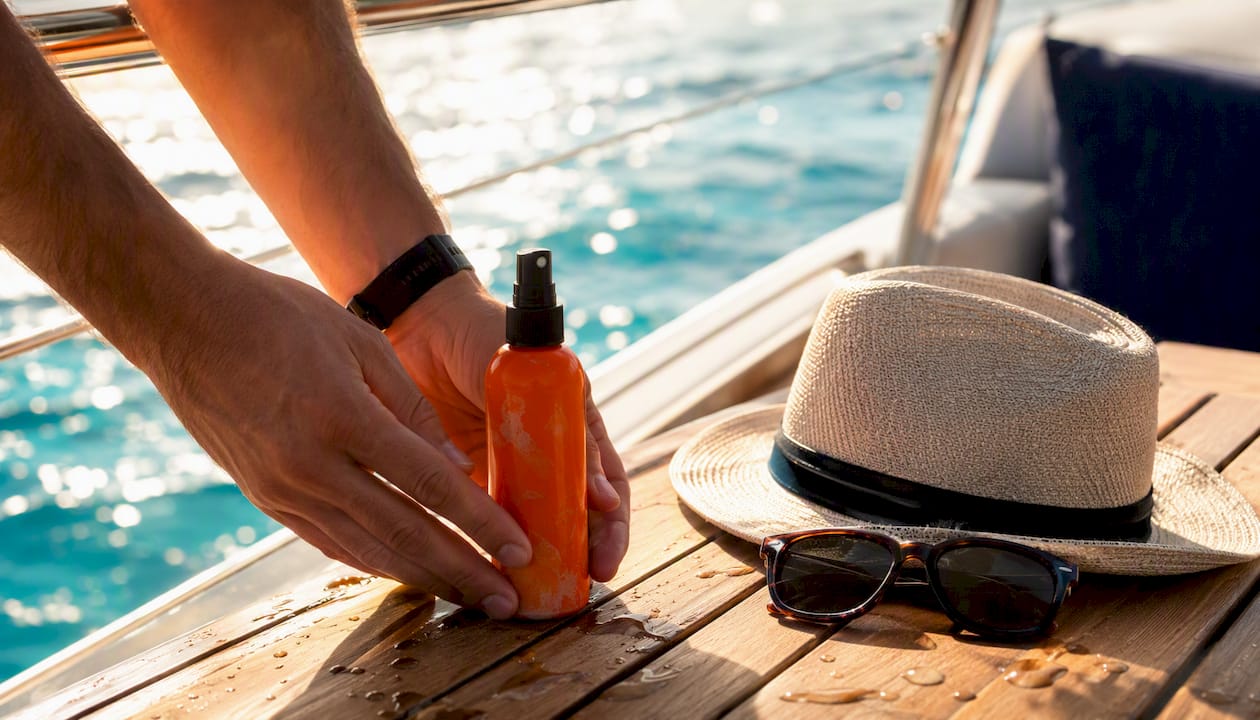

It matches DEET’s protection against Aedes aegypti (the mosquito behind dengue, Zika, and chikungunya), lasts just as long at equivalent concentrations, and won’t melt your sunglasses or leave a greasy film on your skin. The CDC’s Yellow Book and the EPA both list picaridin and DEET as registered, effective active ingredients, so you’re not sacrificing protection for comfort.
- Buy 20% picaridin in a pump spray (3.4 oz or under for carry-on).
- Store repellent in a zip-lock bag away from yacht upholstery, electronics, and fishing line.
- Reapply every 6–8 hours, or sooner after heavy sweating or swimming.
Pro Tip: Picaridin is safe on synthetic fabrics and plastics, which matters when you’re surrounded by a yacht’s gear, cushions, and instrument panels.
Key Takeaways
| Point | Details |
|---|---|
| Default repellent choice | Pack 20% picaridin pump spray for most Caribbean resort and charter trips. |
| When to choose DEET | Use 20–30% DEET for jungle hikes, remote anchorages, or very high-exposure settings. |
| Layer for best protection | Combine skin repellent with permethrin-treated clothing and physical barriers like screens. |
| Safety for kids and pregnancy | Both ingredients are considered safe per label directions; follow age guidance and consult a provider. |
| Virgin Charter Yachts advantage | Screened vessels, experienced local routing, and provisioning support reduce insect exposure before you even apply repellent. |
Table of Contents
- How do DEET and picaridin compare for Caribbean biting insects?
- How should you apply and reapply repellent in Caribbean conditions?
- Is repellent safe for children, pregnant travelers, and sensitive skin?
- What practical tips actually reduce bites on Caribbean trips and yachts?
- What should you buy in the U.S. before your Caribbean trip?
- A charter operator’s perspective on insect management at sea
- Planning a worry-free Caribbean charter starts before you board
- Sources
How do DEET and picaridin compare for Caribbean biting insects?
The Caribbean’s primary threat is Aedes aegypti, which bites hard during the day, not just at dusk. That changes the calculus compared to temperate travel, where you might only worry about evening mosquitoes.
Field and review summaries show that 20% picaridin performs comparably to roughly 20–25% DEET against both Aedes and Anopheles mosquitoes. Against ticks, DEET has a longer track record, but picaridin is effective there too. For sand flies and biting midges (no-see-ums), which are a real nuisance on Caribbean beaches and anchorages, both repellents offer meaningful protection, though higher concentrations help with these small, persistent insects.
Protection duration follows concentration closely. DEET at 20–30% delivers a similar 6–8 hour window, and EPA-registered formulations at higher concentrations extend duration further, though the gains flatten out above 30–35%.
The cosmetic differences are real and matter on a charter. DEET has a distinct solvent smell, feels oily on skin, and can damage polycarbonate lenses, watch crystals, certain synthetic coatings, and fishing line. Picaridin is odorless, absorbs quickly, and independent testing by Wirecutter consistently rates it as the non-greasy option that performs as well as DEET in most settings.
| Feature | 20% Picaridin | 20–30% DEET |
|---|---|---|
| Effectiveness vs Aedes mosquitoes | Comparable to equivalent DEET | Strong, well-documented |
| Effectiveness vs ticks | Effective | Effective, longer track record |
| Effectiveness vs sand flies | Good at 20% | Good at 20–30% |
| Protection duration | 6–8 hours | 6–8 hours |
| Skin feel | Light, non-greasy | Oily, solvent-like |
| Odor | Minimal | Noticeable |
| Synthetic fabric/plastic safety | Safe | Can damage some materials |
| Sunscreen compatibility | Apply sunscreen first, then repellent | Apply sunscreen first, then repellent |
| Permethrin-treated clothing | Compatible | Compatible |
| Safety for children (2+) | Yes, per label | Yes, per label (avoid in infants) |
| Pregnancy guidance | Generally considered safe per label | Generally considered safe per label |
Pro Tip: At equivalent concentrations, the protection difference between picaridin and DEET is small. The bigger practical difference is how each feels on your skin for 8 hours in 90°F heat.
How should you apply and reapply repellent in Caribbean conditions?
Application order matters. Sunscreen goes on first, allowed to absorb for a few minutes, then repellent goes on top. Reversing that order reduces sunscreen’s SPF effectiveness. Never mix them into a single product — combination sunscreen-repellent formulas require more frequent reapplication than either product alone warrants, which means you end up applying more repellent than necessary.
On skin:
- Apply to all exposed skin, including the back of the neck and ears.
- Spray into your hands first, then apply to the face — never spray directly onto the face.
- Avoid applying to cuts, irritated skin, or around the eyes and mouth.
- For children, apply repellent yourself rather than letting them handle it.
Reapplication in the tropics: Heat and sweat accelerate breakdown. Follow the product label’s reapplication interval as the baseline, but treat it as a ceiling, not a guarantee. After swimming or a heavy sweat session, reapply regardless of elapsed time.
Layering with permethrin-treated clothing is one of the most effective upgrades you can make. Permethrin is applied to clothing, gear, and tent fabric, not skin. It kills or repels insects on contact and survives multiple washes. The combination of permethrin-treated clothing and a skin-applied repellent is the CDC-recommended multi-layer approach for tropical travel. Do not apply skin repellent directly over permethrin-treated fabric — the permethrin is already doing its job on the clothing surface.
On-board packing tips:
- Choose pump sprays over aerosols on a yacht. Aerosols pressurize in heat and are harder to control in wind.
- Keep repellent in a sealed zip-lock bag inside your cabin bag, away from instrument panels, cushions, and fishing gear.
- Store away from direct sunlight and heat sources.
Always follow the product label for reapplication timing — environmental conditions vary.
Is repellent safe for children, pregnant travelers, and sensitive skin?
Both DEET and picaridin are considered safe when used as directed. The EPA’s skin-applied repellent guidance covers both ingredients and confirms their registration for consumer use, including guidance for vulnerable populations.
Children: The CDC and EPA both state that DEET-based repellents should not be used on infants under 2 months old. Picaridin carries similar age guidance — check the specific product label, as formulations vary. For young children, apply repellent to your own hands first, then onto the child’s skin, and avoid the hands, eyes, and mouth.
Pregnancy and breastfeeding: Both DEET and picaridin are generally considered acceptable for use during pregnancy when applied as directed, and the risk of mosquito-borne disease (dengue, Zika) in the Caribbean is a real concern that makes repellent use advisable rather than optional. The CDC’s Zika guidance specifically underscores the importance of effective repellent use for pregnant travelers to affected regions. Consult your healthcare provider before travel if you have specific concerns.
Skin reactions: Picaridin tends to cause fewer skin reactions than DEET for sensitive-skinned users, according to poison control summaries. DEET can cause irritation if applied to broken or sunburned skin. If irritation develops, wash the area with soap and water and discontinue use. Seek medical attention for any severe reaction.
A practical note on materials: DEET is a known solvent. It can cloud polycarbonate lenses, damage watch crystals, warp certain plastics, and degrade synthetic coatings on gear. On a yacht, that means keeping DEET away from instrument panels, fishing line, and synthetic rope. Picaridin does not carry this risk, which is one reason it’s the better default choice for charter guests surrounded by equipment.
Follow product label instructions and consult a healthcare provider for unusual reactions or specific medical concerns.
What practical tips actually reduce bites on Caribbean trips and yachts?
The Caribbean’s biting-insect calendar doesn’t follow a simple pattern. Aedes aegypti bites during daylight hours, which surprises travelers who only apply repellent at dusk. Sand flies and no-see-ums peak at dawn and dusk, especially near shorelines, mangroves, and calm anchorages. Knowing when and where to be vigilant changes how much repellent you actually use.
Timing and habitat:
- Apply repellent before going ashore in mangrove areas or near still water, not after you notice bites.
- Dawn and dusk on deck are the highest-risk windows for sand flies and biting midges.
- Anchorages near mangroves or river mouths carry higher insect pressure than open-water anchorages.
On-board protection:
- Request screened hatches or companionways if your charter vessel offers them. Many modern catamarans in the BVI fleet do.
- Light-colored, loose-fitting long-sleeved shirts and pants at dusk cut bite exposure significantly without any repellent at all.
- Mosquito coils can be used in cockpit areas where ventilation is good, but check with your captain or crew first.
- A fine-mesh net over infant strollers or baby sleeping areas adds a physical barrier that no repellent replaces.
Packing checklist for U.S. travelers:
- 20% picaridin pump spray (3.4 oz carry-on size, or larger in checked luggage)
- 20–30% DEET spray if you plan jungle hikes or remote anchorages
- Permethrin spray for treating clothing before departure (allow to dry fully before packing)
- Light long-sleeved shirt and pants for evening deck time
- Fine-mesh travel net if traveling with infants
Combining physical barriers with chemical repellents is the approach the CDC recommends for tropical travel, and it’s what experienced charter guests learn quickly: repellent alone, applied inconsistently, leaves gaps. Layering closes them.
What should you buy in the U.S. before your Caribbean trip?
Buy before you travel. Repellent availability in the Caribbean varies by island and resort, and you won’t always find the concentration you want at a local pharmacy. U.S. drugstores, outdoor retailers, and major online retailers stock the full range.
Recommended concentrations:
- Default pick: 20% picaridin pump spray. This is the concentration that Wirecutter’s independent testing consistently recommends as the best balance of duration, comfort, and material safety.
- Higher-exposure alternative: 20–30% DEET for jungle hikes, remote anchorages, or destinations with active dengue or Zika transmission.
Formulation guidance:
- Pump spray: Best for travel. Easy to control application, no pressurization issues in heat or on aircraft.
- Aerosol: Convenient but bulky and harder to use in wind. Check TSA rules for carry-on liquids (3.4 oz limit applies to all liquids, aerosols, and gels).
- Lotion: Good for precise application on children; slower to apply over large areas.
What to check on the label before buying:
| Label Item | What to Look For |
|---|---|
| Active ingredient % | 20% picaridin or 20–30% DEET for Caribbean travel |
| EPA registration number | Confirms the product is registered and reviewed for safety |
| Age guidance | Check minimum age if buying for children |
| Reapplication interval | Should state hours of protection clearly |
| Formulation type | Pump spray preferred for travel; lotion for kids |
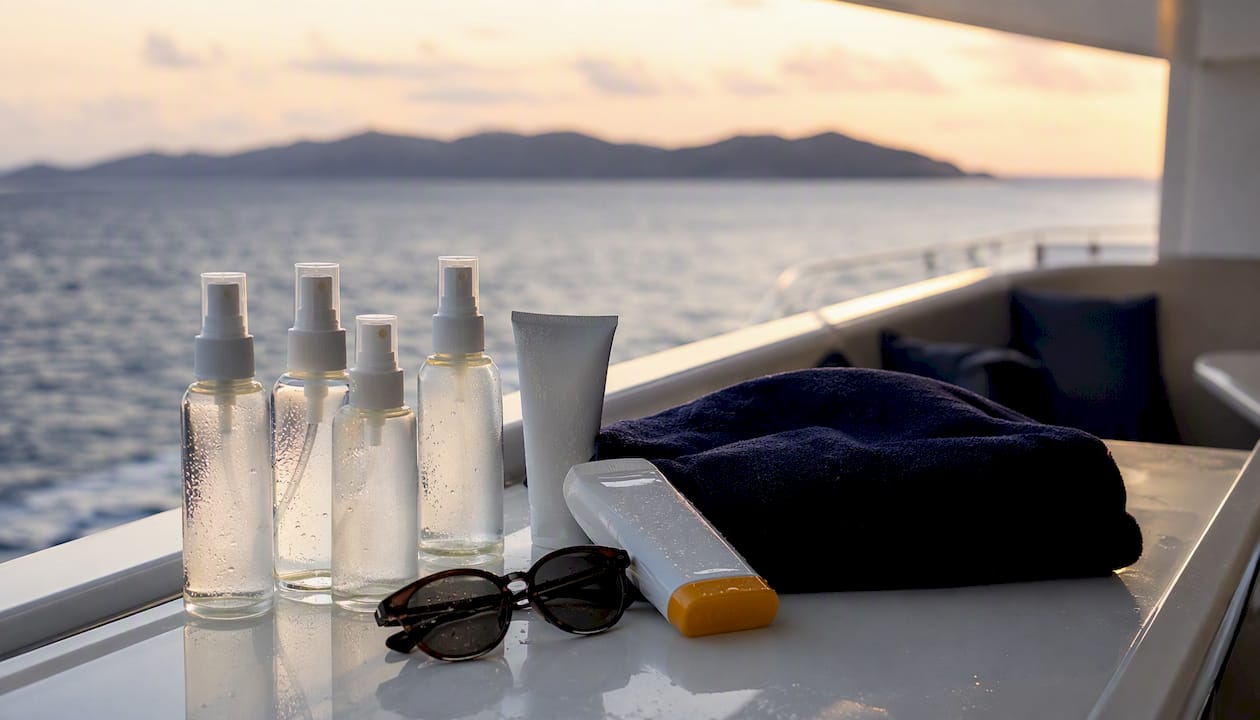
Use the EPA’s repellent finder tool to search by active ingredient, concentration, and pest type before you buy. It’s the fastest way to confirm a specific product is registered and appropriate for your trip.
A charter operator’s perspective on insect management at sea
After nearly 30 years of running charters out of Tortola in the BVI, the pattern is consistent: guests who arrive with the right repellent and know how to use it have a dramatically better time than those who don’t. The guests who struggle are usually the ones who packed a low-concentration spray, applied it once, and then wondered why they were getting bitten at a mangrove anchorage at dusk.
On a well-run charter, the vessel itself does a lot of the work. Modern catamarans in the Virgin Charter Yachts fleet are maintained with screened hatches and companionways, and itineraries can be planned to favor open-water anchorages where insect pressure is lower. But no screen or itinerary substitutes for a guest who has packed correctly and applies repellent before going ashore, not after.
In general, when you are on a mooring ball or in an anchorage, buts are not much of a concern due to the constant tradewinds. The breeze helps guests stay comfortable and keeps the bugs away while you are on the yacht. You might encounter mosquitoes or sand fleas in the evening when you are ashore, especially if you are dining on the beach.
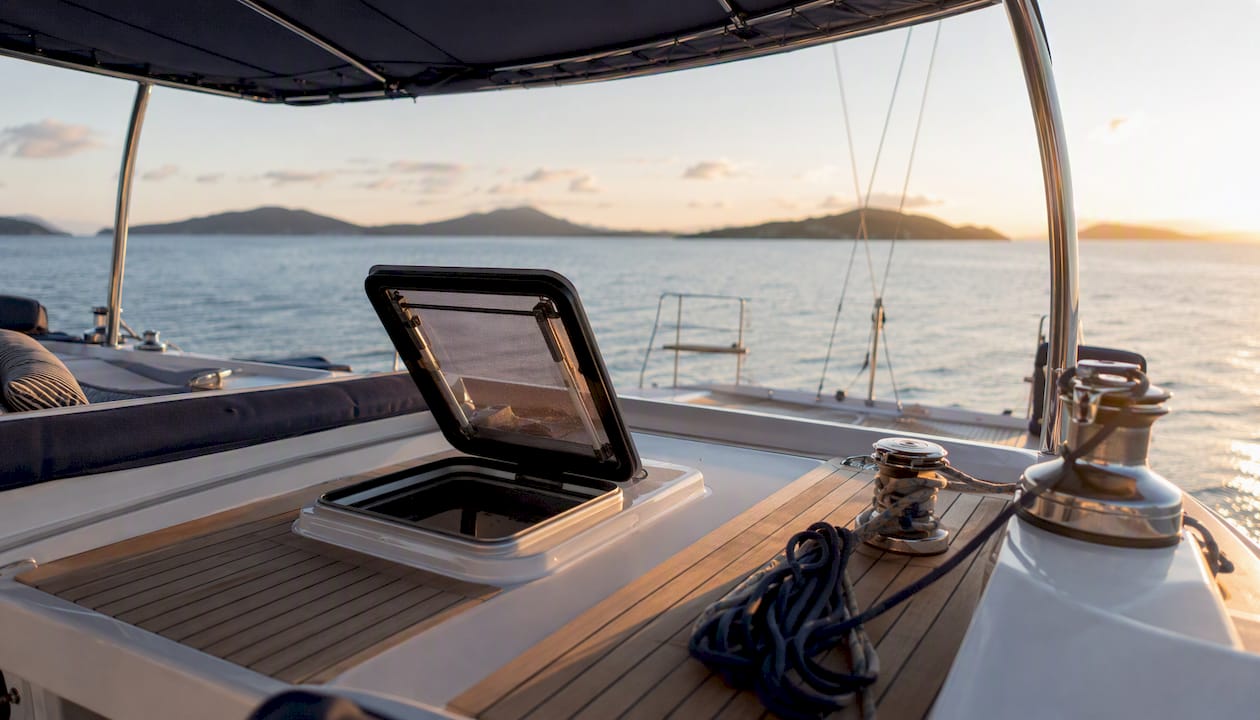
The CDC’s layered approach to bite prevention maps directly onto what experienced charter guests do instinctively after their first trip.
Planning a worry-free Caribbean charter starts before you board
Virgin Charter Yachts has been operating luxury bareboat and crewed charters in the British Virgin Islands and wider Caribbean since 1996. The fleet includes modern power catamarans from Fountaine Pajot, Leopard, Aquila, Lagoon, and other top builders, all maintained to a standard that includes screened living areas and itineraries designed around guest comfort.
Charter guests can request specific on-board provisioning, including repellent supplies, and itineraries can be routed to favor open-water anchorages that reduce insect exposure at the most vulnerable times of day. The local knowledge that comes from 30 years based on Tortola means your route isn’t planned from a map — it’s planned from experience.
Pro Tip: When booking a crewed charter, ask your captain to prioritize open-water anchorages at dusk and to confirm the vessel has screened hatches. Both requests take 30 seconds and meaningfully reduce your evening bite exposure.
Browse available luxury yacht options or check yachting destinations to start planning your route. When you’re ready to book, contact Virgin Charter Yachts directly for personalized itinerary advice and fleet availability.
Sources
This article is general information, not a substitute for advice from a qualified doctor. Consult a qualified healthcare professional about your own circumstances before acting on anything here.
Did You Know?
The BVI are only accessible by boat. Check out our charter yachts that can get you there. View Our Fleet