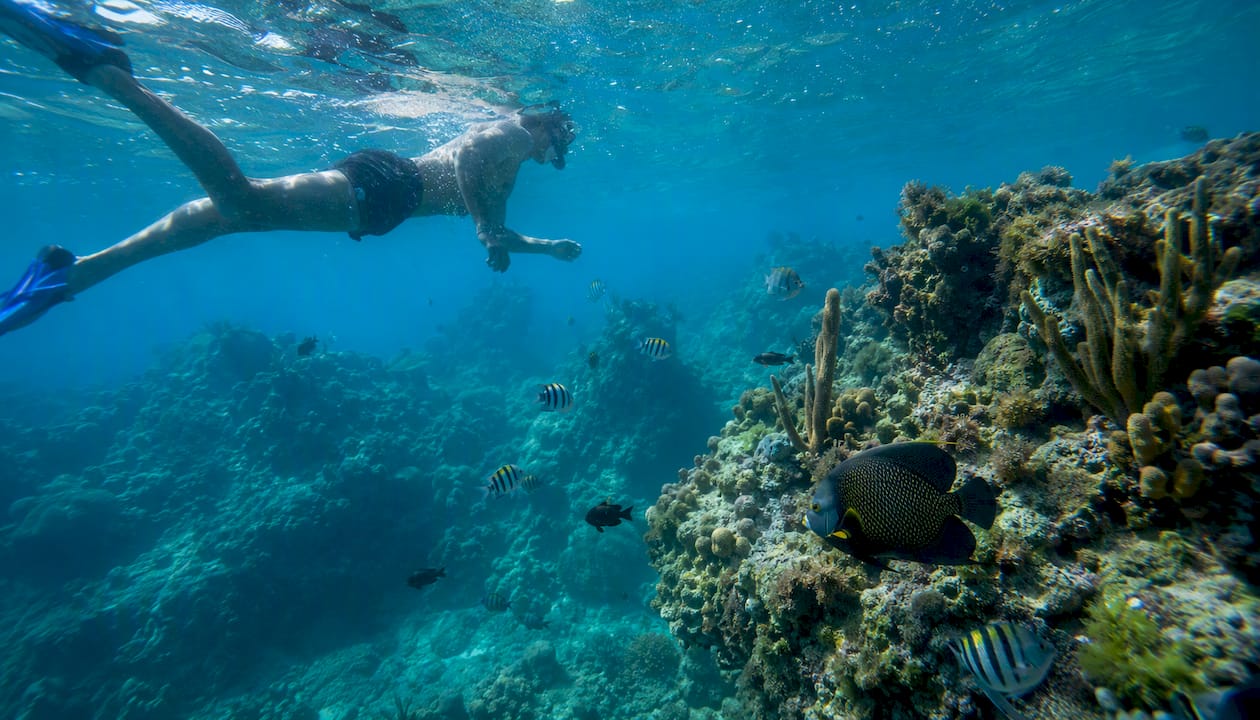

The British Virgin Islands pack more world-class snorkeling into a compact sailing radius than almost anywhere else in the Caribbean. Here are the top BVI snorkeling spots and exactly who each one suits:
- The Indians (four rock pinnacles, Sir Francis Drake Channel) — best for dramatic underwater scenery and fish density; boat access required
- Norman Island — The Caves / The Bight / Kelly Cove — best for cave exploration and calm-water family snorkeling; boat access
- RMS Rhone, Salt Island — best for experienced snorkelers who want a world-famous wreck; guided boat trip strongly recommended
- The Baths, Virgin Gorda — best for families and beginners; boulder grottoes with shallow, calm water
- Anegada — Loblolly Bay / Horseshoe Reef — best for remote, uncrowded reef snorkeling; ferry or charter access
- Cooper Island — Cistern Point & Wreck Alley — best for intermediate snorkelers wanting reef variety and a small wreck
- Dog Islands (The Dogs / Great Dog) — best for advanced snorkelers seeking pristine, less-visited reefs
- Brewers Bay, Tortola — best for shore-access beginners and families; coral gardens, easy entry
- Cane Garden Bay, Tortola — best for a quick, low-effort snorkel from the beach
- Monkey Point, Guana Island — best for adventurous snorkelers after dramatic terrain and seclusion
- Guana Island — best for those on a private charter who want a quieter, less-trafficked reef
Key Takeaways
The BVI’s top snorkeling sites reward early departures and boat access — the best underwater scenery in the islands is consistently found at sites that require a charter or guided trip.
| Point | Details |
|---|---|
| Best beginner sites | The Baths, Brewers Bay, and Loblolly Bay offer shallow, calm water with shore or easy boat access. |
| Best advanced sites | The Indians, RMS Rhone, Dog Islands, and Monkey Point require boat access and comfort with currents. |
| Morning timing matters | Depart by 8 AM to reach top sites before trade winds build and charter crowds arrive. |
| Use mooring buoys | Never anchor on coral; mooring buoys are mandatory at protected sites including the Rhone Marine Park. |
| Virgin Charter Yachts | Offers private and crewed charters from Tortola with fleet options, gear support, and itinerary planning for snorkel-focused days. |
Table of Contents
- 1. The best BVI snorkeling spots, site by site
- 2. Snorkeling safety and sea conditions in the BVI
- 3. What gear to bring (and what to rent)
- 4. How to reach each snorkel spot: shore, ferry, and charter
- 5. Planning a snorkel day with a BVI charter operator
- 6. Marine park rules and how to snorkel responsibly
- Useful resources for planning your BVI snorkel trip
- What a charter operator actually prioritizes on a snorkel day
- Plan your snorkel charter with Virgin Charter Yachts
- Sources
1. The best BVI snorkeling spots, site by site
The Indians
The Indians are four rocky pinnacles rising from the Sir Francis Drake Channel, and they are the single most talked-about snorkeling site in the BVI. The protected ring between the rocks creates a calm inner pocket where visibility often exceeds 20 meters on a good day. Outside that ring, currents can run strong, so stay inside unless you know what you’re doing.
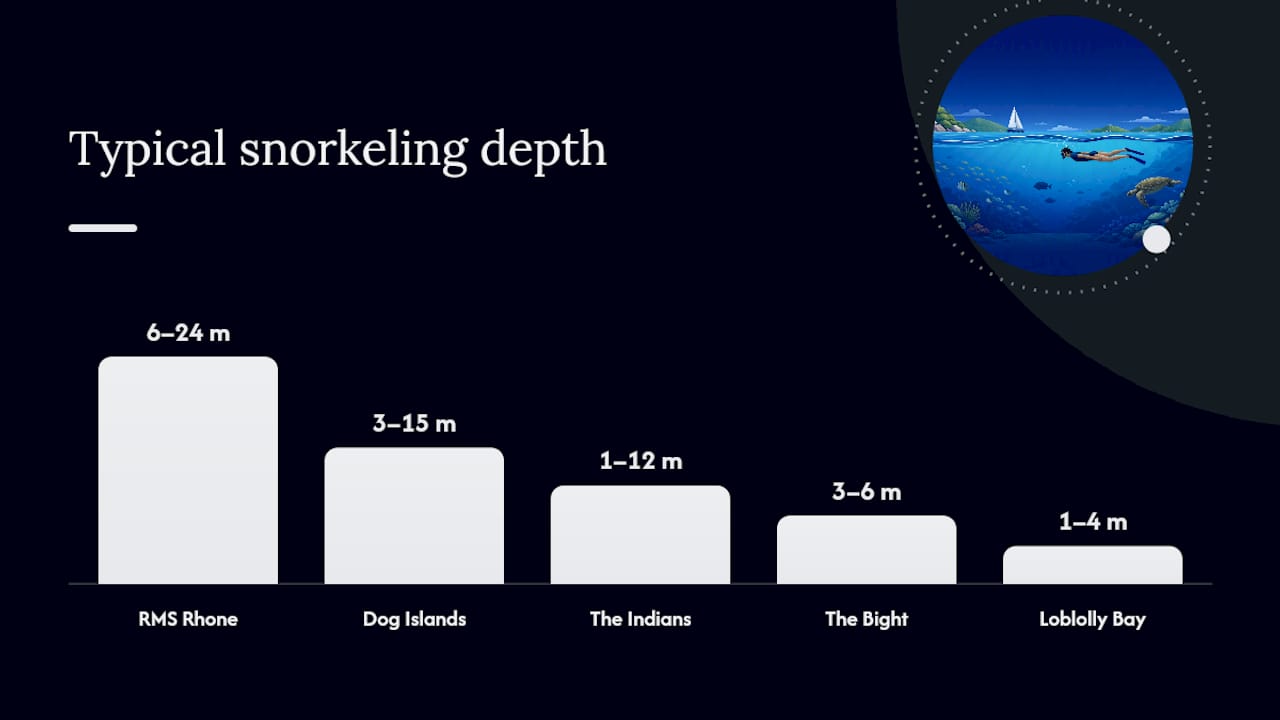
Underwater, you’ll find dense coral coverage, sergeant majors, French angelfish, and the occasional nurse shark resting on the sandy bottom. Depth ranges from the surface down to around 12 meters on the outer walls. Skill level: intermediate, though the inner area is manageable for confident beginners with a guide. Boat access only; no shore approach. Arrive early — by 9 AM if possible — before the mid-morning charter rush turns the mooring field into a parking lot.
Safety note: The outer pinnacle edges can develop strong surge and current. Stay inside the protected ring unless you’re a strong swimmer with experience reading water movement.
Norman Island — The Caves, The Bight, and Kelly Cove
Norman Island is a full snorkeling day on its own. The Caves are three sea caves cut into the cliff face at the western end of the island, accessible only by boat. Inside, bioluminescent plankton can glow in the dim light, and glassy sweepers hang in dense schools near the cave ceilings. Swell makes cave entry genuinely dangerous — if there’s any chop, skip it and head to The Bight instead.
The Bight is the large, protected bay on the island’s north side. It’s calm, shallow (3–6 meters), and loaded with coral heads and reef fish. Kelly Cove, tucked further around the island, offers a quieter alternative with similar reef quality. Both are good for beginners. Boat access for all three; Norman Island has no permanent residents, so there are no shore facilities beyond the moored restaurant boat.
Pro Tip: Pair The Caves with The Indians on the same day — they’re roughly 20 minutes apart by boat, and the combination covers the BVI’s two most iconic snorkel experiences in one trip.
RMS Rhone, Salt Island
The RMS Rhone sank in 1867 during a hurricane, and the wreck has been a protected marine park ever since. Snorkeling the Rhone is possible in the shallower stern section, where the hull sits at around 6–9 meters. The bow drops to 24 meters — that’s dive territory. Strong currents run through this site regularly, making it unsuitable for beginners or anyone without solid water confidence.
Go with an experienced operator who knows the tidal windows. The marine park has strict no-anchoring rules; use the designated mooring buoys. Marine life is exceptional: large grouper, barracuda, and dense coral growth on the hull. This is the BVI’s most historically significant underwater site, and it earns that reputation.
Safety note: Currents here can be deceptively strong. Never snorkel the Rhone alone, and always confirm conditions with your operator before entering the water.
The Baths, Virgin Gorda
The Baths are a geological oddity — massive granite boulders tumbled along the shoreline, creating a network of shallow grottoes and tunnels that fill with turquoise water. Depth runs roughly 5–20 feet, making this one of the most beginner-friendly and family-suitable sites in the BVI. There’s a small entrance fee to the national park area.
Snorkeling between the boulders reveals sergeant majors, parrotfish, and the occasional sea turtle. The protected geometry of the rocks keeps the water calm even when conditions outside are choppy. Shore access is possible from the beach at Devil’s Bay; boat access via mooring buoys offshore. Arrive before 10 AM or after 3 PM to avoid the day-tripper crowds.
Anegada — Loblolly Bay and Horseshoe Reef
Anegada sits apart from the rest of the BVI — a flat coral island surrounded by the largest barrier reef in the Eastern Caribbean. Loblolly Bay on the north shore is a shallow, clear-water snorkel straight off the beach, with elkhorn and staghorn coral in good condition. Horseshoe Reef extends for miles offshore and is best reached by boat from the island.
Ferry access from Tortola takes roughly one hour, with fares typically running in the low tens of dollars each way. The island is genuinely remote by BVI standards — no crowds, no mega-yachts anchored nearby. That remoteness is the point. Skill level: beginner to intermediate for Loblolly Bay; intermediate to advanced for the outer reef sections.
Cooper Island — Cistern Point and Wreck Alley
Cooper Island’s mooring field sits in a protected bay, and the snorkeling at Cistern Point rewards anyone willing to swim a short distance from the mooring. Coral coverage is healthy, with good populations of parrotfish, wrasse, and the occasional spotted eagle ray passing through. Wreck Alley, a short swim further, holds several small sunken vessels that have become artificial reef structures — not as dramatic as the Rhone, but accessible to intermediate snorkelers without the current risk.
The Cooper Island Beach Club provides food and drinks, making this a natural lunch stop on a multi-site day. Boat access required; no ferry service.
Dog Islands (The Dogs / Great Dog)
The Dogs are a cluster of small uninhabited islands between Virgin Gorda and Tortola, and they see far fewer visitors than the marquee sites. Great Dog has the most accessible snorkeling, with coral walls, sea fans, and a good chance of spotting turtles. Currents between the islands can be significant, and the sites are exposed enough that conditions change quickly.
Best suited to confident intermediate and advanced snorkelers. Boat access only; no facilities on any of the islands. The reward is reef that hasn’t been loved to death by daily tour boats.
Brewers Bay and Cane Garden Bay, Tortola
Brewers Bay is the best shore-access snorkel on Tortola. The coral gardens here are calm, protected, and shallow — ideal for families and first-timers who want to get in the water without booking a boat. A small campground and beach bar provide basic amenities. Drive or taxi from Road Town takes about 20 minutes.
Cane Garden Bay is primarily a swimming beach, but the reef at its northern end holds some coral and reef fish. It’s convenient rather than spectacular — good for a quick snorkel if you’re already there, not worth a dedicated trip. Both sites are shore-accessible and free to enter.
Monkey Point, Guana Island
Monkey Point sits on the southern tip of Guana Island, a privately owned nature reserve. The underwater terrain here is dramatic — steep coral walls, large sea fans, and a genuine sense of being somewhere off the beaten path. Guana Island itself is accessible only by private boat or charter. Currents can be strong on the point, so this one is for experienced snorkelers who are comfortable in moving water.
No public facilities. The payoff is snorkeling that feels genuinely wild compared to the busier sites.
How the main sites compare
| Site | Best for | Access | Features | Typical depth | Crowds & amenities | Safety notes |
|---|---|---|---|---|---|---|
| The Indians | Intermediate, fish density | Boat only | Pinnacles, coral walls | 1–12 m | Busy by midday; no facilities | Outer-edge currents |
| Norman Island Caves | Intermediate, cave fans | Boat only | Sea caves, reef | 1–6 m | Moderate; restaurant boat nearby | Swell makes entry dangerous |
| The Bight | Beginners, families | Boat only | Coral heads, calm bay | 3–6 m | Moderate; moored restaurant | Minimal hazards |
| RMS Rhone | Advanced, wreck fans | Guided boat | Historic wreck, coral | 6–24 m | Low; no facilities | Strong currents; guided only |
| The Baths | Beginners, families | Shore or boat | Boulder grottoes | 1–6 m | Busy; park entrance, café | Boat traffic near moorings |
| Loblolly Bay | Beginners, remote-reef fans | Ferry + shore | Barrier reef, clear water | 1–4 m | Low; beach bar | Minimal |
| Cooper Island | Intermediate | Boat only | Reef, small wrecks | 3–10 m | Low; beach club | Mild currents |
| Dog Islands | Advanced | Boat only | Coral walls, sea fans | 3–15 m | Very low; no facilities | Strong inter-island currents |
| Brewers Bay | Beginners, families | Shore | Coral gardens | 1–5 m | Low; campground, bar | Minimal |
| Monkey Point | Advanced | Charter boat | Coral walls, sea fans | 3–15 m | Very low; no facilities | Strong point currents |
2. Snorkeling safety and sea conditions in the BVI
The BVI’s trade winds blow from the east-northeast most of the year, and they shape everything about snorkeling conditions. Sites on the windward (eastern) side of islands can be rough when the trades are up; leeward sites stay calm. That’s the single most useful piece of weather logic you can carry.
Core safety rules:
- Use mooring buoys where provided; never anchor on coral
- Check wind direction and swell forecast before departure (Windy.com or PredictWind give reliable local data)
- Know your limits and communicate your swimming ability to your operator before entering the water
- Never snorkel alone, especially at exposed or current-prone sites
- Wear a rashguard or wetsuit top to protect against fire coral and sun exposure
Specific hazards to know:
- Currents: The Indians (outer edges), RMS Rhone, Dog Islands, and Monkey Point all have current exposure. At pinnacle and point sites, current can switch direction with the tide.
- Surge: At The Caves (Norman Island), any swell creates surge inside the cave openings. If the water is moving in and out rhythmically, don’t enter.
- Boat traffic: The Baths and The Indians attract heavy charter traffic. Stay close to the mooring field and use a dive flag when swimming away from the boat.
- Fire coral: Present at most BVI reef sites. It looks like branching tan coral and causes a burning rash on contact. Don’t touch anything.
- Jellyfish: Occasional seasonal presence, most common in late summer and fall. A rashguard provides meaningful protection.
- Dehydration and sun: Caribbean sun is intense even on overcast days. Drink water before and after every snorkel, and reapply reef-safe sunscreen every 80 minutes.
When to postpone: If visibility drops below 5 meters, swell exceeds 1.5 meters, or wind is above 20 knots, most reputable operators will reschedule. Trust that call.
Pro Tip: Morning windows — roughly 8 AM to 11 AM — consistently offer the calmest water and best visibility at most BVI sites. Trade winds typically build through the afternoon, stirring up surface chop and reducing underwater clarity.
3. What gear to bring (and what to rent)
Getting the gear right matters more than most people expect. A leaking mask ruins a snorkel session faster than bad weather.
Essential items to bring:
- A well-fitting mask (test it by pressing it to your face without the strap — it should hold suction)
- Fins (open-heel adjustable fins travel well and work for most adults)
- Snorkel with a purge valve (makes clearing water effortless)
- Flotation vest or snorkel vest for weaker swimmers or children
- Reef-safe sunscreen (mineral-based, non-nano zinc oxide or titanium dioxide — required in many BVI marine park areas)
- Rashguard or UV-protective shirt
- Reusable water bottle
On rentals: Most BVI charter operators and beach vendors at popular sites rent full snorkel sets. Rental quality varies, so if mask fit is a concern, bring your own. Prescription masks are available from some dive shops in Road Town, but availability isn’t guaranteed — if you need one, bring it. Rental prices at beach vendors typically run $10–20 per set per day; charter packages often include gear.
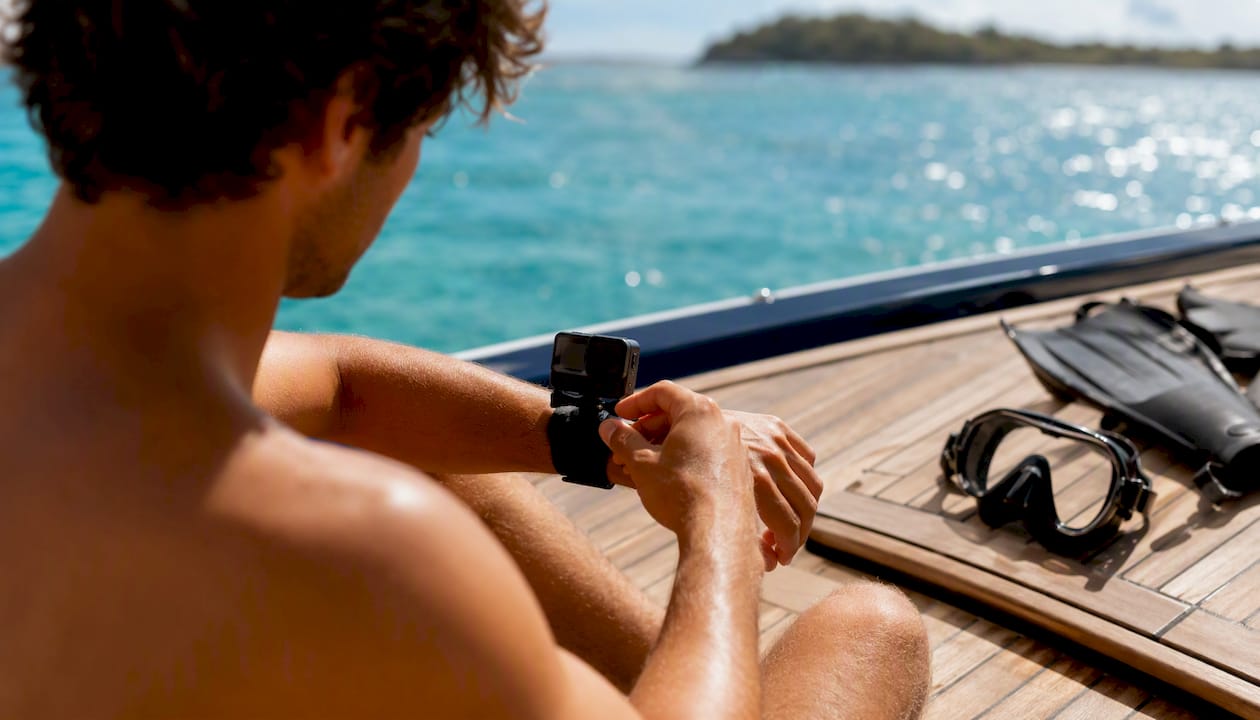
Cameras: A GoPro or similar action camera in a housing works well. Mount it to a wrist strap rather than a head mount for more natural framing underwater. The no-touch reef rule applies to camera housings too — don’t use the reef to stabilize a shot.
Pro Tip: Prevent mask fogging by rubbing a small amount of baby shampoo inside the lens the night before, then rinsing lightly in the morning. Commercial defog drops work too, but the shampoo trick is cheaper and just as effective.
4. How to reach each snorkel spot: shore, ferry, and charter
The honest answer is that the best BVI snorkeling spots by boat are the best BVI snorkeling spots, full stop. Shore access gets you to Brewers Bay, Cane Garden Bay, and The Baths — all genuinely good. But The Indians, the Rhone, the Dog Islands, and Norman Island’s caves require a boat, and charters typically include gear and combine multiple stops in a single day.
Three ways to reach sites:
Shore access: Drive or taxi to Brewers Bay (20 min from Road Town), Cane Garden Bay (25 min), or The Baths on Virgin Gorda (ferry from Tortola to Spanish Town, then taxi). Free entry except The Baths national park fee.
Shared day-charter or snorkel tour: Shared half-day tours typically run roughly $60–150 per person and follow a fixed itinerary, usually hitting The Indians and Norman Island. Book through marinas in Road Town or Soper’s Hole. Convenient and affordable; less flexible on timing.
Private charter: Full flexibility on departure time, site sequencing, and pace. Private charters cost significantly more than shared tours but let you depart at 7:30 AM before the crowds arrive and linger at sites that deserve it.
Getting to Anegada: BVI ferry schedules list the public routes to Anegada from Tortola. The crossing takes roughly one hour. Fares run in the low tens of dollars each way. Ferries don’t run every day, so check the schedule before planning an Anegada snorkel day.
Booking tips:
- Reserve private charters at least 4–6 weeks ahead during high season (December–April)
- Shared tours can often be booked 1–2 days out in shoulder season
- Confirm cancellation policy before booking — reputable operators reschedule for weather, not just cancel
Pro Tip: Depart for The Indians by 8 AM if you’re on a private charter. By 10:30 AM, the mooring field fills with shared-tour boats and the site gets noticeably crowded. The same logic applies to The Baths.
5. Planning a snorkel day with a BVI charter operator
A well-planned charter day looks different from a spontaneous one. Here’s what to confirm before you leave the dock:
- Weather and sea forecast — check wind speed, direction, and swell height the evening before. Sites like The Indians and the Rhone need calm conditions.
- Mooring availability — popular sites have a limited number of mooring buoys. Your operator should know which sites are likely to have space at your planned arrival time.
- Gear inventory — confirm masks, fins, snorkels, and flotation vests are on board and sized for your group.
- First-aid kit and safety equipment — oxygen kit, first-aid kit, and a VHF radio should be standard on any reputable charter.
- Passenger experience levels — tell your operator honestly who in your group is a strong swimmer and who isn’t. It changes the site selection.
- Itinerary priorities — name your must-do sites and let the operator sequence them for conditions and timing.
Sample half-day itinerary (4–5 hours): Depart 8 AM from Road Town or Soper’s Hole. The Indians first (45–60 min in the water), then motor 20 minutes to Norman Island for The Caves and The Bight (60–75 min). Back at the dock by 1 PM.
Sample full-day itinerary (7–8 hours): Depart 7:30 AM. The Indians (60 min), Norman Island Caves and The Bight (90 min), lunch at the Cooper Island Beach Club, then Cistern Point (45 min). Return by 4:30 PM.
Anegada day trip: Depart early via ferry or private charter. Loblolly Bay in the morning before wind builds, lunch at one of the island’s lobster shacks, then a short boat trip to the outer reef in the afternoon. Full day; plan for 10–12 hours.
Shared snorkel tours run roughly $60–150 per person for a half-day. Private charters are priced significantly higher but give you the early-departure advantage that makes the biggest difference at the busiest sites.
Pro Tip: High season runs December through April, when trade winds are steady and visibility tends to be consistent. Morning departures before the wind builds give you the calmest water and the clearest underwater conditions of the day.
6. Marine park rules and how to snorkel responsibly
The BVI’s reefs are protected, and the rules exist because they work. Follow them.
The core rule: Use designated mooring buoys wherever they are provided and never anchor on coral or reef. Anchoring on a reef can destroy decades of coral growth in minutes. The RMS Rhone Marine Park enforces strict no-anchoring rules, and violations carry fines. The same no-anchor principle applies at The Indians, The Baths, and most other popular sites.
Rules and best practices:
- Never touch coral, sea fans, or any marine life — even a light brush can damage coral polyps
- Use only reef-safe, mineral-based sunscreen (non-nano zinc oxide or titanium dioxide); chemical sunscreens containing oxybenzone are harmful to coral and restricted in many BVI marine areas
- No collecting: shells, coral fragments, and marine animals must stay where they are
- Respect no-landing zones on uninhabited islands and wildlife nesting areas
- If you see reef damage, anchor damage, or litter, report it to the BVI National Parks Trust
- Keep fins off the reef bottom; practice neutral buoyancy or stay in open water above the reef
Mooring buoy etiquette: Mooring buoys are first-come, first-served at most sites. If a buoy is occupied, wait or move to an alternate site. Never tie two boats to a single buoy unless the buoy is rated for it and the operator confirms it’s safe. At the Rhone Marine Park, only use the designated dive/snorkel buoys.
The BVI National Parks Trust manages the Rhone Marine Park and several other protected areas. Current park rules and fee information are available directly from the Trust.
Useful resources for planning your BVI snorkel trip
- BVI ferry schedules — official timetables and routes for public ferry service to Anegada and other islands; essential for planning shore-based access to remote sites
- BVI National Parks Trust — park rules, mooring buoy locations, and fee information for the Rhone Marine Park and other protected areas
- Island Hopper Guides — BVI snorkeling — detailed site-by-site visitor notes covering conditions, access, and marine life
- My Traveling Tastes — BVI snorkeling guide — independent traveler notes on suitability by skill level and specific site hazards
- Virgin Charter Yachts — fleet details, itinerary planning, and booking for private and crewed charters in the BVI
What a charter operator actually prioritizes on a snorkel day
The night before a snorkel charter, the first thing worth checking isn’t the itinerary — it’s the wind. A forecast above 15 knots from the east means The Caves at Norman Island are likely a no-go, and the outer edges of The Indians will be rougher than guests expect. The sequence that works most reliably: hit the exposed sites first thing in the morning when the water is glassy, then move to protected bays like The Bight or Brewers Bay as the afternoon wind builds. That structure keeps the day smooth regardless of what the trades decide to do.
For guests, the one thing worth confirming the night before is whether gear is already on board and sized for everyone in the group. Showing up at the dock to discover the kids’ fins don’t fit costs 45 minutes and the best window of the day.
Plan your snorkel charter with Virgin Charter Yachts
The difference between a good snorkel day and a great one usually comes down to timing, site sequencing, and having a boat that can actually get you to the best spots. Virgin Charter Yachts has been running charters out of Tortola since 1996, and that 30 years of local knowledge shows up in the details: which mooring fields fill up by 10 AM, which sites are worth skipping when the swell is up, and how to build a day that works for a mixed group of strong swimmers and beginners.
The charter fleet includes modern power catamarans from Fountaine Pajot, Leopard, Aquila, Lagoon, and others, with bareboat and fully crewed options depending on how much you want to handle yourself. Crewed charters include a captain who knows these waters and can adjust the itinerary on the fly. To check availability and start planning a snorkel-focused charter, visit Virgin Charter Yachts and reach out directly — the team will match you with the right vessel and build an itinerary around the sites that matter most to your group.
Sources
- Snorkeling Adventures at The Indians in the British Virgin Islands - Island Hopper Guides
- Bvitourism
- The Best Snorkeling Spots in the British Virgin Islands - My Traveling Tastes
Did You Know?
The BVI are only accessible by boat. Check out our charter yachts that can get you there. View Our Fleet