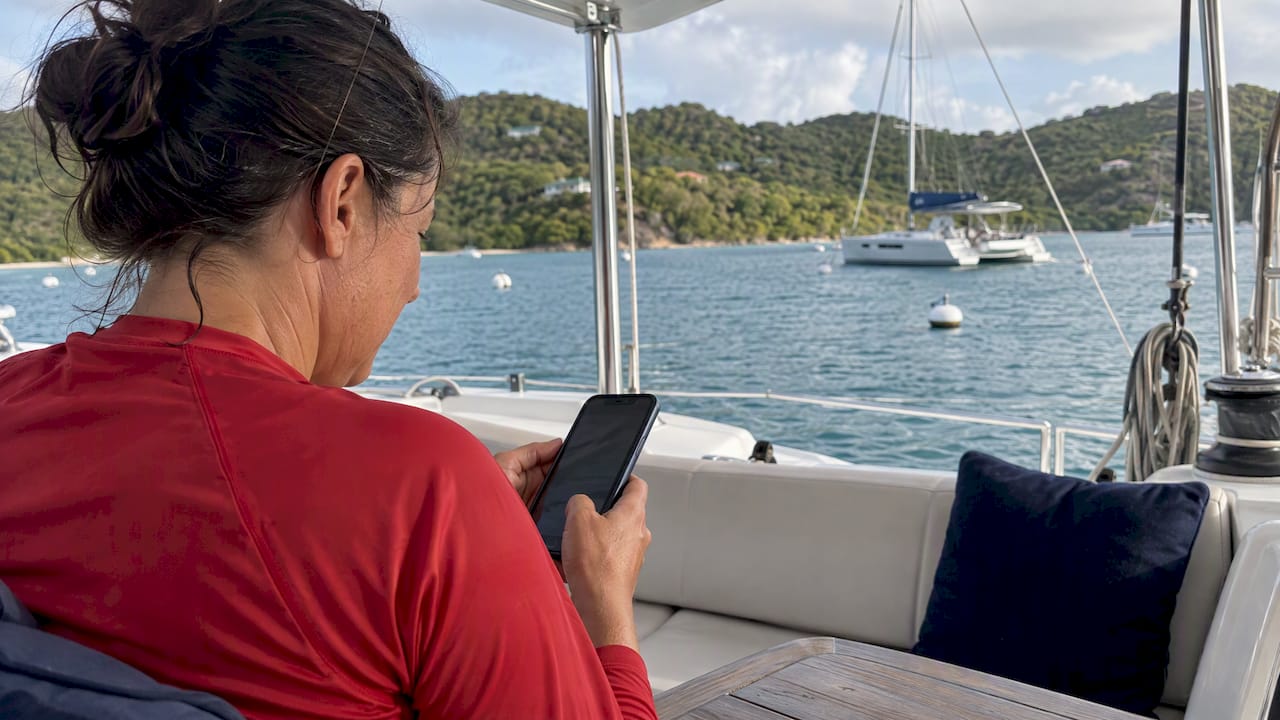

In popular BVI bays and marine parks, you will pick up a mooring ball, because anchoring is restricted there. Reservable moorings open at 7:00 AM local time through BoatyBall and fill fast in peak season, so have the app ready or plan for first-come, first-served buoys. Carry a National Parks Trust mooring permit, and never tie to a reserved ball you didn’t book.
TL;DR:
- Reservable BoatyBall moorings open at 7:00 AM local time, hold a selection for four minutes, and popular peak season bays can fill quickly.
- White buoys are typically for overnight stays, while orange Halas buoys are often day use only; marine park moorings cannot be used overnight.
- Check buoy color, number, line condition, and exposure; some sites limit stays to 90 minutes, and mooring areas are 5 MPH no wake zones.
- BoatyBall lists reservable moorings at about $55 per night and first come, first served buoys at roughly $30 to $40; check membership rules before booking.
- If moorings are full, use a safe sandy anchorage only outside restricted zones, and never take a reserved buoy you did not book.
Table of Contents
- How do BVI moorings work, and which buoys are which?
- How do you reserve a mooring with BoatyBall?
- When should you anchor, and when must you moor?
- What should you do before arrival and on the water?
- Why most first-timers worry about the wrong thing
- How we help first-time guests handle mooring logistics
- Get mooring support from the team that knows these bays
- FAQ
- Sources
How do BVI moorings work, and which buoys are which?
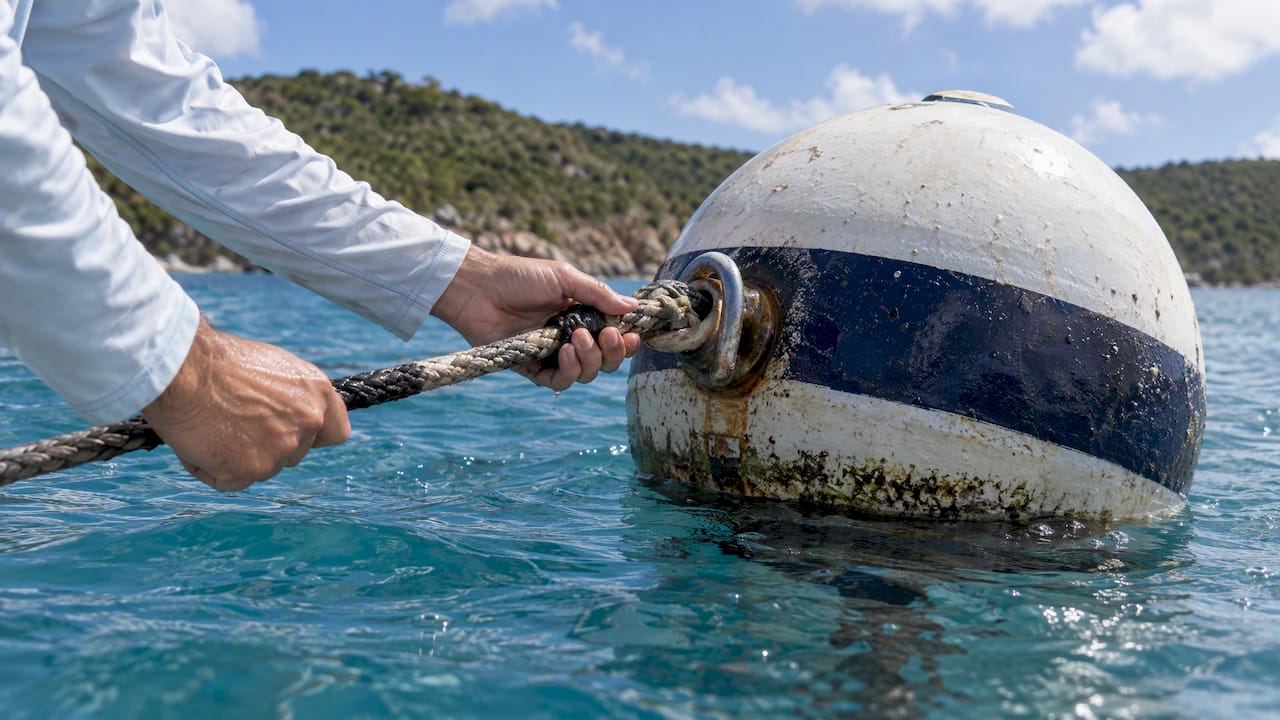
The National Parks Trust installs protected mooring systems, including Halas buoys, so boats stop dragging anchors across coral and seagrass. In these zones, vessels must use the provided buoys by law and may need a National Parks Mooring Permit. Color tells you what a buoy is for:
- White (18" diameter): typically overnight use
- Orange Halas (13" diameter): often day-use only, at marine parks and dive sites
- Yellow: commercial vessels
- Blue: dinghies
Overnight and day-use buoys differ in both safety and placement, so read the color before you tie up.
Marine park moorings are for day use only, and anchoring is strictly prohibited. Source: National Parks Trust Marine Conservation Programme. Check the rules for each site before you plan a stop.
Many sites also carry a 90-minute limit on some moorings, and all mooring areas are 5 MPH no-wake zones. Some park moorings sit in exposed spots and are not safe places to spend the night, even if the weather looks calm when you arrive.
How do you reserve a mooring with BoatyBall?
BoatyBall sorts moorings into three types: Reservable, First Come First Serve (FCFS), and Day Use Only. Reservable moorings open every morning at 7:00 AM local time. The app shows available balls on a zoomable map, holds your pick for four minutes while you pay, and confirms by email. In peak season, popular bays can fill quickly, so preparation matters more than speed alone.
Here is the flow we walk first-timers through:
- Create your account and join before you arrive.
- Open the app before 7:00 AM and find your target bay.
- Tap your mooring, then pay before the hold expires.
- Save the confirmation email.
- On arrival, check that the buoy number matches your reservation.
BoatyBall’s help guide lists reservable moorings at about $55 per night and FCFS at roughly $30–$40 per night. For an FCFS buoy, tie up first, confirm in the app that you are attached, then pay to receive your email verification. Check the membership requirements before booking.
Pro Tip: Pick a primary bay and two alternates before the clock hits 7:00 AM, so a lost bid costs you seconds, not your whole evening.
When should you anchor, and when must you moor?
In marine parks and many protected sites, the choice is made for you. Anchoring is prohibited in park areas, and at places like the Dead Chest and RMS Rhone Marine Park, anchoring and fishing are strictly prohibited. Outside those zones, a safe sandy anchorage can work when moorings are full, which also shapes where you stay overnight. Our mooring balls vs. marinas comparison covers that trade-off.
Overnight buoys are built and placed for sleeping aboard. Day-use buoys are not, so treat them as lunch stops. Before you commit to any ball, run these checks:
- Inspect the pick-up line for chafe, fraying or growth.
- Judge exposure and swell: if the bay is open to the swell, move on.
- Never leave the boat unattended on an exposed day-use buoy.
- Confirm the color and number match what you booked or intend to use.
If everything nearby is taken, head for a safe sandy anchorage or a dinghy mooring, following National Parks Trust guidance.
Pro Tip: Arrive early in the afternoon. Light is better for reading buoy numbers and judging the line, and you leave yourself time for a backup plan.
What should you do before arrival and on the water?
This checklist keeps your first trip calm:
- Before you fly: set up BoatyBall, join as the boat’s primary member, and confirm mooring permits with your charter company. List your preferred bays and alternates. Our BVI bareboat guide covers wider trip prep.
- Reservation morning: be ready before reservations open, with the app open and payment details at hand.
- On approach: confirm the buoy number matches your reservation, test the pick-up line and hardware, and carry your customs and immigration clearance.
- Overnight: save your payment confirmation email as proof, and know whether your mooring is day-only.
- Leaving: check and obey the time limits and no-wake rules for the mooring area.
For bay-by-bay tactics, see our BVI mooring guide for skippers. Practical context on categories and etiquette also appears in this Caribbean mooring guide, and a packaged trip resource may help if you are building add-ons around your charter.
Why most first-timers worry about the wrong thing
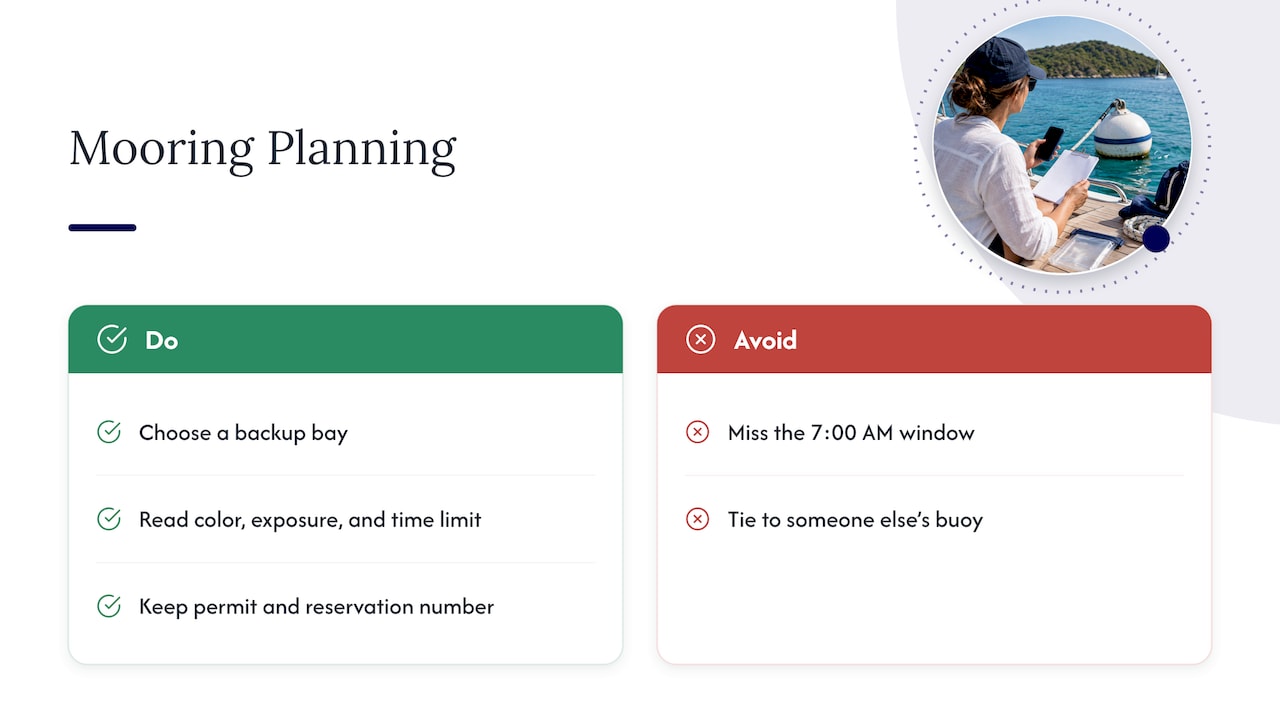
The usual fear is picking up the ball itself. In practice, the stress comes earlier: missing the 7:00 AM window, arriving without a backup bay, or tying to a buoy that belongs to someone else. The line handling takes a few practice runs. The planning is what separates a relaxed evening from circling a crowded bay at sunset.
I would also push back on treating a mooring as just a parking spot. The color, the exposure and the time limit tell you what the buoy is actually safe for, and guests who read those three things rarely have a bad night. Treat the permit and the reservation number as part of the boat’s paperwork, as important as the clearance.
— alexia
How we help first-time guests handle mooring logistics
Our presence on Tortola shapes how we advise guests on permits, bays and timing. If you prefer to leave the buoy work to someone else, we offer a standard captain at 250 USD per day or a training captain at 300 USD per day, who can handle mooring while you learn the routine. Before you arrive, we can walk you through setting up your BoatyBall account and getting your permit sorted.
Get mooring support from the team that knows these bays
Mooring stress is easiest to remove before the trip starts. We pair itinerary planning with permit help and captain options, so your first night is a plan, not a gamble.
- Compare yacht sizes on our bareboat pricing page.
- Start with our charter planning team.
Contact us early, and we will help you build a mooring plan with backups. Request your booking when you are ready.
FAQ
How do you attach to a mooring ball?
Approach slowly into the wind, pick up the pick-up line with a boat hook, and run your own line through the eye to your bow cleat. Check the line for chafe before you settle in. For an FCFS ball, confirm in BoatyBall that you are tied up before paying.
What color light is on a mooring buoy?
We have no sourced answer on buoy lights, so rely on color instead. White buoys are typically overnight, orange Halas buoys are often day-use, yellow are commercial, and blue are for dinghies.
How can I reserve a mooring ball in the BVI?
Use the BoatyBall app. Reservables open at 7:00 AM local time, hold your pick while you complete payment, and confirm by email. Join before you arrive.
Is it illegal to attach your boat to a mooring buoy?
It depends on the buoy. In protected zones, vessels are required to use the provided moorings with a permit, but taking a reservations-only ball you didn’t book breaks etiquette and the system’s rules. Match your buoy number to your reservation.
Sources
- Marine Conservation Programme | bvinationalparkstrust.org
- BVI Vacation - Moorings and Anchorage, Tortola , Virgin Gorda, Anegada, JVD
- Before You Set Sail | BVI Pre-Arrival Guide | BoatyBall
Recommended
- BoatyBall Booking: 7:00 AM Reserve With Pre Arrival Concierge
- Reserve BVI Mooring Balls On-Line!
- Never Miss a BVI Mooring for Skippers: Bay by Bay Reservation Tactics
- BVI Mooring Balls vs. Marinas | Bareboat Charter Guide
Did You Know?
The BVI are only accessible by boat. Check out our charter yachts that can get you there. View Our Fleet