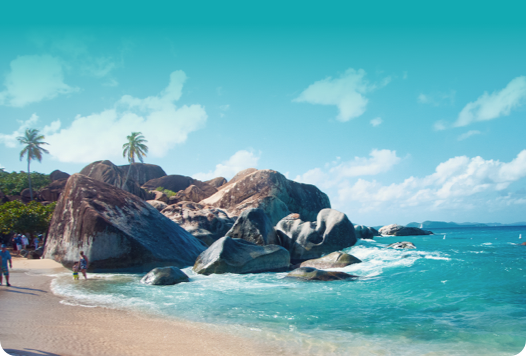
BVI Luxury Crewed Yacht Charter Guide
Everything you need to know about choosing a fully crewed yacht in the BVI, from finding the right yacht and crew to customized menus, itineraries and activities.

Experience a Fully Crewed BVI Yacht Charter
A fully crewed yacht charter is one of the easiest and most personalized ways to experience the British Virgin Islands.
Your yacht comes with a professional captain and chef who take care of the details throughout your vacation. The captain operates the yacht, helps plan your itinerary and introduces you to the best of the BVI, while your private chef prepares meals customized around your group’s preferences.
Unlike a cruise ship or resort vacation, the yacht is completely private for your group. You aren’t sharing it with other guests, and your itinerary, meals and activities are built around how you want to spend your vacation.
Crewed yachts in the BVI range from intimate 50-foot catamarans that can be ideal for a family or three couples to larger luxury sailing catamarans, power catamarans and motor yachts accommodating groups of up to 12 guests.
At Virgin Charter Yachts, we believe choosing the right crew is just as important as choosing the right yacht.
Beautiful yacht photos and specifications are easy to compare online. What is much harder to evaluate is whether the captain and chef are the right fit for your family or group.
That’s where experience matters.
Virgin Charter Yachts has been operating in the British Virgin Islands since 1996. In addition to being a professional crewed yacht charter broker, we directly manage charter yachts and work with professional yacht crews in the BVI. We know what separates a good crew from an exceptional one.
When we recommend a yacht, we consider the yacht itself, but also the captain and chef, crew experience and longevity, personalities, service style, cabin layout, amenities, water toys and the priorities of your particular group.
And you are not limited to the yachts managed by VCY. As a professional charter broker, we can help you compare crewed yachts throughout the BVI and Caribbean charter market.
Tell us your dates, number of guests, budget and what matters most to your group, and we’ll help narrow the options down to the yachts and crews we believe are the best fit.
Explore our BVI luxury crewed yachts.

Your BVI Itinerary, Your Way
There is no standard itinerary that every crewed charter has to follow. Before your charter, your captain will learn more about your group and what you want from your week in the BVI.
Some guests want an active vacation filled with snorkeling, diving, paddleboarding, hiking and water sports. Others want quiet beaches, long lunches and secluded bays. Some want to visit the BVI’s best-known beach bars and restaurants, while others would happily spend several days away from the crowds.
Most groups want a little of everything.
Your captain will use those preferences to create a suggested itinerary while taking into account weather, sea conditions, reservations and local knowledge.
Popular BVI destinations include Norman Island, Peter Island, Cooper Island, Virgin Gorda and The Baths, North Sound, Anegada and Jost Van Dyke. But a crewed charter isn’t about checking as many islands as possible off a list.
If your family finds a snorkeling spot everyone loves, you can stay longer. If you decide you’d rather spend another afternoon at a quiet beach than move to the next island, your captain can adjust the plan.
That flexibility is one of the biggest advantages of a private yacht charter. And because your captain cruises these waters regularly, they can introduce you to places you may never have discovered by planning the trip yourself.
Explore our Luxury Crewed BVI Charter Itinerary


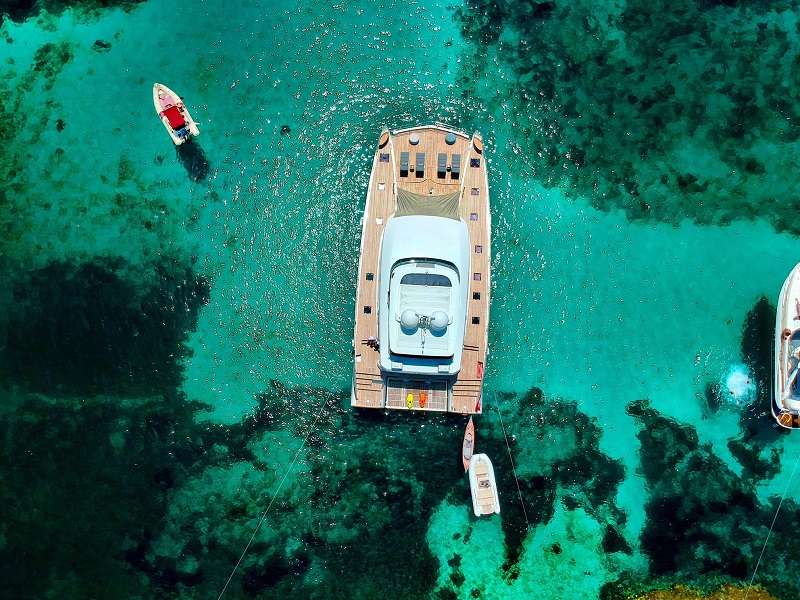


Activities & Water Toys
One of the best parts of a crewed yacht charter is having the freedom to spend as much time in, on or around the water as you like.
Crewed yachts typically carry a selection of water toys for guests to enjoy throughout the week, but the exact equipment varies significantly from yacht to yacht. Depending on the yacht, you may find snorkeling equipment, stand-up paddleboards, kayaks, floating mats, sea scooters, wakeboards, waterskis, towable tubes, fishing equipment, eFoils and other specialty toys.
If a particular activity is important to your group, let us know when choosing your yacht. A family with children who want to spend every afternoon tubing and playing in the water may be happiest on a different yacht than a group of adults primarily interested in snorkeling, diving and relaxing.
This is one of the details we consider when recommending yachts.
Snorkeling & Diving
The BVI offers excellent snorkeling throughout the islands, with reefs, caves, rock formations, shipwrecks and abundant marine life. Your captain can incorporate snorkeling stops into your itinerary based on your group’s interests and experience.
If scuba diving is important to you, let us know before selecting your yacht. Some yachts have dive-qualified crew and carry scuba equipment aboard, while rendezvous diving can also be arranged with a local dive operator that meets your yacht during the charter.
Activities Ashore
Your vacation doesn’t have to stay on the yacht. Your crew can help incorporate activities ashore such as hiking, exploring The Baths on Virgin Gorda, an island tour on Anegada, beach days, shopping, restaurants and beach bars, spa visits or other special excursions.
For families, the BVI offers plenty of opportunities to mix time aboard with activities that keep children interested throughout the week. The flexibility of a private charter means you aren’t following a preset excursion schedule — your days can be planned around what your group actually enjoys.
Explore Things to Do in the BVI.




Your Private Chef & Custom Menu
Food is one of the things that can turn a great crewed yacht charter into an exceptional one. On a fully crewed BVI charter, your private chef prepares meals aboard specifically for your group.
Before your charter, you’ll complete a detailed preference sheet that gives your captain and chef the information they need to personalize your week. You’ll be able to share your favorite foods and cuisines, foods you dislike, allergies and dietary restrictions, children’s preferences, breakfast habits, favorite snacks, coffee preferences, non-alcoholic beverages, wine, beer and cocktails, preferred brands and any special occasions you’ll be celebrating.
Your chef uses that information to provision the yacht and create a menu specifically for your group. This isn’t a restaurant where everyone orders from a printed menu, and it isn’t a predetermined cruise-ship meal plan. The experience is much more personal.
Dietary Restrictions & Allergies
Professional charter chefs are accustomed to accommodating a wide range of dietary preferences and restrictions, including gluten-free, vegetarian and vegan diets.
If someone in your group has a serious food allergy or particularly complicated dietary requirement, let us know when selecting your yacht. The chef is an important part of the crew match, and we want to make sure we recommend a yacht with a chef who is comfortable accommodating your group’s needs.
What Does a Typical Day Look Like?
Breakfast might be anything from fresh fruit, pastries and coffee to eggs, pancakes or a full cooked breakfast.
Lunch is often lighter — fresh salads, seafood, tacos, grilled dishes or something easy to enjoy between swimming and afternoon activities.
Dinner can become one of the highlights of the day, with beautifully prepared, restaurant-quality meals served aboard your own private yacht.
And because the menu is customized, the experience can be as casual or sophisticated as your group prefers.
Can You Eat at Restaurants During Your Charter?
Absolutely. One of the pleasures of chartering in the BVI is being able to combine meals aboard with some of the islands’ restaurants and beach bars.
Meals aboard are included on most all-inclusive crewed charters, while meals and drinks purchased ashore are generally at your own expense. Let your crew know in advance if there are restaurants you’d particularly like to visit so your chef can provision accordingly and your captain can incorporate them into the itinerary.
Celebrations & Special Occasions
Crewed yacht charters are particularly popular for birthdays, anniversaries, honeymoons and milestone celebrations.
If you’re celebrating something special, tell us and your crew in advance. Whether it’s a birthday cake, Champagne, a special dinner or simply making one evening particularly memorable, advance notice gives the crew an opportunity to personalize the experience.


Choosing the Right Crewed Yacht for Your Group
The biggest or most expensive yacht isn’t necessarily the best yacht for your vacation. One of the most important parts of choosing a crewed yacht is finding a layout that works well for the people traveling with you.
A family with children has very different needs from four or five couples traveling together, and two yachts that accommodate the same number of guests on paper can offer very different experiences.
For Couples
When several couples are traveling together, private cabins with private ensuite bathrooms are particularly important. Most couples do not want to share a bathroom with another cabin, so we pay close attention to the number of true guest cabins and ensuite heads rather than simply the yacht’s advertised maximum guest capacity.
Cabin size and equality can matter as well. Some yachts have one spectacular primary suite followed by substantially smaller guest cabins, while others offer several similarly sized queen cabins. For groups splitting the charter cost between couples, the latter can sometimes be a better fit.
For Families
Families often have much more flexibility.
A yacht with a shared bathroom between two cabins, bunk beds or a smaller cabin may work extremely well for children and can provide excellent value without sacrificing the spaces where the family will spend most of the day.
We also consider how easily parents can access children’s cabins, interior and exterior living areas, water access, railings and stairs, and the yacht’s selection of water toys.
Don’t Choose by Length Alone
A yacht’s length tells only part of the story. Catamaran design, beam, cabin configuration and use of space can make two yachts of similar length feel completely different.
A well-designed 50-foot power catamaran may be an excellent choice for a family of six, while a group of eight adults may be much happier aboard a larger yacht offering four comparable ensuite guest cabins.
This is why we recommend looking beyond simply “How many guests does it sleep?”
The Crew Is Part of the Decision
Layout is only half of the equation.
We also consider the captain and chef, their experience together, personalities and service style. A fantastic yacht with the wrong crew fit isn’t the right yacht for your vacation.
Because Virgin Charter Yachts both manages crewed yachts in the BVI and works as a charter broker, we know many of the yachts and crews personally. We use that knowledge to help match each group with the combination of yacht, layout and crew we believe will suit them best.
Compare Power Catamaran Layouts
See our favorite Crewed Yachts for 6, 8 and 10 guests




Frequently Asked Questions About Crewed Charters
What is included in a fully crewed yacht charter?
Most BVI crewed catamaran charters are all-inclusive. The charter rate generally includes the yacht, professional captain and chef, accommodations, meals and snacks aboard, standard ship’s bar and beverages, cruising fuel, water, use of the yacht’s onboard water toys and most operating expenses.
There are some exceptions, particularly larger motor yachts that operate on an APA (Advance Provisioning Allowance) basis rather than an all-inclusive rate. We will always explain exactly what is and is not included when we send you yacht options so you can compare the true cost of each charter.
What expenses are normally not included?
Crew gratuity, airfare and transportation to the yacht, meals and drinks purchased ashore, optional shore excursions and certain specialty activities are generally not included.
Crew gratuity is customary and is typically 15–20% of the charter rate, based on the level of service you receive.
What is an APA?
APA stands for Advance Provisioning Allowance. It is an additional amount paid before the charter and used by the captain to cover actual charter expenses such as fuel, food, beverages, dockage and other operating costs.
APA is most common on larger motor yachts and some higher-end charter yachts. It is not an additional fee that the yacht simply keeps. The captain maintains an accounting of expenses, and any unused funds are returned at the end of the charter. If expenses exceed the amount deposited, you are responsible for the difference.
Most of the crewed catamarans we book in the BVI operate at an all-inclusive rate instead.
Do I need any boating or sailing experience?
No. Your professional captain operates the yacht and handles navigation, docking, moorings and the operation of the vessel. You are there to enjoy the vacation.
If you love boating, most captains are happy to explain more about the yacht and cruising the BVI, but there is no experience requirement for guests.
Can we customize our itinerary?
Absolutely. A private crewed charter does not follow a fixed itinerary.
Your captain will discuss what your group wants to see and do and develop an itinerary around your interests. The itinerary remains flexible during the charter and may be adjusted for weather, sea conditions or simply because your group decides it wants to spend more time somewhere.
Can the chef accommodate allergies or special diets?
In most cases, yes. Charter chefs regularly accommodate dietary preferences and restrictions such as vegetarian, vegan and gluten-free diets.
For serious allergies or particularly complicated dietary requirements, tell us before choosing your yacht. That allows us to make sure the chef we recommend is comfortable accommodating your group’s specific needs.
Can we eat at restaurants during the charter?
Yes. Even on an all-inclusive charter, you are welcome to dine ashore whenever you choose. The BVI has excellent restaurants, beach bars and casual waterfront dining throughout the islands.
Meals and drinks purchased ashore are normally at your own expense. Let your crew know which meals you expect to eat ashore so your chef can provision accordingly.
How far in advance should we book a BVI crewed yacht charter?
The best yacht and crew combinations often book well in advance, particularly for Christmas, New Year’s, Presidents’ Week, spring break and other popular travel periods.
If your dates are flexible, there may still be excellent options closer to departure. But if you have fixed dates, a larger group or a particular yacht or crew in mind, booking earlier gives you considerably more choice.
What is the difference between a bareboat with a captain and a fully crewed yacht?
With a bareboat plus captain, you are essentially renting the yacht and hiring a professional captain separately. You are still responsible for provisioning, cooking, cleaning and many of the other aspects of the vacation.
A fully crewed charter is a hospitality experience. The yacht comes with its professional crew, typically including a captain and private chef, and most BVI crewed catamarans include meals, beverages and onboard amenities in the charter rate.
For guests who want the yacht experience without managing the yacht or household responsibilities during their vacation, a fully crewed charter is generally the better fit.
How do I choose the right crewed yacht?
Start with the number of guests, dates and approximate budget, but don’t choose based on yacht size or photographs alone.
Cabin configuration, number of ensuite bathrooms, crew experience, chef, water toys, outdoor spaces and the personalities of the captain and crew can all make a significant difference.
Virgin Charter Yachts has been operating in the BVI since 1996. Because we both manage crewed yachts and work as a professional charter broker, we use our firsthand knowledge of yachts and crews to help match each group with the options we believe will suit them best.
Why Book Your BVI Crewed Yacht Charter With Virgin Charter Yachts?
Choosing the right yacht is important, but choosing the right crew and the right charter broker can make an even bigger difference in your vacation. At Virgin Charter Yachts, we offer something relatively unique: we are not simply an online yacht booking platform. We are a BVI-based charter company, professional crewed yacht broker, and yacht management company with 30 years of experience in the British Virgin Islands.
30 Years of BVI Charter Experience
Virgin Charter Yachts has been operating in the British Virgin Islands since 1996. Our team doesn’t just sell vacations to the BVI—we live and work in the charter industry here.
That local experience gives us firsthand knowledge of the islands, anchorages, restaurants, activities, charter yachts, crews and the overall BVI charter experience. When you have questions before or during your vacation, you’re working with a company that actually operates in the destination you’re visiting.
Access to Crewed Yachts Throughout the BVI
The crewed yachts featured on our website represent only a selection of the yachts we can offer.
As a professional crewed yacht charter broker, Virgin Charter Yachts can help you compare luxury crewed catamarans, power catamarans and motor yachts throughout the BVI and Caribbean charter market. You are not limited to yachts owned or managed by Virgin Charter Yachts.
Tell us your dates, number of guests, preferred yacht style, budget and what matters most to your group, and we’ll help narrow the options to the yachts and crews we believe are the best match.
We Know That the Crew Matters Just as Much as the Yacht
It’s easy to fall in love with beautiful yacht photos online. But after 30 years in the charter business, we know that a successful crewed yacht vacation depends on much more than the yacht itself.
Your captain and chef will be with you throughout your vacation. Their personalities, experience, local knowledge, level of service and ability to understand your group’s preferences can completely change your charter experience.
That’s why we consider both the yacht and the crew when making recommendations.
We look beyond the number of cabins, water toys and beautiful photographs. We want to help match you with a yacht whose crew, service style and personality are right for your group.
We’re Not Just Yacht Brokers — We’re Yacht Operators
Virgin Charter Yachts also directly manages charter yachts and works with professional yacht crews in the BVI.
That operational experience gives us a perspective that a typical online booking platform cannot provide. We understand what goes into maintaining and operating a charter yacht, what separates an exceptional crew from an average one, and how important reliable local support can be when you’re spending thousands of dollars on a luxury vacation.
Our recommendations are based on more than what looks good on a website. They are backed by decades of experience operating yachts and taking care of charter guests in the BVI.
Why Use a Crewed Yacht Charter Broker?
You don’t need to contact multiple yachts or spend hours trying to compare dozens of seemingly similar options online.
A professional charter broker does that work for you.
We can help you compare available yachts based on:
- Your group size and preferred cabin configuration
- Sailing catamaran, power catamaran or motor yacht
- Budget
- Captain and crew experience
- Chef and dining preferences
- Family, couples or adult-group dynamics
- Water sports and onboard amenities
- Special occasions and celebrations
- Preferred itinerary and activities
- Any special requests that are important to your group
Our goal isn’t simply to find you a yacht. It’s to help you find the right yacht and crew for your particular vacation.
Local Expertise Before, During and After Your Charter
When you book through Virgin Charter Yachts, our involvement doesn’t end when you sign the charter agreement.
Our team can help with your BVI vacation planning before you arrive, answer questions about transportation and provisioning, assist with itinerary ideas and activities, and provide the local knowledge that comes from three decades in the BVI charter industry.
And because we’re based here in the British Virgin Islands, we’re still here while you’re on charter.
Let Us Find the Right BVI Crewed Yacht for You
With hundreds of crewed yacht listings online, choosing the right one can feel overwhelming. That’s where experience matters.
Virgin Charter Yachts combines professional yacht brokerage with 30 years of firsthand BVI charter experience, yacht operations and local knowledge.
Whether you’re planning a family vacation, milestone birthday, anniversary, couples’ getaway or simply an unforgettable week on the water, tell us what your ideal vacation looks like.
We’ll help you find the yacht—and the crew—to make it happen.
Get A Quick Quote