
Uncategorized

Compliant BVI Bareboat Planning for Skippers: Moorings, Permits, Anegada

September 23, 2026 by Alexia Lucas
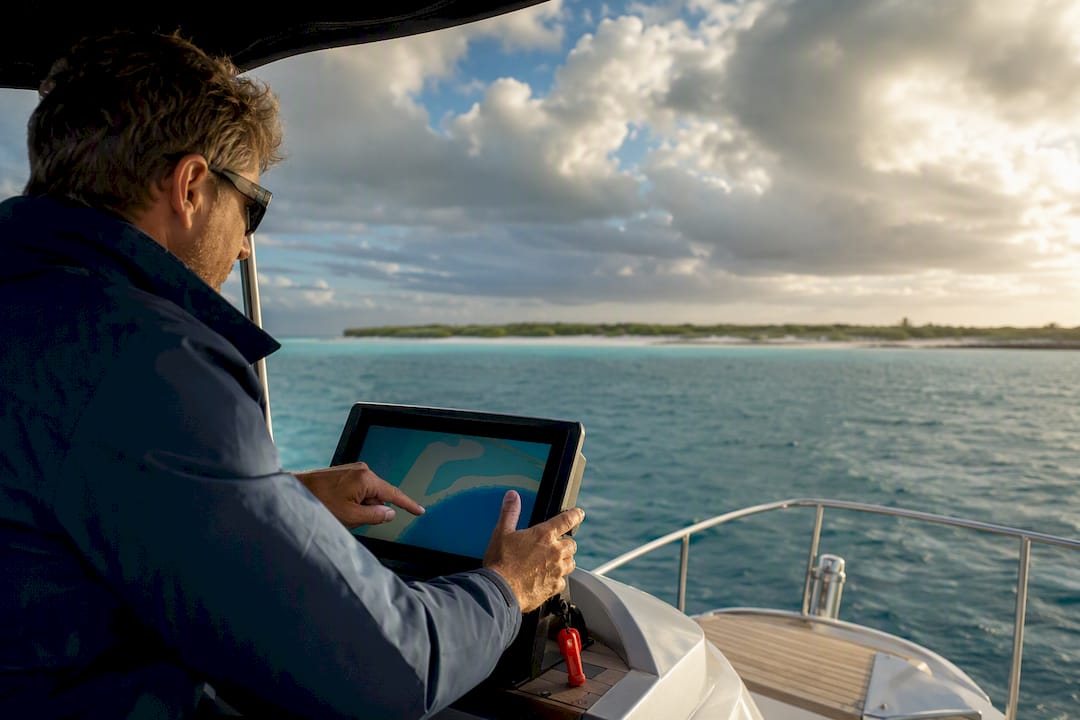
Skipper navigating Anegada reef approach

You can bareboat charter across three main sectors: the Sir Francis Drake Channel, North Sound, and Anegada, but each comes with its own rulebook. National Parks Trust moorings govern where you can tie up overnight, cruising permit paperwork determines whether your vessel is even cleared to sail, and Anegada demands open-water skill most first-time charterers underestimate. Confirm your operator’s permit status and Anegada policy before you sign anything.


TL;DR:

  • Most mooring reservations at popular sites like The Baths or Cooper Island fill within minutes via the BoatyBall system, requiring early booking and backup plans.
  • Anegada demands careful open-water navigation, a precise approach, and is usually restricted during heavy swell, making it unsuitable for inexperienced skippers without local guidance.
  • The BVI requires safety and registration certificates, proof of insurance, and a captain’s license if a professional skipper is on board, though no formal sailing license is mandated.
  • Charterers should plan for variable weather, especially in late summer, and check marine forecasts daily to avoid storm or swell risks that could cancel Anegada crossings.
  • Overnight anchoring inside National Parks Trust boundaries is generally forbidden, so plan mooring or anchoring outside park limits for late stays.

Virgin Charter Yachts
Plan Your BVI Charter With Local Knowledge
Virgin Charter Yachts helps tailor Caribbean yacht holidays from Tortola, with local knowledge built through 30 years of BVI operation.
Explore Virgin Charter Yachts

Table of Contents

Where can you bareboat charter in the BVI cruising areas?

The Sir Francis Drake Channel is where nearly every charter itinerary starts, and for good reason. It’s a body of water flanked by islands on both sides, which means you’re almost always sailing with land in view and a protected anchorage within an hour’s reach. Hops between Norman Island, Peter Island, Cooper Island, and the Baths at Virgin Gorda run 5 to 15 nautical miles, short enough that a family with young kids or a crew that’s never sailed together can string together a relaxed week without ever feeling exposed.

North Sound, up at the northeastern tip of Virgin Gorda, is a different kind of shelter. It’s a lagoon enclosed by a reef, with a narrow, marked entrance that rewards a slow, attentive approach. Inside, you’ll find resort docks and marina moorings that make it a natural spot for a night ashore.

Anegada is the outlier. It sits alone across open water, ringed by Horseshoe Reef. Reaching it means an open-water passage across the Anegada Passage with real navigational stakes. It’s spectacular, but it’s not a sector to add to your route casually.

What mooring and marine park rules apply to bareboat charters?

Every mooring buoy in BVI waters tells you something by its color, and misreading one is the fastest way to get a warning, or worse, a fine.

  • Orange buoys mark non-diving, day-use-only moorings.
  • Yellow buoys are for commercial vessels of larger sizes, including some between medium and longer lengths.
  • White buoys are reserved for dive operations.
  • Blue buoys are for dinghies only.

National Parks Trust requires a Marine Conservation Permit for use of its mooring fields, and many of those fields, including popular ones at The Baths and around Cooper Island, are day-use only with limits as short as 90 minutes. Overnight anchoring inside park boundaries is generally prohibited, and anchoring on coral or seagrass anywhere in BVI waters can draw a fine regardless of location.

The concession system known as BoatyBall covers white mooring buoys at spots like Cooper Island’s Manchioneel Bay and Great Harbour. Reservations open online at 7:00 AM Atlantic Standard Time, and the best moorings vanish within minutes.

Pro Tip: Set a phone alarm for 6:55 AM and have your BoatyBall app open before the clock hits 7:00. If your first-choice mooring is gone, know your backup anchorage before you leave the dock that morning, not after.

What permits and paperwork does a bareboat charter require?

Most bareboat guests never file anything themselves. Your charter operator handles cruising permit registration and port-of-entry fees on your behalf, but you’re still responsible for knowing what’s covered.

The Cruising and Home Port Permit (Amendment) Act, 2025 redefined terms like “BVI vessel” and “home based charter boat,” added exemptions for smaller rented craft, and now prohibits foreign-based bareboat charters over 60 feet from operating in BVI waters without a flag-state-recognized licensed captain aboard. The Premier’s office also confirmed an interim removal of some trade licence requirements for certain foreign-based charter vessels, though registration, safety certification, and insurance obligations remain fully in force.

Before final payment, confirm with your broker or operator:

  1. Certificate of registration for the vessel
  2. Current safety/commercial vessel inspection certificate
  3. Proof of insurance covering your intended cruising area
  4. Captain’s licence or STCW documentation, if a captain is included
  5. Valid passports for every guest aboard

How do seasonal winds and hurricane season affect your route?

Winter delivers the most reliable sailing, with steady northeast trade winds from December through April. But December through February also bring the “Christmas Winds,” when gusts regularly hit 20 to 30 knots and swell builds against exposed coastlines.

That swell matters most on Anegada’s approach and any north-facing cove in North Sound. When it’s running heavy, smart skippers shift plans toward the sheltered Sir Francis Drake Channel and wait out the exposed legs.

Hurricane season runs June 1 through November 30, with peak risk in late summer. Charter operators typically adjust cancellation and insurance terms during this window, and travel insurance with hurricane coverage is worth the cost if you’re booking July through October. Whatever the season, check a marine forecast daily. Conditions on the water shift faster than shoreside apps suggest.

Why does Anegada require extra caution for bareboat skippers?

Anegada sits roughly 15 nautical miles north of Virgin Gorda, low and flat, surrounded by the largest coral reef system in the eastern Caribbean. There’s no gradual approach. The channel into Setting Point is narrow and shallow, and it demands precision, not guesswork.

  • Align tightly with channel markers; drifting off line puts you over reef in minutes.
  • Monitor depth continuously rather than checking it periodically.
  • Use local pilot advice when it’s offered. Anegada’s boat boys know the channel better than any chartplotter.

Many charter companies restrict Anegada visits when swell exceeds a set threshold, and some require a training captain or a skipper upgrade for crews without recent reef-navigation experience. Read your charter agreement’s Anegada clause before you count on that leg of your route.

How do you plan a compliant 7-day BVI itinerary?

A workable itinerary starts with paperwork, not scenery. Before you leave the dock, confirm your cruising permit status, book your must-have moorings, get a weather brief from your operator, run a safety briefing with your crew, and sketch a provisioning plan with at least two backup anchorages built in.

Family-friendly route (calmer water, shorter hops):

  1. Depart Tortola, sail to Norman Island for lunch and an afternoon snorkel.
  2. Cooper Island for the night, using a day-use mooring for the swim stop en route.
  3. The Indians for morning snorkeling, then on to Virgin Gorda.
  4. Anchor at The Baths area (day-use mooring only), then continue to North Sound.
  5. Full day in North Sound: reef-protected swimming, a marina dinner ashore.
  6. Return south through the channel, stopping at Peter Island.
  7. Final night near Tortola, provisioning wrapped up before the last sail in.

Adventurous route (includes Anegada, sea-state permitting):

Follow the same first three days, then commit a full day to the Anegada crossing rather than squeezing it between other stops. Budget extra fuel for the passage, build in a weather-hold day in case swell rules it out, and always confirm the return leg’s forecast before departure.

Pro Tip: Never schedule Anegada as your last full day. If weather forces a cancellation, you want a spare day to rebook it, not a missed flight.

What skipper qualifications and safety gear does a bareboat charter require?

The BVI has no government-issued sailing license requirement for bareboat charters, but that doesn’t mean anyone can walk aboard and take the helm. Operators screen every renter through a detailed sailing resume, and many ask for VHF radio competence on top of it.

BVI safety regulations for commercial vessels adopt the UK’s Codes of Practice for small commercial sailing and motor vessels%20Regs%202004.pdf), which require inspection certificates to be current and displayed aboard. Before you leave the dock, confirm the boat’s certificate is visible and check that life jackets, flares, a working VHF, and a first-aid kit are aboard and accessible.

Skipper checking onboard safety equipment

If your crew’s combined experience is thin, ask about a training captain rather than pushing your resume past what it supports. Confirm your insurance covers the specific sectors you plan to cruise, especially if Anegada is on the itinerary.

What should you know about emergencies in BVI cruising areas?

Channel 16 VHF is the universal distress and hailing frequency across BVI waters, monitored by marinas, charter bases, and the Virgin Islands Search and Rescue (VISAR) network. Every charter yacht should carry a working VHF as standard equipment, and your operator’s check-in briefing typically covers exactly how to raise help if something goes wrong.

For serious medical emergencies, Peebles Hospital in Road Town, Tortola, is the main facility, with smaller clinics on Virgin Gorda. Cell coverage is generally solid across the main cruising sectors, though it thins out around Anegada and in North Sound’s more remote corners, which is one more reason a working VHF matters more than your phone once you’re off the beaten track.

Before departure, save your charter base’s emergency contact number, VISAR’s number, and the nearest marina’s VHF channel somewhere you can find it fast, not buried in an email. If you’re anchored overnight, know the nearest safe harbor in both directions. Weather can turn a calm evening into a decision you need to make quickly, and knowing your bailout options ahead of time beats figuring them out under pressure. Report any accident, grounding, or serious near-miss to your charter operator immediately, even if no damage is visible. Reef contact that looks minor from the deck can be significant below the waterline.

What environmental rules apply beyond mooring and anchoring?

Marine park protections in the BVI extend well past where you can drop a hook. Discharging gray water, bilge water, or any waste within park boundaries or near reef systems is prohibited, and most charter operators brief guests on holding tank use and pump-out procedures at the start of the trip.

BVI marine conservation practices diagram

Trash disposal is centralized at marinas and charter bases rather than left to individual boats. Dumping any waste, including food scraps, overboard in BVI waters is not permitted, and marine debris is a persistent problem around high-traffic anchorages. Bag your trash and offload it at your next marina stop rather than waiting until the end of the week.

Fish feeding, coral touching, and anchor chain drag across seagrass beds all fall under the same conservation mandate that governs mooring rules. Seagrass meadows recover slowly from prop and anchor damage, which is part of why day-use mooring fields exist in the first place rather than open anchoring.

If you’re snorkeling or diving from the boat, use reef-safe sunscreen where possible. Standard sunscreen chemicals accumulate in high-traffic snorkel spots like The Baths and can stress coral over time. None of this requires much extra effort. It just means treating the water the way the moorings already ask you to.

Where can you refuel during a BVI bareboat charter?

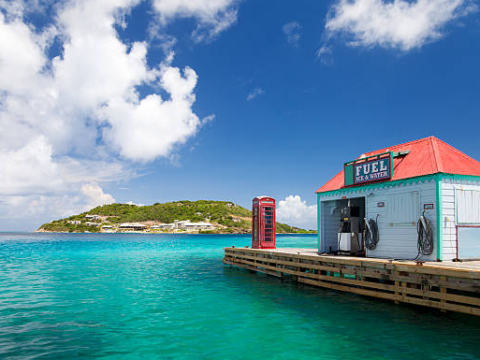
Fuel docks cluster around the main charter bases, and running a route without planning around them is a common rookie mistake. Road Town and West End on Tortola both have full-service fuel docks, and Nanny Cay marina is a reliable stop if you’re departing or returning from that base.

On Virgin Gorda, the Yacht Harbour in Spanish Town offers fuel, and North Sound has limited fuel access through the marina facilities there, though availability can be tighter than on Tortola. If Anegada is on your route, fuel there is genuinely limited, so top off before you cross the passage rather than counting on refueling once you arrive.

Most bareboat catamarans carry enough range for a standard 7-day loop without daily refueling, but if your itinerary includes Anegada or extended motoring against wind, plan a refuel stop before and after that leg. Marina staff can usually tell you current fuel dock hours, which shift seasonally, so a quick radio call ahead of arrival saves a wasted trip to a closed dock.

Where can you provision for a BVI charter?

Most charterers provision once, at the start of the week, through a service arranged by their charter base, then top up small items as they go. Road Town and Nanny Cay both have full grocery stores capable of stocking a week’s worth of meals for a full crew, and pre-ordering through your charter company means your galley is loaded before you ever step aboard.

Once you’re underway, options narrow but don’t disappear. Norman Island, Cooper Island, and Virgin Gorda’s Spanish Town all have small markets or resort shops for ice, bread, and last-minute items. North Sound’s resorts offer restaurant dining and some provisioning through their on-site shops, useful if you want a night off from cooking.

Anegada has limited provisioning, mostly geared toward its excellent lobster restaurants rather than grocery resupply, so treat it as a dining stop, not a shopping one. Ice is worth prioritizing wherever you find it. It runs out faster than most first-time charterers expect, especially with drinks and fresh provisions competing for cooler space in warm-weather sailing.

What communication and navigation tools do you need aboard?

VHF radio is the backbone of BVI cruising communication, used for hailing marinas, checking mooring availability, and reaching help in an emergency. Every charter yacht comes equipped with one, and knowing how to use it, not just where it is, should be part of your pre-departure briefing.

Cell service covers most of the main cruising sectors reasonably well, which is why many skippers lean on chartplotter apps for real-time positioning alongside paper charts. That said, coverage gaps around Anegada and the outer edges of North Sound mean you shouldn’t rely on a phone alone for navigation in those areas.

A physical or digital chart of the BVI cruising grounds, cross-referenced with your onboard chartplotter, remains the most dependable way to confirm channel markers and reef boundaries, particularly on tricky approaches like Anegada’s. Depth sounders matter just as much as any chart on that leg, since the difference between safe water and reef can be a matter of a few feet.

What Virgin Charter Yachts has learned running BVI charters since 1996

Virgin Charter Yachts has run bareboat and crewed charters in the BVI since 1996, and three decades on the water teaches you where paperwork actually trips people up. It’s rarely the permit itself. It’s guests assuming their operator has confirmed Anegada access when the contract never specified it.

The fleet runs modern power catamarans from brands built for reliable, well-maintained charters, which matters most on longer passages where mechanical confidence counts. Being family-owned and based on Tortola for 30 years means the team knows which mooring fields fill by 7:15 AM and which port-of-entry staff move faster earlier in the day. That local knowledge, more than any single document, is what keeps a charter week running on schedule instead of adjusting around avoidable delays.

— alexia

Plan Your Route With Help That Knows the Water

You could piece together permits, mooring reservations, and an Anegada contingency plan on your own, calling three offices and refreshing a BoatyBall app at dawn. Or you could hand that friction to a team that’s done it every week since 1996. A charter operator can coordinate cruising permit paperwork, help secure mooring reservations in popular fields, and provide captains to support crews as needed.

Virgin Charter Yachts

Bareboat catamarans start in the 3-Cabin Power Catamaran through 5+ Cabin Luxury Power Catamaran range, and if you’d rather hand the wheel over entirely, crewed options put a licensed captain aboard from day one. A training captain runs $300 a day for crews building open-water confidence before an Anegada crossing. Reach out to Virgin Charter Yachts and get a route built around what’s actually open, moored, and permitted the week you sail.

Sources

Rules shift with each legislative session, so confirm current terms with your charter operator before you travel.

FAQ

Can you anchor overnight anywhere in BVI marine parks?

No. Overnight anchoring inside most National Parks Trust boundaries is prohibited, and many mooring fields inside those boundaries are day-use only. Plan overnight stops at approved mooring fields or anchorages outside park limits.

Do you need a sailing license to bareboat charter in the BVI?

No government-issued license is required, but charter operators evaluate your sailing resume before handing over a boat. Crews with limited experience are often steered toward a training captain instead.

How do you reserve a mooring ball before your trip?

Popular concession moorings use the BoatyBall system, with reservations opening at 7:00 AM Atlantic Standard Time, and high-demand spots fill within minutes. Virgin Charter Yachts can handle mooring reservations as part of itinerary planning.

Is Anegada safe to visit on a bareboat charter?

Anegada is safe with careful planning but requires an open-water crossing and precise channel navigation through reef-lined water. Many charter agreements restrict Anegada visits in heavy swell, so confirm the policy with your operator before counting it into your route.

What does a bareboat charter with Virgin Charter Yachts cost?

Pricing depends on the catamaran size, with the 3-Cabin, 4-Cabin, and 5+ Cabin Power Catamaran range covering different group sizes and budgets. Crewed options and training captains are priced separately based on the level of support you need.

Did You Know?

The BVI are only accessible by boat. Check out our charter yachts that can get you there. View Our Fleet
More Recent Stories

Skipper navigating Anegada reef approach
September 23, 2026
Compliant BVI Bareboat Planning for Skippers: Moorings, Permits, Anegada
Read More  
Captain conducting yacht safety assessment
September 22, 2026
BVI Bareboat Charter Requirements: Do You Need a Captain?
Read More  
Traveler arriving at Tortola airport
September 21, 2026
Getting to the BVI for a Yacht Charter: Tortola, St. Thomas, Ferries & Water Taxis
Read More  

What Customers Are Saying

"Excellent Staff, Dedicated Team!"

Excellent staff, have never seen a more dedicated team to making sure your vacation is perfect.

R Lowrey -
google stars

"VCY was the absolute best"

We have chartered several times in the BVIs, and our experience with VCY was the absolute best. The boat was in great condition and the service start to finish was fabulous. We will be back!

J Payne -
google stars

"Friendly, Professional & Accommodating!"

Our charter yacht was nearly new and well maintained. VCY was responsive whenever we had questions during our charter as well. Highly recommended!

S Cunningham -
google stars

"Best vacation we have ever taken!"

VCY was fantastic!! They answered every question, helped with all the travel details. Booked us taxis to and from the airport and even got us reservations for a special birthday dinner. We will absolutely be back!

T Williford -
google stars

"Exceptional Experience with 1st Class Crew!"

Highly recommend this organization… they were even able to accommodate a last minute itinerary change due to tropical storm “Beryl”!

RayDoc - Texas
review

"Best Week of My Life!"

Virgin motor yachts lined us up with a great Captain and assisted with all the details in preparation. I am already planning to come back in November.

Jorwash - Charlotte, NC
review

"All Around 1st Class Customer Service"

Our 3rd year with Virgin Motor Yachts and we are starting to plan our trip for next year. An excellent vacation covering 7 islands over the 10 days.

Thomas - Edgewater, MD
review

"Search No Further VCY Is It!"

If I were to write everything good about our experience with VCY…I would need another week on their CAT on the BVI!

Juno - Ft. Lauderdale, FL
review

"Better Than We Could Have Ever Imagined"

From the planning stage to last day of our trip, we could not have asked for any better experience. Alexia and crew were wonderful to deal with.

Lisa - Hilton Head, SC
review

"Another Amazing Week With VCY"

Amazing customer service. Highly recommend VCY ahead of the other two big companies on the island with very little customer service.

Dasha M. - Idaho Falls, ID
review